WEATHER ALERT

Paws for reflection

History of tending to animals, veterinary practice a fascinating account

Advertisement

Advertise with us

At what point in human existence did we turn our attention to relieving animals’ illnesses and suffering? In Heal the Beasts, veterinarian Dr. Philipp Schott examines the history of veterinary science and highlights those who made strides in the field.

Read this article for free:

or

Already have an account? Log in here »

To continue reading, please subscribe:

Subscribe and receive a limited-edition Free Press branded hat or tote.

Digital Subscription

One year of digital access for only $205*

  • Enjoy unlimited reading on winnipegfreepress.com
  • Read the E-Edition, our digital replica newspaper
  • Access News Break, our award-winning app
  • Play interactive puzzles

*First annual payment billed as $205.00 + GST for one year. This annual subscription will automatically renew at $233.00 + GST every 52 weeks (10% off the regular annual price of $259.35). Offer available to new and qualified returning subscribers only. Cancel any time.

To continue reading, please subscribe:

Add Free Press access to your Brandon Sun subscription for only an additional

$1 for the first 4 weeks*

  • Enjoy unlimited reading on winnipegfreepress.com
  • Read the E-Edition, our digital replica newspaper
  • Access News Break, our award-winning app
  • Play interactive puzzles
Start now

*Your next Brandon Sun subscription payment will increase by $1.00 and you will be charged $17.95 plus GST for four weeks. After four weeks, your payment will increase to $24.95 plus GST every four weeks.

Hey there, time traveller!
This article was published 02/08/2025 (345 days ago), so information in it may no longer be current.

At what point in human existence did we turn our attention to relieving animals’ illnesses and suffering? In Heal the Beasts, veterinarian Dr. Philipp Schott examines the history of veterinary science and highlights those who made strides in the field.

Schott, who recently wrapped up his practice in Winnipeg, has written three short non-fiction collections filled with anecdotes about the weird and wonderful animals he’s treated. The first of the books, 2019’s The Accidental Veterinarian, was a bestseller and was translated into five languages. He’s also the author of three mysteries featuring fictional vet and amateur detective Dr. Bannerman, as well as a novel about a German boy in the Second World War.

Schott opens Heal the Beasts by stating that he’s not a professional historian, but has a passion for history, veterinary medicine and storytelling. He draws on his ability in the latter to create vignettes based on the lives and experiences of people — both real and fictional — who helped establish the care and treatment of animals as a legitimate medical practice. These stories that open the chapters are an entertaining addition to the historical information provided chronologically.
Tim Smith / Brandon Sun files
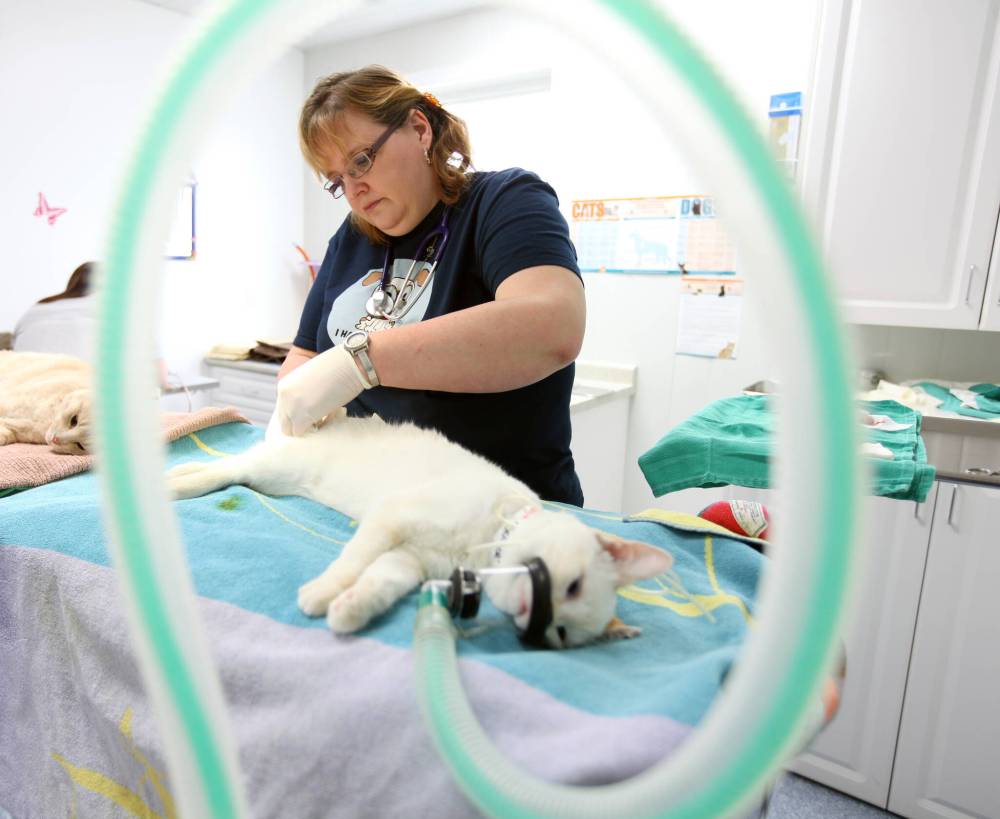
                                About 80 per cent of veterinary students are women today, a much higher percentage than in law, dentistry and medicine.

Tim Smith / Brandon Sun files

About 80 per cent of veterinary students are women today, a much higher percentage than in law, dentistry and medicine.

Animal healing traditions can be traced back to 2100 BCE in Mesopotamia, India, Egypt and China. In a Chinese legend, a horse doctor successfully cured an ailing dragon using an herbal remedy. Many early healing methods used on animals were quite bizarre, such as strapping a cat under a difficult horse and having a priest read psalms to a flock of sick sheep.

Schott tells of Prince Rupert’s poodle Boye, who supposedly had supernatural powers he used to protect his master during the English Civil War in the 1640s. Boye was rumoured to be Satan in disguise, and was shot and killed by a member of the opposing army.

The value of horses, cattle, sheep, goats and pigs prompted owners to keep seeking effective cures for common illnesses. If local cattle herds were decimated by a plague called rinderpest, human starvation could occur. Dr. Giovanni Maria Lancisi, a personal physician to popes in the early 18th century, advised that sick animals be separated from healthy ones, their barns and stalls be cleaned and dead cattle be buried as deeply as possible. His recommendations proved wise.

Schott says the focus of animal healers gradually shifted away from horses and livestock to dogs and cats throughout the 19th century as household pets became more common. This period was also when private veterinary schools opened in many countries. Upper Canada Veterinary School was established in 1862 in Toronto. It became the Ontario Veterinary College and moved to Guelph in 1922, where it remains today, graduating 120 Doctors of Veterinary Medicine annually.

The life of a rural vet in England was depicted in James Herriot’s books, the pen name of real-life vet Alf Wright. His books were turned into the popular TV series All Creatures Great and Small, and show the introduction of antibiotic use for animals. Unlike the cheerful vets in his books, Schott says Wright suffered from depression, a mental health condition that continues to be common among veterinarians.
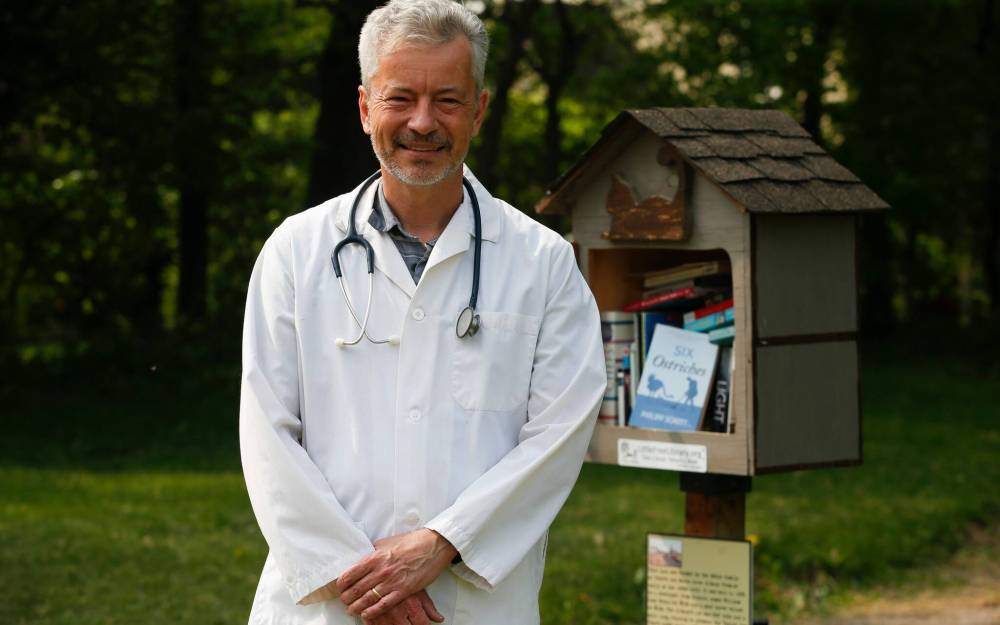
John Woods / Free Press files
                                Philipp Schott

John Woods / Free Press files

Philipp Schott

Schott includes information on the first women who entered the veterinary profession. Today about 80 per cent of veterinary students are women — a much higher percentage than in law, dentistry and medicine. He attributes this in part to women’s higher academic achievement allowing them to be accepted at veterinary colleges, the lower pay and prestige compared to other medical professions and the need for empathy.

Heal the Beasts lacks the broad appeal of Schott’s Accidental Veterinarian series, but provides interesting insight into how veterinary medicine and practice developed to support the animals we love and those that feed us.

Andrea Geary is a freelance writer in Selkirk.

Philipp Schott will launch Heal the Beasts on Thursday, Sept. 4 at 7 p.m. at McNally Robinson Booksellers’ Grant Park location.
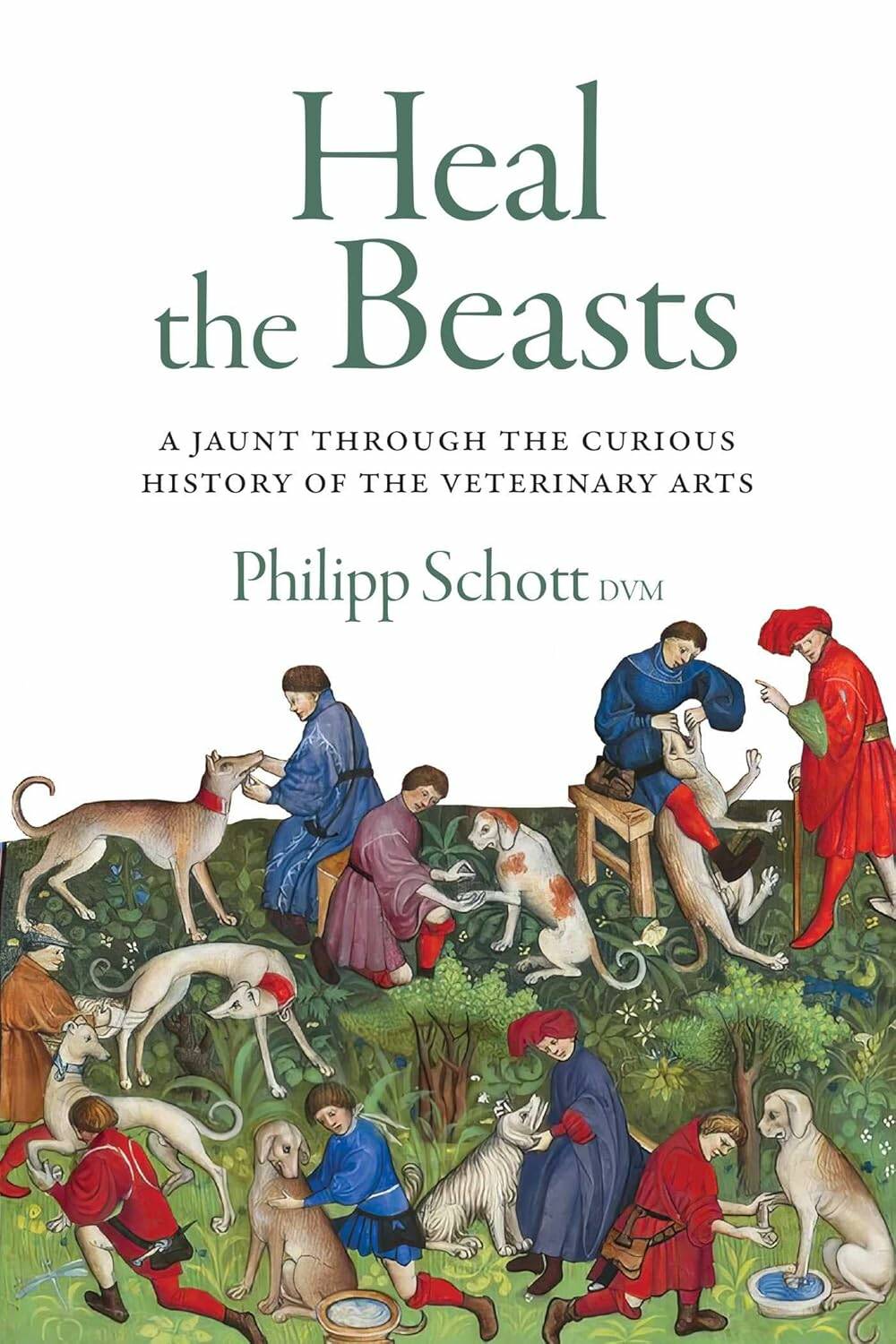
Heal the Beasts
Heal the Beasts

Report Error Submit a Tip

More Stories

Five ATV deaths renew mandatory safety course debate

Morgan Modjeski 4 minute read Preview

Five ATV deaths renew mandatory safety course debate

Morgan Modjeski 4 minute read Updated: Yesterday at 11:27 AM CDT

A high number of ATV fatalities in Manitoba has longtime riders wondering what measures can be taken to prevent deaths, including the possibility of mandatory safety courses.

So far this year, five riders have been killed in the province. The latest tragedy took place Thursday when a 59-year-old woman died in South Indian Lake, located about 770 kilometres north of Winnipeg. RCMP arrived to find her lying on the road, while her ATV was in the ditch.

Dave Lee, the president of the All-Terrain Vehicle Association of Manitoba, said one death is too many.

“Someone has lost their loved one,” he said. “It’s devastating for a family. The first question I always ask is: ‘Why did this happen?

Read
Updated: Yesterday at 11:27 AM CDT

‘Cautious optimism’ in Brandon as river crests

Scott Billeck 2 minute read Preview

‘Cautious optimism’ in Brandon as river crests

Scott Billeck 2 minute read 11:17 AM CDT

Water levels on the Assiniboine River, which have threatened Manitoba’s second-largest city over the past week, crested overnight, Brandon officials said Monday.

The river reached 1,179.46 feet, “indicating the river level has stabilized and reached its peak overnight,” according to an update posted on the city’s website.

The level stood at 1,179.23 feet on Sunday morning after rising 1.63 feet from Saturday. Officials had expected it to climb by as much as another foot before cresting. Overall, the river has risen about 7.5 feet over the past week.

Despite the crest, residents are still being urged to remain prepared as conditions could change.

Read
11:17 AM CDT

Folk fest donates leftover food to Siloam Mission

Scott Billeck 2 minute read Preview

Folk fest donates leftover food to Siloam Mission

Scott Billeck 2 minute read 3:26 PM CDT

Thousands of meals will be served at Siloam Mission this week thanks to a massive food donation from the Winnipeg Folk Festival.

More than 4,200 pounds — about two tonnes — of surplus food from the four-day festival that wrapped up Sunday was delivered to the mission on Monday.

The donation, consisting of prepared food, protein, dairy and fresh produce, is expected to provide enough ingredients to prepare about 6,000 meals for people experiencing homelessness and poverty.

Siloam Mission food services manager Marilou Castro said the food is enough to serve three meals a day for four days.

Read
3:26 PM CDT

Steamy days and hot nights sizzle city

Marsha McLeod 4 minute read Preview

Steamy days and hot nights sizzle city

Marsha McLeod 4 minute read Updated: 7:55 AM CDT

Hot, humid temperatures continued to grip Winnipeg Sunday with “dangerous” heat — feeling like low to mid-40s — anticipated to last into Monday.

The nighttime temperature Sunday was expected to be close to record setting. The anticipated overnight low of 27 C would mark the second warmest on record in Winnipeg since a 28 C low was recorded during the Dust Bowl of the 1930s, said a Winnipeg-based meteorologist with Environment and Climate Change Canada.

“A hot day is one thing, but a hot night is a totally other thing. If you don’t have air conditioning, (Sunday’s) going to be the really hard night,” said Brad Vrolijk.

Vrolijk also said it’s unusual is for such high temperatures to be combined with high humidity, calling the mix a “dangerous heat.”

Read
Updated: 7:55 AM CDT

If it works in Ontario, why not in Manitoba?

James Wilt 5 minute read Preview

If it works in Ontario, why not in Manitoba?

James Wilt 5 minute read 2:00 AM CDT

Grid-scale battery storage has fundamentally changed the global energy landscape — and Manitoba needs to get on board.

Battery systems store large amounts of excess electricity for when it’s most needed. While they can be charged from any generation source, they are especially beneficial for integrating wind and solar power, which vary with weather and time of day. Batteries allow electrical grids to meet the need for firm, dispatchable and affordable capacity using renewable energy, rather than relying on coal, nuclear and fossil gas. They also provide numerous other benefits, including reducing overloading of transmission infrastructure and helping to regulate the grid’s frequency and voltage.

Average costs for grid-scale batteries plummeted by more than half between 2023 and 2025 and installations have skyrocketed in China, the U.S., Australia and Europe. Texas now has 16,500 megawatts (MW) of battery storage, while California has 15,200 MW. Closer to home, Ontario recently awarded 640 MW of contracts to three battery storage projects in a competitive auction, with batteries beating out fossil gas-fired power plants on cost every time. One of these projects will be built near Dryden, only four hours east of Winnipeg.

Each battery system will provide eight hours of capacity but will cost considerably less than Ontario’s previous battery procurements, which provide only four hours of capacity. With this latest auction, Ontario has now secured 3,600 MW of battery storage capacity, including the operational Oneida (250 MW), Hagersville (300 MW) and Napanee (250 MW) projects. Almost all have significant Indigenous participation, with the latest procurements boasting 50 per cent First Nations ownership.

Read
2:00 AM CDT

History of tending to animals, veterinary practice a fascinating account

Reviewed by Andrea Geary 4 minute read Preview

History of tending to animals, veterinary practice a fascinating account

Reviewed by Andrea Geary 4 minute read Saturday, Aug. 2, 2025

At what point in human existence did we turn our attention to relieving animals’ illnesses and suffering? In Heal the Beasts, veterinarian Dr. Philipp Schott examines the history of veterinary science and highlights those who made strides in the field.

Schott, who recently wrapped up his practice in Winnipeg, has written three short non-fiction collections filled with anecdotes about the weird and wonderful animals he’s treated. The first of the books, 2019’s The Accidental Veterinarian, was a bestseller and was translated into five languages. He’s also the author of three mysteries featuring fictional vet and amateur detective Dr. Bannerman, as well as a novel about a German boy in the Second World War.

Schott opens Heal the Beasts by stating that he’s not a professional historian, but has a passion for history, veterinary medicine and storytelling. He draws on his ability in the latter to create vignettes based on the lives and experiences of people — both real and fictional — who helped establish the care and treatment of animals as a legitimate medical practice. These stories that open the chapters are an entertaining addition to the historical information provided chronologically.

Animal healing traditions can be traced back to 2100 BCE in Mesopotamia, India, Egypt and China. In a Chinese legend, a horse doctor successfully cured an ailing dragon using an herbal remedy. Many early healing methods used on animals were quite bizarre, such as strapping a cat under a difficult horse and having a priest read psalms to a flock of sick sheep.

Read
Saturday, Aug. 2, 2025