A cure for boredom
Dalnavert tour focuses on Victorian drug use

Advertisement
Read this article for free:
or
Already have an account? Log in here »
To continue reading, please subscribe:

Digital Subscription
One year of digital access for only $205*
- Enjoy unlimited reading on winnipegfreepress.com
- Read the E-Edition, our digital replica newspaper
- Access News Break, our award-winning app
- Play interactive puzzles
*First annual payment billed as $205.00 + GST for one year. This annual subscription will automatically renew at $233.00 + GST every 52 weeks (10% off the regular annual price of $259.35). Offer available to new and qualified returning subscribers only. Cancel any time.
To continue reading, please subscribe:
Add Free Press access to your Brandon Sun subscription for only an additional
$1 for the first 4 weeks*
- Enjoy unlimited reading on winnipegfreepress.com
- Read the E-Edition, our digital replica newspaper
- Access News Break, our award-winning app
- Play interactive puzzles
*Your next Brandon Sun subscription payment will increase by $1.00 and you will be charged $17.95 plus GST for four weeks. After four weeks, your payment will increase to $24.95 plus GST every four weeks.
Read unlimited articles for free today:
or
Already have an account? Log in here »
Hey there, time traveller!
This article was published 05/08/2025 (367 days ago), so information in it may no longer be current.
The tour’s title might have sent the Victorian home’s original inhabitants into a fit of the vapours. Luckily, Dalnavert on Drugs might also have the remedy. (Likely, laudanum or an alcoholic tonic.)
A brainchild of a former summer intern, Dalnavert on Drugs unfolds every Friday and Sunday beginning at 1:30 p.m. in former Manitoba premier Hugh John Macdonald’s family residence, also known as Dalnavert Museum.
It’s a lively, educational and gently satirical portrait of Victorians’ use of intoxicating “patent medicines” and exotic everyday remedies to treat common sicknesses and conditions — sometimes as spurious as the medicines themselves.
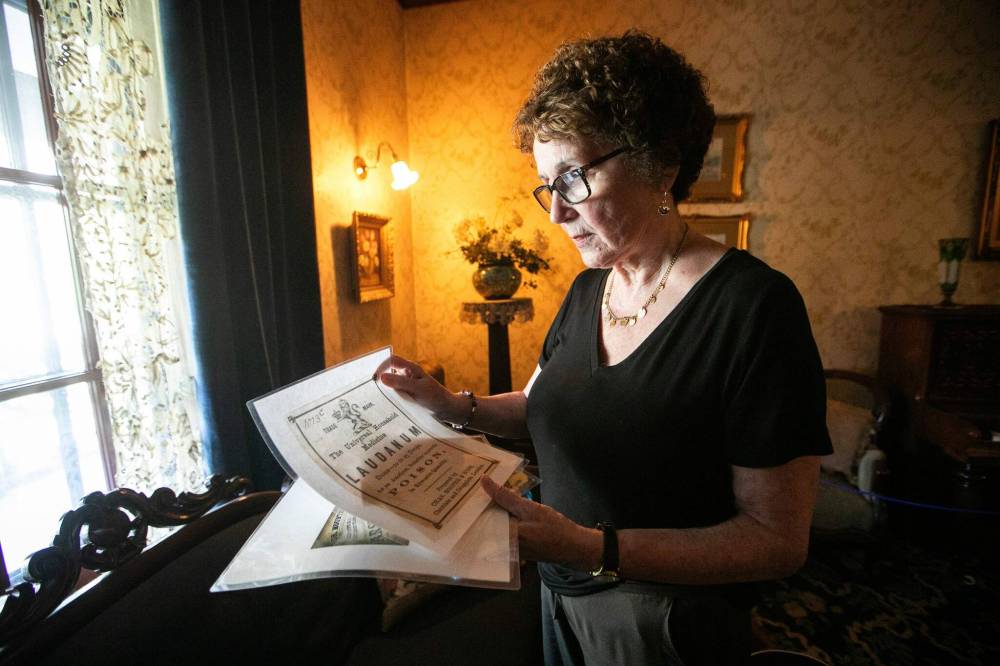
MIKAELA MACKENZIE / FREE PRESS
Inés Bonacossa shows some highlights of the Dalnavert on Drugs tour at the museum.
Is your busy society wife suffering from “hysteria” or some other form of “female weakness”? Try Mrs. Winslow’s Soothing Syrup. With its heavy dose of morphine sulfate, it might also just be the thing to quiet your teething baby. A little goes a long way.
And, you a Winnipeg businessman overworked from parcelling out prairie land, have you, too, come down with a bout of “nervous exhaustion”? That sounds emasculating, but a few shots of Dr. Hostetter’s Stomach Bitters (47 per cent hard liquor) should restore your masculine vitality in no time.
“Unfortunately, there are no samples available,” jokes Inés Bonacossa, the tour’s permanent guide, as she steps into the dark and thickly ornate home at 61 Carlton St.
A maximum of five people are allowed on the tour at one time — no one under 16 is allowed, because of the tour’s discussions of drug use, addictions and illness.
Ordinarily, Dalnavert’s tours explore the life and lifestyle of a more provincial figure bearing the name of one of Canada’s most powerful politicians. Hugh John was John A.’s son and ventured west looking to chart his own course at a time when Winnipeg resonated with great economic promise.
It was a move made not only by many working-class labourers, immigrants and unemployed men, but many lawyers, bankers, land speculators and members of the so-called Laurentian class looking to get in on the city’s explosive growth tied to rail, grain and trade.
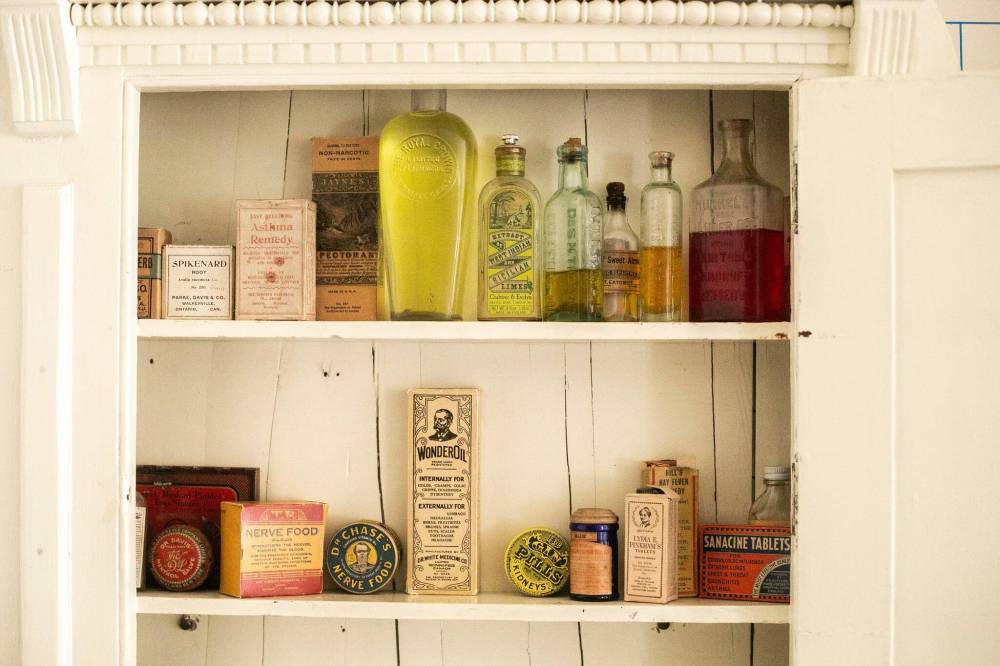
MIKAELA MACKENZIE / FREE PRESS
The medicine cabinet in the Macdonald bathroom holds a collection of exotic remedies.
A lawyer by profession, Hugh John Macdonald twice served as a military officer to help quell Louis Riel’s Métis-led rebellions (1869–70 and 1885).
He held key roles in Winnipeg’s conservative scene — first as an MP, serving in Charles Tupper’s cabinet, then briefly as Manitoba’s premier in 1900 and then, finally, was appointed Winnipeg’s police magistrate in 1911 — before his death in 1929.
Though an illustrious local figure, Hugh John’s reserved style couldn’t match the charisma of his father, and some saw him saw him as a partial waste of such a pedigree.
A visit to the museum will likely impress you with some of this history, but these details fade into the background in Dalnavert on Drugs. When Bonacossa delivers this tour rather than the regular one, she isn’t discussing the Macdonalds — who may or may not have relied on patent medicines — but she offers no less a vivid picture of early Winnipeg’s culture and society.
“The tour is about how drugs were used depending on your social class and gender and race. How manufacturers made their products stand out by using ads that were frighteningly effective because they were always portrayed with very idyllic scenes with small children, very angelic looking, or beautiful women who looked absolutely lovely drinking something or other,” she says.
As she guides the visitor through the two-storey home in Queen Anne Revival style, she’ll pull out laminated copies of old patent medicine labels — charming works of kitsch, where all the children, as Bonacossa points out, seem to have curly hair.
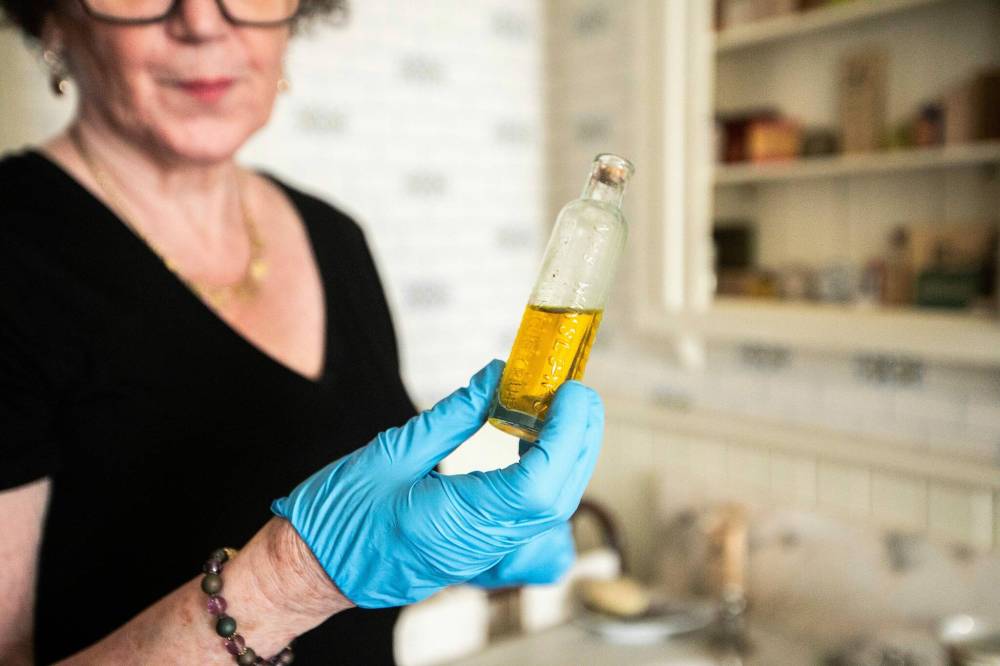
MIKAELA MACKENZIE / FREE PRESS
Inés Bonacossa with a bottle of Mrs. Winslow’s Soothing Syrup.
While some of these drugs — such as arsenic and lead-based cosmetics, promising pale skin and signifying a life indoors — seemed clearly marketed at the bourgeoisie, others cut across class lines. The tired labourer and businessman could both find respite at the end of the day in the calming effects of opiates and glorified booze, free from pesky warnings or strict dosage directions.
“There was nothing in those ads that warned anyone at a time when so many could not afford to see a physician. The images were enough to convince somebody,” says Bonacossa.
Though, as Bonacossa says, opiate- and alcohol-based remedies were not generally taken socially, they did provide something of a workaround to the era’s rising anti-alcohol tendencies.
The temperance movement, which drew many Victorian reformists and suffragettes such as Winnipegger Nellie McClung, had gained strong footing in Canada by the late 19th century, especially in the prairie provinces.

The movement pushed for moral reform and legislation against drinking, which it believed to be a root cause of domestic violence and poverty.
“They managed to rebrand wine, calling it a tonic, because that made it legitimate. Then, physicians prescribed tonic,” Bonacossa says.
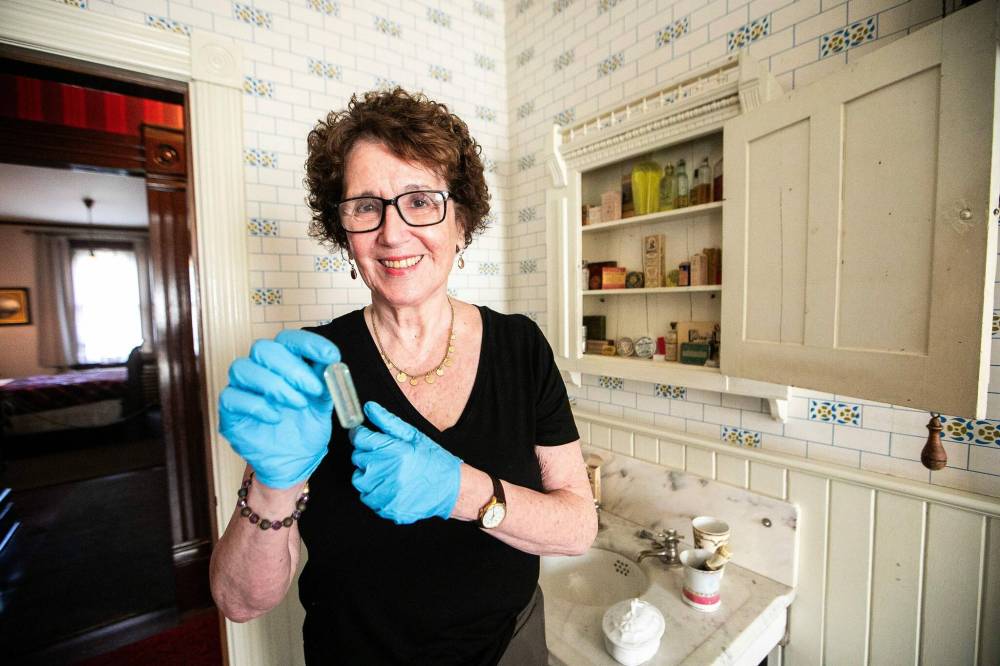
MIKAELA MACKENZIE / FREE PRESS
Inés Bonacossa, Dalnavert Museum collections registrar and specialty tour guide, with a 19th century opium bottle.
Bonacossa’s tour ends, fittingly, in the Macdonald bathroom in front of the medicine cabinet — a treasure trove of exotic remedies with charming labels and curious ingredients.
Other Dalnavert tours — such as its regular guided tours and longer Behind the Ropes tours, which let visitors step into areas that are usually off-limits — have different trajectories and are part of the museum’s evolving downtown programming, offered since the museum opened in 1974.
conrad.sweatman@freepress.mb.ca
Conrad Sweatman is an arts reporter and feature writer. Before joining the Free Press full-time in 2024, he worked in the U.K. and Canadian cultural sectors, freelanced for outlets including The Walrus, VICE and Prairie Fire. Read more about Conrad.
Our newsroom depends on a growing audience of readers to power our journalism. If you are not a paid reader, please consider becoming a subscriber.
Our newsroom depends on its audience of readers to power our journalism. Thank you for your support.
Event preview
Dalnavert on Drugs
● Dalnavert Museum and Visitors’ Centre, 61 Carlton St.
● Fridays and Sundays, 1:30 p.m.
● Tickets $13-15 (free for Dalnavert members)
● Open to people ages 16+
Conrad Sweatman is an arts reporter and feature writer. Before joining the Free Press full-time in 2024, he worked in the U.K. and Canadian cultural sectors, freelanced for outlets including The Walrus, VICE and Prairie Fire. Read more about Conrad.
Our newsroom depends on a growing audience of readers to power our journalism. If you are not a paid reader, please consider becoming a subscriber.
Our newsroom depends on its audience of readers to power our journalism. Thank you for your support.
Advertisement Advertise With Us
Advertisement Advertise With Us
History
Updated on Thursday, August 28, 2025 11:29 AM CDT: Corrects days to Fridays and Sundays