Takeaways from AP’s report on problems in the worldwide campaign to eradicate polio
Advertisement
Read this article for free:
or
Already have an account? Log in here »
To continue reading, please subscribe:

Digital Subscription
One year of digital access for only $205*
- Enjoy unlimited reading on winnipegfreepress.com
- Read the E-Edition, our digital replica newspaper
- Access News Break, our award-winning app
- Play interactive puzzles
*First annual payment billed as $205.00 + GST for one year. This annual subscription will automatically renew at $233.00 + GST every 52 weeks (10% off the regular annual price of $259.35). Offer available to new and qualified returning subscribers only. Cancel any time.
To continue reading, please subscribe:
Add Free Press access to your Brandon Sun subscription for only an additional
$1 for the first 4 weeks*
- Enjoy unlimited reading on winnipegfreepress.com
- Read the E-Edition, our digital replica newspaper
- Access News Break, our award-winning app
- Play interactive puzzles
*Your next Brandon Sun subscription payment will increase by $1.00 and you will be charged $17.95 plus GST for four weeks. After four weeks, your payment will increase to $24.95 plus GST every four weeks.
Read unlimited articles for free today:
or
Already have an account? Log in here »
Hey there, time traveller!
This article was published 05/08/2025 (432 days ago), so information in it may no longer be current.
KARACHI, Pakistan (AP) — For nearly four decades, the World Health Organization and partners have been trying to rid the world of polio, a paralytic disease that has existed since prehistoric times. While cases have dropped more than 99%, polio remains entrenched in parts of Afghanistan and Pakistan.
In its quest to eliminate the virus, WHO and its partners in the Global Polio Eradication Initiative have been derailed by mismanagement and what insiders describe as blind allegiance to an outdated strategy and a problematic oral vaccine, according to workers, polio experts and internal materials obtained by the Associated Press.
Officials tout the successes – 3 billion children vaccinated, an estimated 20 million people who would have been paralyzed spared – while acknowledging challenges in Pakistan and Afghanistan. WHO polio director Dr. Jamal Ahmed defended progress in those two countries, citing workers’ tailored response in resistant pockets.
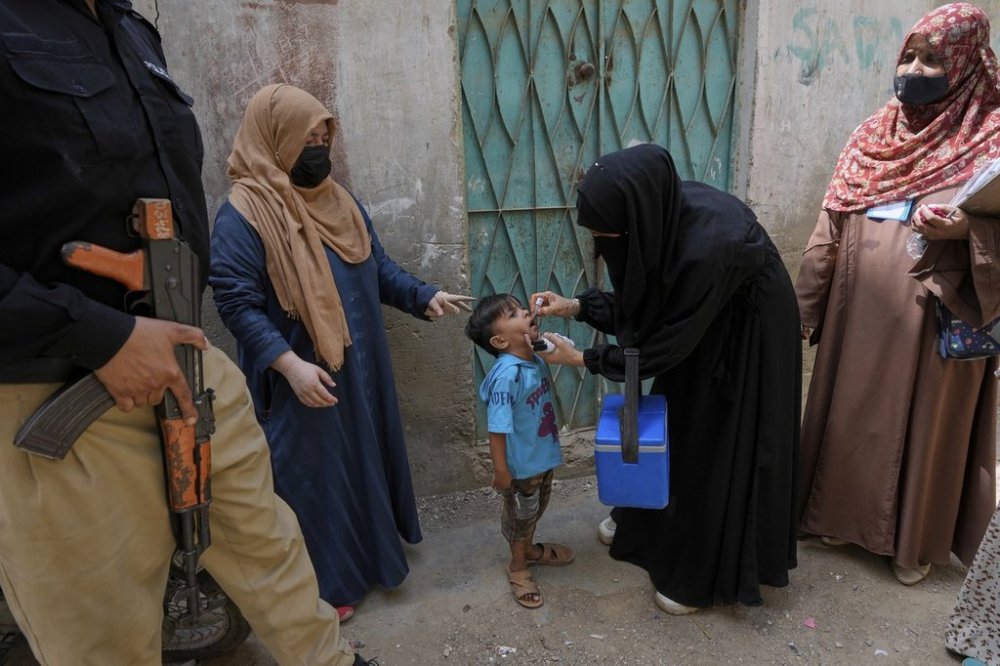
Here are some takeaways from AP’s report on what’s happened in one of the most expensive efforts in all of public health.
Documents show major problems on polio vaccination teams
Internal WHO reports reviewing polio immunization in Afghanistan and Pakistan over the past decade — given to AP by current and former staffers — show that as early as 2017, local workers were alerting problems to senior managers. The documents flagged multiple cases of falsified vaccination records, health workers being replaced by untrained relatives and workers improperly administering vaccines.
On numerous occasions, WHO officials noted, “vaccinators did not know about vaccine management,” citing failure to keep doses properly cold. They also found sloppy or falsified reporting, with workers noting “more used vaccine vials than were actually supplied.”
According to an August 2017 report from Kandahar, Afghanistan, vaccination teams worked “in a hurried manner,” reports said, with “no plan for monitoring.” A team in Nawzad, Afghanistan, covered just half of the intended area in 2017, with 250 households missed entirely. Village elders said no one visited for at least two years.
Polio workers say problems have gone unaddressed
Health officials in Afghanistan and Pakistan told AP their efforts to vaccinate children are often stymied by cultural barriers, misinformation about the vaccines, and poverty.
Sughra Ayaz has traveled door to door in southeastern Pakistan for the past decade, pleading for children to be immunized. Some families demand basics such as food and water instead of vaccines. Others, without citing proof for their beliefs, repeat false rumors and say they think the oral vaccine doses are meant to sterilize their kids.
Ayaz said that given the immense pressure for the campaign to succeed, some managers have instructed workers to falsely mark children as immunized
“In many places, our work is not done with honesty,” she said.
Some scientists blame the oral vaccine
Polio eradication demands perfection — zero polio cases and immunizing more than 95% of children.
But some scientists and former WHO staffers say the campaign’s efforts are far from perfect, blaming in particular the oral vaccine. It’s safe and effective, but in very rare instances, the live virus in the oral vaccine can paralyze a child. In even rarer cases, the virus can mutate into a form capable of starting outbreaks among unimmunized people where vaccination rates are low.
Except for Afghanistan and Pakistan, most polio cases worldwide are linked to the vaccine; several hundred cases have been reported annually since 2021, with at least 98 this year.
Most public health experts agree the oral vaccine should be pulled as soon as possible. But they acknowledge there isn’t enough injectable vaccine — which uses no live virus and doesn’t come with the risks of the oral vaccine — to eliminate polio alone.
The injectable vaccine is more expensive and requires more training to administer.
More than two dozen current and former senior polio officials told AP the agencies involved haven’t been willing to even consider revising their strategy to account for campaign problems.
Last year, former WHO scientist Dr. T. Jacob John twice emailed WHO Director-General Tedros Adhanom Ghebreyesus calling for a “major course correction.” John wrote that “WHO is persisting with polio control and creating polio with one hand and attempting to control it by the other.”
Ahmed told AP the oral vaccine is a “core pillar” of eradication strategy and that “almost every country that is polio-free today used (it) to achieve that milestone.”
Critics say there’s no accountability
Dr. Tom Frieden, who sits on an independent board reviewing polio eradication, said he and colleagues have urged WHO and partners to adapt to obstacles in Afghanistan and Pakistan. Since 2011, the board has issued regular reports about program failures, but had little impact.
“There’s no management,” he said.
With an annual budget of about $1 billion, polio eradication is among the most expensive initiatives in public health. WHO officials have privately admitted that sustaining funding will be difficult without signs of progress.
Roland Sutter, who previously headed polio research at WHO, said donors had spent more than $1 billion in Pakistan trying to get rid of polio in the last five years — and made little progress.
“If this was a private company, we would demand results,” he said.
Ahmed pointed to the program’s many successes.
“Let’s not overdramatize the challenges, because that leads to children getting paralyzed,” he said.
Mistrust of the vaccine persists
Vaccine workers and health officials say it’s hard for campaign leadership to grasp the difficulties in the field. Door-to-door efforts are stymied by cultural barriers, unfounded stories about vaccines, and the region’s poverty and transience.
The campaign is up against a wave of misinformation, including that the vaccine is made from pig urine or will make children reach puberty early. Some blame an anti-vaccine sentiment growing in the U.S. and other countries that have largely funded eradication efforts.
In a mountainous region of southeastern Afghanistan where most people survive by growing wheat and raising cows and chickens, many are wary of the Western-led initiative.
A mother of five said she’d prefer that her children be vaccinated against polio, but her husband and other male relatives have instructed their families to reject it, fearing it will compromise their children’s fertility.
“If I allow it,” the woman said, declining to be named over fears of family retribution, “I will be beaten and thrown out.”
____
Cheng reported from London.
____
The Associated Press Health and Science Department receives support from the Howard Hughes Medical Institute’s Department of Science Education and the Robert Wood Johnson Foundation. The AP is solely responsible for all content.