B.C. First Nation wins rights, title along Fraser River’s south arm in Lower Mainland

Advertisement

Advertise with us

VICTORIA - A Vancouver Island First Nation has won back fishing rights and title for part of the land its ancestors used as a summer home in the Lower Mainland, despite opposition by two other Indigenous communities. 

Read this article for free:


or

Already have an account? Log in here »

To continue reading, please subscribe:

Subscribe and receive a limited-edition Free Press branded hat or tote.

Digital Subscription

One year of digital access for only $205*

  • Enjoy unlimited reading on winnipegfreepress.com
  • Read the E-Edition, our digital replica newspaper
  • Access News Break, our award-winning app
  • Play interactive puzzles

*First annual payment billed as $205.00 + GST for one year. This annual subscription will automatically renew at $233.00 + GST every 52 weeks (10% off the regular annual price of $259.35). Offer available to new and qualified returning subscribers only. Cancel any time.

To continue reading, please subscribe:

Add Free Press access to your Brandon Sun subscription for only an additional

$1 for the first 4 weeks*

  • Enjoy unlimited reading on winnipegfreepress.com
  • Read the E-Edition, our digital replica newspaper
  • Access News Break, our award-winning app
  • Play interactive puzzles
Start now

*Your next Brandon Sun subscription payment will increase by $1.00 and you will be charged $17.95 plus GST for four weeks. After four weeks, your payment will increase to $24.95 plus GST every four weeks.

Hey there, time traveller!
This article was published 08/08/2025 (414 days ago), so information in it may no longer be current.

VICTORIA – A Vancouver Island First Nation has won back fishing rights and title for part of the land its ancestors used as a summer home in the Lower Mainland, despite opposition by two other Indigenous communities. 

A B.C. Supreme Court judge says in a written decision posted Friday that the Cowichan Tribes have established fishing rights on the Fraser River and title to a portion of almost 7 1/2 square kilometres of land they claimed on Lulu Island in Richmond, B.C.

The Musqueam and Tsawwassen First Nations, along with the federal and provincial governments, the City of Richmond and the Vancouver-Fraser Port Authority all opposed the claim during the 513-day trial. 
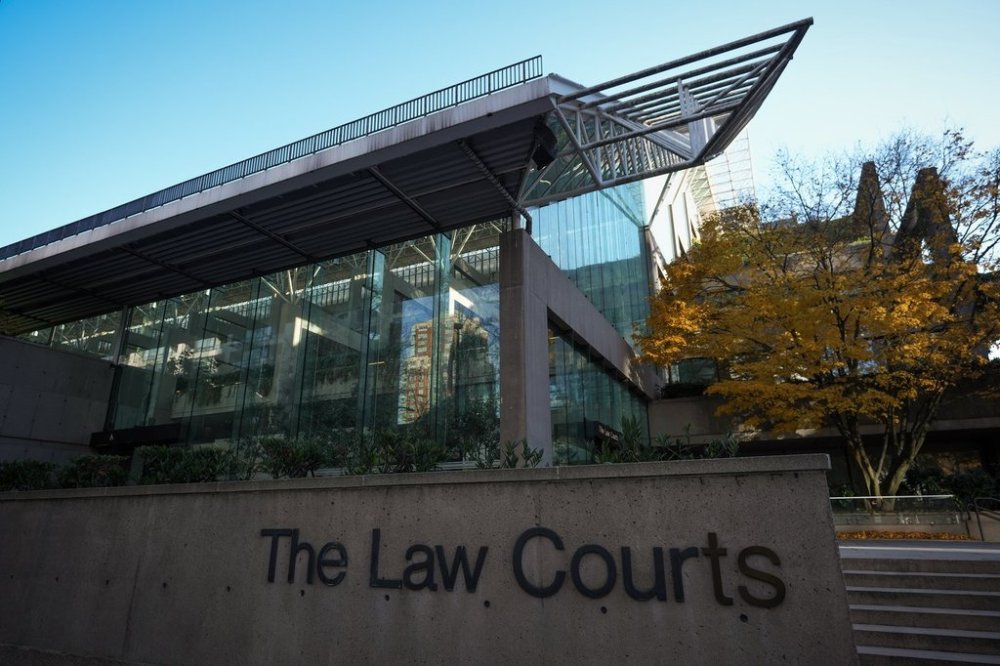
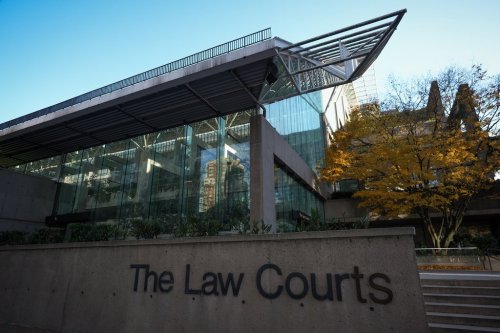
The Law Courts building, which is home to B.C. Supreme Court and the Court of Appeal, is seen in Vancouver, on Thursday, Nov. 23, 2023. THE CANADIAN PRESS/Darryl Dyck

Justice Barbara Young ruled that land titles grants issued by the Canadian and B.C. governments to others “are defective and invalid” as they “unjustifiably infringe the Cowichan Nation Aboriginal title to these lands.”

The decision says both governments owe a duty to negotiate with the nation “in good faith” on how to reconcile its land title with what’s now in the territory, including the Vancouver Airport Fuel Delivery Project property. 

B.C. Premier David Eby says in a response that the province is reviewing the decision for a possible appeal and will also seek to resolve the issue by negotiating with all nations involved.

“But let me be clear: owning private property with clear title is key to borrowing for a mortgage, economic certainty, and the real estate market,” Eby says.

“We remain committed to protecting and upholding this foundation of business and personal predictability, and our provincial economy, for Indigenous and non-Indigenous people alike.”

The area where the Cowichan have established title was used by the nation’s ancestors during the summer as a “permanent post and beam village” but was never established as a reserve, resulting in B.C. giving away the land starting in 1871.

The Musqueam Indian Band — which declared in 1976 that it holds the Aboriginal title covering both the north and south arms of the Fraser River — says in a statement that it is deeply disappointed and “fundamentally” disagrees with the court decision.

It says that it has established “national legal precedent on Aboriginal title and fishing rights” through two major cases in the Supreme Court of Canada, and it plans to “continue to vigorously defend these rights.”

“Musqueam is shocked the court didn’t give effect to oral history and traditional governance protocols, which guide intercommunity relationships since time immemorial,” the statement says.

Musqueam Chief Wayne Sparrow said in an interview that the land in question is in the heart of the nation’s territory and double the size of the Musqueam reserve.

“We’re disappointed, but not surprised. We’ve been down this path many times before,” he said.

“We’ve had decisions that the lower courts go against us, and we brought them to the higher courts and were successful there. And those are the options that we’re going to be looking at in the next week or so.”

All parties have 30 days to decide if they will appeal.

The Vancouver Fraser Port Authority says in a statement that it is reviewing the implications and details of the decision alongside other affected federal government departments, and further updates will be provided at an appropriate time.

The Cowichan Tribes says in a news release that it is “celebrating a historic victory,” while honouring “generations of leaders” in the community who fought to win the Aboriginal title on the Fraser River land.

“It is in their honour and for the well-being of our future generations that the elders, knowledge holders, and chiefs who have gone before us brought this case forward to recognize our Aboriginal title and fishing rights, as a basis for truth and reconciliation, through the courts,” it says. 

Young says in the decision that while evidence shows a number of Coast Salish groups being historically located in the lower Fraser River region, some places, such as the area of the Cowichan claim, “belonged to specific groups.”

The judge says the Cowichan “had the capacity and intention to exclusively control their village land and some surrounding areas on the south arm of the Fraser River” before 1846, when the British Crown asserted sovereignty in the area. 

“This was the Cowichan village,” the ruling says. “It belonged to the Cowichan, and other groups respected that it was on Cowichan land.

“The Cowichan exercised effective control over their land. There is no evidence of other Indigenous groups occupying this village.”

The court recognizes that the case “raised complex … and novel issues,” its decision says. 

“The fact is, all the parties have continued interests, rights and obligations around the south arm of the Fraser River and limited resources need to be shared and preserved,” Young says in the decision.

“Now that this multi‑year journey has concluded, it is my sincere hope that the parties have the answers they need to return to negotiations and reconcile the outstanding issues.”

This report by The Canadian Press was first published Aug. 8, 2025. 
Report Error Submit a Tip

More Stories

U of W marks 10 years of Indigenous education requirement

Maggie Macintosh 5 minute read Preview

U of W marks 10 years of Indigenous education requirement

Maggie Macintosh 5 minute read Yesterday at 2:00 AM CDT

The University of Winnipeg is collecting course outlines, historic concerns about systemic racism on campus and related records to mark the 10-year anniversary of mandating Indigenous studies.

The unveiling of a new archive drew nearly 200 people to Centennial Hall on Thursday afternoon to reflect on how the Indigenous course requirement, also known as “the ICR,” came to be.

University archivist Brett Lougheed told the crowd its inception is “an amazing story” of student activism that, until now, wasn’t accurately reflected in U of W records.

“What little material we had told the story of administration’s role in developing the ICR as though it was the ultimate driver… and not a student-led response to racism,” Lougheed said.

Read
Yesterday at 2:00 AM CDT

Sequestered skivvies seem like last straw

Maureen Scurfield 5 minute read Yesterday at 2:00 AM CDT

DEAR MISS LONELYHEARTS: My husband, who earns a hefty income, stayed in the city most of the summer working, except for a few long weekends with the kids and me at the cottage. He has giant work projects that need daily tending.

I work hard, too, with our four kids, two dogs and a cat. But I have to tell you I got a shock last week after coming home to organize my family team for a thorough cleaning of our three-storey home.

You’ll never guess what they found up in the attic — hidden boxes of sexy women’s lingerie that all looks brand-new.

I’ve kept my mouth shut so far, but my mind is spinning.

How confusing; seems there’s more than one candidate in Hanover named Shayne Barkman

Dan Lett 5 minute read Preview

How confusing; seems there’s more than one candidate in Hanover named Shayne Barkman

Dan Lett 5 minute read Thursday, Sep. 24, 2026

It’s not entirely clear when or why Hanover trustee Shayne Barkman became one of Manitoba’s best-known anti-LGBTTQ+ crusaders.

Back in 2022, when he ran as a candidate for Hanover school board for the first time, there was nary a hint that socially conservative culture wars were going to be a large part of his identity as an elected official.

In a Steinbach Online profile published before the 2022 municipal elections, Barkman highlighted his background as a successful farmer. He said he was entering politics to be a “listening ear” who could promote understanding.

“I would love to kind of just be a voice of reason amongst all the problems coming down the pipe,” Barkman said

Read
Thursday, Sep. 24, 2026

B.C. First Nation wins rights, title along Fraser River’s south arm in Lower Mainland

The Canadian Press 5 minute read Preview

B.C. First Nation wins rights, title along Fraser River’s south arm in Lower Mainland

The Canadian Press 5 minute read Friday, Aug. 8, 2025

VICTORIA - A Vancouver Island First Nation has won back fishing rights and title for part of the land its ancestors used as a summer home in the Lower Mainland, despite opposition by two other Indigenous communities. 

A B.C. Supreme Court judge says in a written decision posted Friday that the Cowichan Tribes have established fishing rights on the Fraser River and title to a portion of almost 7 1/2 square kilometres of land they claimed on Lulu Island in Richmond, B.C.

The Musqueam and Tsawwassen First Nations, along with the federal and provincial governments, the City of Richmond and the Vancouver-Fraser Port Authority all opposed the claim during the 513-day trial. 

Justice Barbara Young ruled that land titles grants issued by the Canadian and B.C. governments to others "are defective and invalid" as they "unjustifiably infringe the Cowichan Nation Aboriginal title to these lands."

Read
Friday, Aug. 8, 2025

New series terrific addition to RWB repertoire

Holly Harris 5 minute read Preview

New series terrific addition to RWB repertoire

Holly Harris 5 minute read 2:01 AM CDT

‘See the music, hear the dance,” is a famous quote from quintessential ballet influencer George Balanchine, whose pithy bons mots have defined much of American classical dance since the legendary Russian-born choreographer first blazed a trail with the New York City Ballet.

Local balletomanes were given a golden opportunity to experience both up-close-and-personal Thursday when the Royal Winnipeg Ballet officially kicked off its 87th season with its newly minted Studio Series, which runs until Sunday.

The brainchild of the company’s artistic director, Christopher Stowell, the series features an abridged “concert version” of Balanchine’s seminal Who Cares?, set to a playlist of catchy George Gershwin tunes that make up the backbone of the Great American Songbook.

The Studio Series is the latest initiative taken by Stowell as he settles into his arguably still new position. Some of those endeavours will invariably stumble; others will hit their mark. This venture belongs in the latter category, bringing a 500-plus-year-old art form, often perceived as rarified, to audience members who may be hesitant, shy or just plain intimidated to visit the cavernous Centennial Concert Hall.

Read
2:01 AM CDT

Winnipeg a character all its own onscreen

Jen Zoratti 4 minute read Preview

Winnipeg a character all its own onscreen

Jen Zoratti 4 minute read 2:01 AM CDT

Watch something shot in Winnipeg with a Winnipegger, and you will be treated to a live running commentary. We can’t help playing “spot the location.”

When we recognize that field/statue/mall/intersection/theatre, we have to say it. It’s practically civically mandated.

A friend told me she was at a film screening at which people literally applauded footage of the Mint. (That likely would have been 2005’s The Constant Gardener.)

Being excited about seeing Portage Place Mall at Christmastime in the trailer for Violent Night 2 — and then exclaiming, to your husband, “Oh, look, it’s Portage Place Mall at Christmastime!” — is not, I will admit, particularly cosmopolitan behaviour. In fact, I could be accused of suffering from a mild case of Podunkitis.

Read
2:01 AM CDT