Climate change made Atlantic Canada heat wave at least 10 times more likely: ECCC

Advertisement

Advertise with us

Human-caused climate change made a record-breaking heat wave in Atlantic Canada far more likely, federal climate scientists said Wednesday, as they released a new analysis of 10 of Canada's hottest heat events in July and August. 

Read this article for free:


or

Already have an account? Log in here »

To continue reading, please subscribe:

Subscribe and receive a limited-edition Free Press branded hat or tote.

Digital Subscription

One year of digital access for only $205*

  • Enjoy unlimited reading on winnipegfreepress.com
  • Read the E-Edition, our digital replica newspaper
  • Access News Break, our award-winning app
  • Play interactive puzzles

*First annual payment billed as $205.00 + GST for one year. This annual subscription will automatically renew at $233.00 + GST every 52 weeks (10% off the regular annual price of $259.35). Offer available to new and qualified returning subscribers only. Cancel any time.

To continue reading, please subscribe:

Add Free Press access to your Brandon Sun subscription for only an additional

$1 for the first 4 weeks*

  • Enjoy unlimited reading on winnipegfreepress.com
  • Read the E-Edition, our digital replica newspaper
  • Access News Break, our award-winning app
  • Play interactive puzzles
Start now

*Your next Brandon Sun subscription payment will increase by $1.00 and you will be charged $17.95 plus GST for four weeks. After four weeks, your payment will increase to $24.95 plus GST every four weeks.

Hey there, time traveller!
This article was published 17/09/2025 (363 days ago), so information in it may no longer be current.

Human-caused climate change made a record-breaking heat wave in Atlantic Canada far more likely, federal climate scientists said Wednesday, as they released a new analysis of 10 of Canada’s hottest heat events in July and August. 

The results suggest the weeklong heat wave over Atlantic Canada was made at least 10 times more likely because of climate change. That was more than any of the others, said Environment and Climate Change Canada research scientist Nathan Gillett.

Figuring out how much human influence — largely from the burning of fossil fuels — is increasing the likelihood of dangerous weather extremes can help decisionmakers “better plan for, better respond to and better (rebuild) following weather emergencies,” Gillett said.
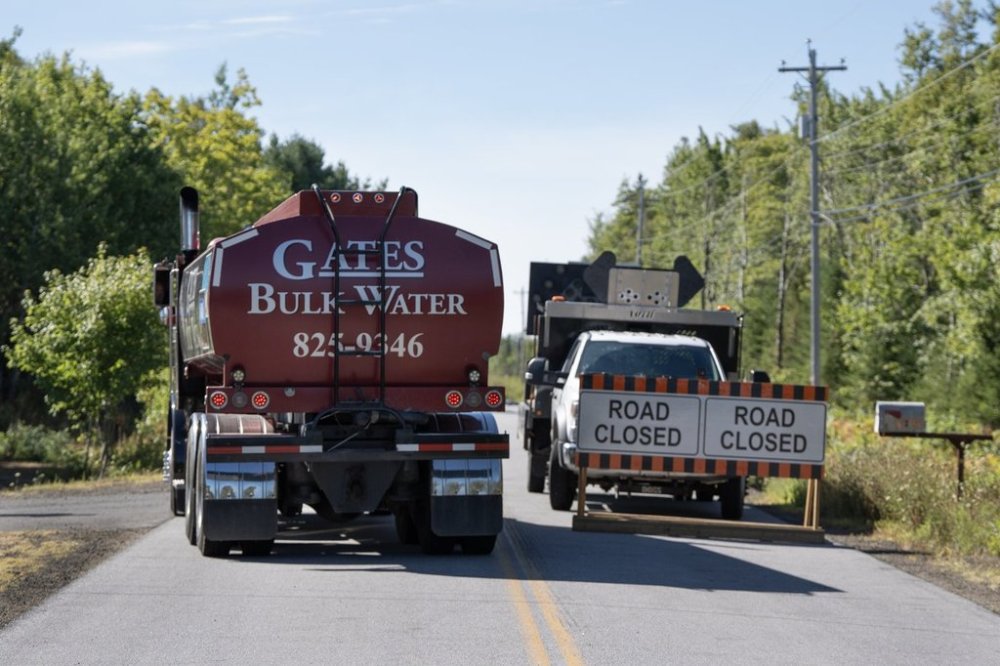
A bulk water delivery truck passes a checkpoint into the evacuation area where firefighters are battling the Long Lake wildfire in Nova Scotia's Annapolis County, outside the community of West Dalhousie, N.S., on Tuesday, Aug. 19, 2025. THE CANADIAN PRESS/Darren Calabrese

“Heat waves are one of the most dangerous, if not the most dangerous weather-related hazard both globally and in Canada,” he said Wednesday. 

“Understanding how the risks are changing can help inform decision-making to protect the health, safety and property of Canadians. And it can also help planning climate change adaptation efforts.”

The Atlantic Canada heat wave from Aug. 7 to 14 saw the region’s average peak daily temperatures soar almost 10 degrees above normal.

Maple Plains, P.E.I., set an all-time provincial temperature record on Aug. 12 when the mercury rocketed up to 38 C. Newfoundland’s Avalon Peninsula saw a record seven days of consecutive heat warnings. 

Scientists with ECCC came up with their results by comparing models of the Earth’s current and pre-industrial climate to see how carbon dioxide and other planet-warming emissions increased the chances of extreme heat. 

They break Canada down into 17 broad regions and will only analyze a heat wave when temperatures exceed the typical hottest day of the year for that region. 

The other nine heat waves analyzed in July and August were all made at least two to 10 times more likely due to climate change, Gillett said.

That included the late-August heat waves over Alberta and Fort Smith, N.W.T., and a three-day long July heat wave over northern Quebec. 

The federal scientists have also started to do similar studies of extreme precipitation, and plan to start releasing those results later this year. 

This report by The Canadian Press was first published Sept. 17, 2025. 
Report Error Submit a Tip

More Stories

Premier touts Port of Churchill opportunities at Canadian investment summit

Carol Sanders 5 minute read Preview

Premier touts Port of Churchill opportunities at Canadian investment summit

Carol Sanders 5 minute read Updated: Yesterday at 6:58 PM CDT

Premier Wab Kinew announced Monday that major capital investments in the Port of Churchill Plus project will receive an exemption from Manitoba’s seven per cent retail sales tax.

Kinew made the announcement at the start of the two-day Canada investment summit in Toronto. The premier made the pitch to a room of 250 Canadian and global investors representing more than US$13 trillion in assets.

“We are here in Toronto to tell global investors that the Port of Churchill is open and ready to expand,” Kinew told the Canadian Global Growth Forum, a provincial government news release said.

“These new capital incentives make it easier for investors to get in on the ground floor of the largest project featured at the Canada investment summit. The grain and critical minerals we are already shipping out of the port are reaching Europe faster than the Port of Vancouver. With the right investments we can ship commodities year-round, strengthening trade between reliable partners and creating good jobs,” the premier, who was not made available for an interview, said in the release.

Read
Updated: Yesterday at 6:58 PM CDT

Seven years sought for serial harasser

Dean Pritchard 5 minute read Preview

Seven years sought for serial harasser

Dean Pritchard 5 minute read 2:01 AM CDT

Alexander Beaton finished serving a two-year jail sentence for criminally harassing six women and didn’t last two days in the community before he was back at it, sending unwanted obscene messages and videos to a dozen women.

Now prosecutors are seeking a seven-year prison sentence for the 30-year-old Winnipeg man, whose latest string of victims includes a police officer who investigated his earlier crimes.

“He essentially continued (offending) unabated,” Crown attorney Brett Rach told provincial court Judge Malcolm McDonald at a sentencing hearing Friday. “It caused more than a nuisance to these victims — it caused them to fear for their safety.”

Beaton pleaded guilty to 14 charges of criminal harassment, sending indecent communications and breaching court orders for a campaign of harassment waged between 2015 and 2025.

Read
2:01 AM CDT

Son found guilty in hatchet slaying of his mother

Tessa Adamski 3 minute read 2:01 AM CDT

BRANDON — A Brandon man has been found guilty of killing his 71-year-old mother with a hatchet in the fall of 2023 after his lawyers argued he should be held not criminally responsible.

Court of King’s Bench Justice Elliot Leven found 47-year-old Gabriel Heymans guilty of second-degree murder on Monday.

Heymans, who listened to the hearing by phone from the Brandon Regional Health Centre, will be sentenced at a later date.

During the April trial, court heard Heymans lived with his mother, Maureen Heymans, for seven years in a two-bedroom apartment in Brandon and hadn’t spoken to her for more than a year before her death.

Nothing wrong with planting trees, but it won’t get province very far on path to net zero

Dan Lett 5 minute read Preview

Nothing wrong with planting trees, but it won’t get province very far on path to net zero

Dan Lett 5 minute read Yesterday at 2:39 PM CDT

Manitoba’s new plan to achieve net zero carbon emissions by 2050 is a lot of things. It’s detailed. It’s certainly comprehensive in scope. But when it is all said and done, it is still very much a work in progress.

Read
Yesterday at 2:39 PM CDT

Winnipeg and choosing its future direction

Kate Kehler 5 minute read 2:00 AM CDT

Winnipeg, the capital of ‘Friendly Manitoba’, is becoming far less friendly to anyone who is struggling to survive. The city is also less and less supportive of the not-for-profit sector which struggles to support those struggling to survive.

Municipal politicians have long insisted that social services are provincial responsibilities. However, the city charter makes it clear that mayor and council are “to promote and maintain the health, safety and welfare of the inhabitants.”

Mayor and council are empowered to decide how they do that. Every four years, we citizens get to vote on what we think and feel about those decisions. That’s our democracy, weighted against the disenfranchised though it is.

In 2022, only 37.17 per cent of eligible voters, the lowest percentage since 1989, voted. Recent Probe Research data demonstrates that only one-third of Winnipeggers believe the next mayor and council will make even a minor difference in addressing Winnipeg’s challenges, and another third believe they will make no difference at all.

Film fest showcases Africa’s best

Ben Waldman 5 minute read Preview

Film fest showcases Africa’s best

Ben Waldman 5 minute read 2:00 AM CDT

Winnipeggers are sometimes accused of living within the Perimeter, meaning a visit to Ouagadougou, the capital city of Burkina Faso, might be out of the question for your weekend travel plans.

But the African Film Festival in Manitoba — which kicked off Monday and runs to Sept. 20 — gives local audiences three feature-length opportunities to embrace stories from a nation that’s widely considered the home of African cinema.

Chief among these is Katanga, a tense re-imagining of Shakespeare’s Scottish play told in the Fulah language. Directed and written by Dani Kouyaté, the film was the winner of the the Etalon D’or — the top prize — at last year’s FESPACO, a biennial celebration of Pan-African film and television held in Ouagadougou.

Starring Mahamadi Nana and Prosper Compaore, the film also features a striking, late-career performance by Rasmané Ouédraogo, who starred in the Palme d’Or winner Tilaï — in which a man returns to his village to find his fiancee has become his father’s second wife — in 1990.

Read
2:00 AM CDT