Trump signs proclamation adding $100K annual fee for H-1B visa applications
Advertisement
Read this article for free:
or
Already have an account? Log in here »
To continue reading, please subscribe:
Digital Subscription
One year of digital access for only $1.44 a week*
- Enjoy unlimited reading on winnipegfreepress.com
- Read the E-Edition, our digital replica newspaper
- Access News Break, our award-winning app
- Play interactive puzzles
*Billed as $5.77 plus GST every four weeks. After 52 weeks, price increases to the regular rate of $19.95 plus GST every four weeks. Offer available to new and qualified returning subscribers only. Cancel any time.
To continue reading, please subscribe:
Add Free Press access to your Brandon Sun subscription for only an additional
$1 for the first 4 weeks*
- Enjoy unlimited reading on winnipegfreepress.com
- Read the E-Edition, our digital replica newspaper
- Access News Break, our award-winning app
- Play interactive puzzles
*Your next Brandon Sun subscription payment will increase by $1.00 and you will be charged $17.95 plus GST for four weeks. After four weeks, your payment will increase to $24.95 plus GST every four weeks.
Read unlimited articles for free today:
or
Already have an account? Log in here »
Hey there, time traveller!
This article was published 19/09/2025 (398 days ago), so information in it may no longer be current.
WASHINGTON (AP) — President Donald Trump on Friday signed a proclamation that will require a $100,000 annual visa fee for highly-skilled foreign workers and rolled out a $1 million “gold card” visa as a pathway to U.S. citizenship for wealthy individuals, moves that face near-certain legal challenges amid widespread criticism he is sidestepping Congress.
If the moves survive legal muster, they will deliver staggering price increases. The visa fee for skilled workers would jump from $215. The fee for investor visas, which are common in many European countries, would climb from $10,000-$20,000 a year.
H-1B visas, which require at least a bachelor’s degree, are meant for high-skilled jobs that tech companies find difficult to fill. Critics say the program is a pipeline for overseas workers who are often willing to work for as little as $60,000 annually, well below the $100,000-plus salaries typically paid to U.S. technology workers.
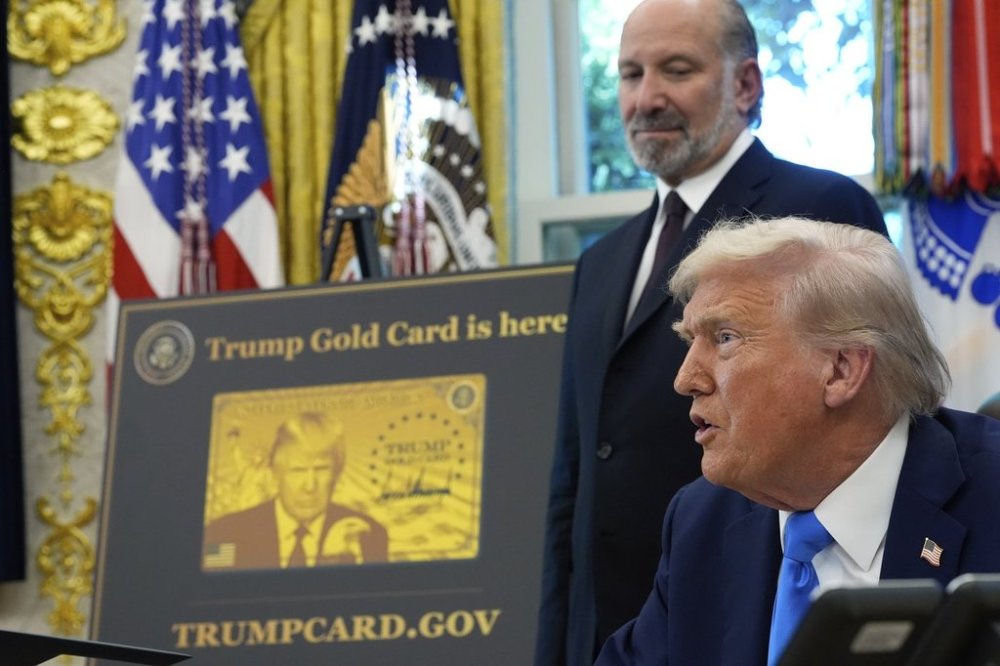
Trump on Friday insisted that the tech industry would not oppose the move. Commerce Secretary Howard Lutnick said “all big companies” are on board.
Representatives for the biggest tech companies, including Amazon, Apple, Google and Meta, did not immediately respond to messages for comment on Friday. Microsoft declined to comment.
Lutnick said the change will likely result in far fewer H-1B visas than the 85,000 annual cap allows because “it’s just not economic anymore.”
“If you’re going to train people, you’re going to train Americans.” Lutnick said on a conference call with reporters. “If you have a very sophisticated engineer and you want to bring them in … then you can pay $100,000 a year for your H-1B visa.”
Trump also announced he will start selling a “gold card” visa with a path to U.S. citizenship for $1 million after vetting. For companies, it will cost $2 million to sponsor an employee.
The “Trump Platinum Card” will be available for a $5 million and allow foreigners to spend up to 270 days in the U.S. without being subject to U.S. taxes on non-U.S. income. Trump announced a $5 million gold card in February to replace an existing investor visa — this is now the platinum card.
Lutnick said the gold and platinum cards would replace employment-based visas that offer paths to citizenship, including for professors, scientists, artists and athletes.
Critics of H-1Bs visas who say they are used to replace American workers applauded the move. U.S. Tech Workers, an advocacy group, called it “the next best thing” to abolishing the visas altogether.
Doug Rand, a senior official at U.S. Citizenship and Immigration Services during the Biden administration, said the proposed fee increase was “ludicrously lawless.”
“This isn’t real policy — it’s fan service for immigration restrictionists,” Rand said. “Trump gets his headlines, and inflicts a jolt of panic, and doesn’t care whether this survives first contact with the courts.”
Lutnick said the H-1B fees and gold card could be introduced by the president but the platinum card needs congressional approval.
Historically, H-1B visas have been doled out through lottery. This year, Amazon was by far the top recipient of H-1B visas with more than 10,000 awarded, followed by Tata Consultancy, Microsoft, Apple and Google. Geographically, California has the highest number of H-1B workers.
Critics say H-1B spots often go to entry-level jobs, rather than senior positions with unique skill requirements. And while the program isn’t supposed to undercut U.S. wages or displace U.S. workers, critics say companies can pay less by classifying jobs at the lowest skill levels, even if the specific workers hired have more experience.
As a result, many U.S. companies find it cheaper to contract out help desks, programming and other basic tasks to consulting companies such as Wipro, Infosys, HCL Technologies and Tata in India and IBM and Cognizant in the U.S. These consulting companies hire foreign workers, often from India, and contract them out to U.S. employers looking to save money.
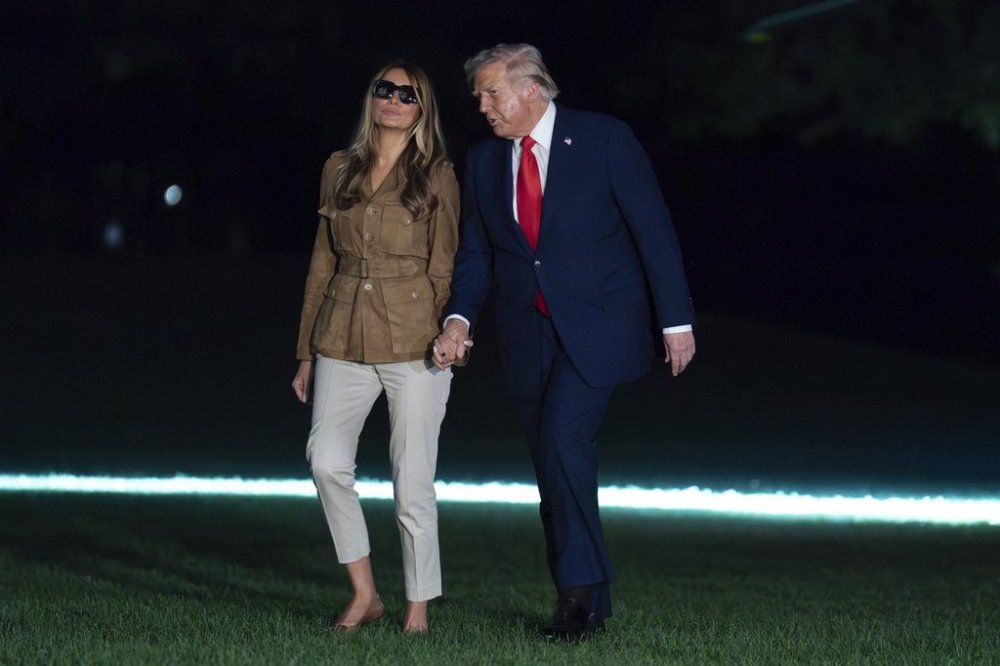
First lady Melania Trump, the former Melania Knauss, was granted an H-1B work visa in October 1996 to work as a model. She was born in Slovenia.

In 2024, lottery bids for the visas plunged nearly 40%, which authorities said was due to success against people who were “gaming the system” by submitting multiple, sometimes dubious, applications to unfairly increase chances of being selected.
Major technology companies that use H-1B visas sought changes after massive increases in bids left their employees and prospective hires with slimmer chances of winning the random lottery. Facing what it acknowledged was likely fraud and abuse, USCIS this year said each employee had only one shot at the lottery, whether the person had one job offer or 50.
Critics welcomed the change but said more needs to be done. The AFL-CIO wrote last year that while changes to the lottery “included some steps in the right direction,” it fell short of needed reforms. The labor group wants visas awarded to companies that pay the highest wages instead of by random lottery, a change that Trump sought during his first term in the White House.
___
Ortutay reported from Oakland, Calif. Associated Press writers Adriana Gomez Licon in Ft. Lauderdale, Fla., and Elliot Spagat in San Diego contributed to this report.