Roasters and cafés grapple with rising coffee bean prices
Advertisement
Read this article for free:
or
Already have an account? Log in here »
To continue reading, please subscribe:

Digital Subscription
One year of digital access for only $205*
- Enjoy unlimited reading on winnipegfreepress.com
- Read the E-Edition, our digital replica newspaper
- Access News Break, our award-winning app
- Play interactive puzzles
*First annual payment billed as $205.00 + GST for one year. This annual subscription will automatically renew at $233.00 + GST every 52 weeks (10% off the regular annual price of $259.35). Offer available to new and qualified returning subscribers only. Cancel any time.
To continue reading, please subscribe:
Add Free Press access to your Brandon Sun subscription for only an additional
$1 for the first 4 weeks*
- Enjoy unlimited reading on winnipegfreepress.com
- Read the E-Edition, our digital replica newspaper
- Access News Break, our award-winning app
- Play interactive puzzles
*Your next Brandon Sun subscription payment will increase by $1.00 and you will be charged $17.95 plus GST for four weeks. After four weeks, your payment will increase to $24.95 plus GST every four weeks.
Read unlimited articles for free today:
or
Already have an account? Log in here »
Hey there, time traveller!
This article was published 06/10/2025 (325 days ago), so information in it may no longer be current.
Your daily cup of java is getting a little more expensive as roasters and cafés grapple with rising coffee bean prices.
Climate change has been the biggest contributor to the ongoing surge in bean prices, as coffee crops are very sensitive to temperature changes, said Michael von Massow, food economist at the University of Guelph.
“We’ve seen some increases in disease and some decreases in yield that have lowered supply, and basic economics 101 — when supply goes down, prices go up,” he said in an interview on Monday.
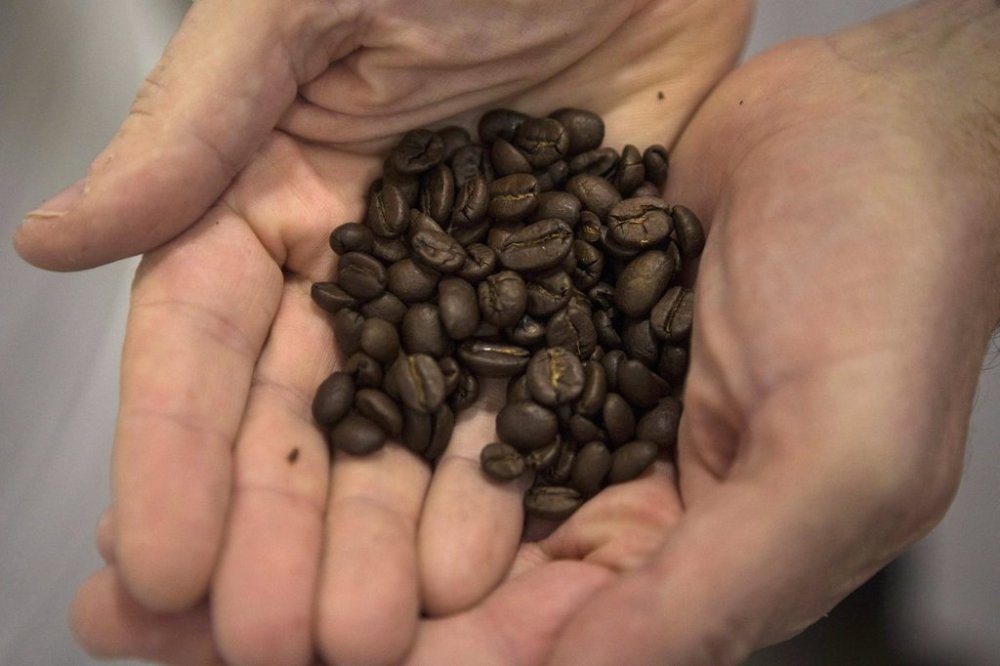
Coffee prices have remained high amid concerns of dry weather in Brazil, a major coffee-producing country.
That’s making your daily cup of coffee more expensive, whether you’re brewing it at home or buying a coffee at a café. Statistics Canada data shows Canadians paid 27.9 per cent more for their coffee at a grocery store in August compared with a year earlier.
Robert Carter, president of the Coffee Association of Canada, said the surge in coffee prices is a continuation of what roasters and cafés saw last year.
“The commodity side is still fluctuating, and the production side, we’re still seeing limited production challenges out of various countries such as Colombia and Brazil,” he said.
Carter said cafés and coffee bean roasters were already struggling with rising operational costs, such as with packaging and labour, and now coffee bean prices are adding to their challenges.
“The cost of goods, which coffee would fall into, has definitely seen an increase … within the double digits,” he said.
Coffee prices are also seeing added price pressures from tariffs, even as Canada dropped its counter-tariffs in September.
Von Massow suspects price fluctuations are likely hurting smaller roasters in Canada more than larger players who buy directly from producers. Small-scale coffee roasters typically buy coffee beans from brokers who aggregate supply from farmers and coffee-producing countries.
“The smaller roasters are going to get squeezed, everyone gets squeezed, as costs go up because we as consumers are resistant to price increases and they don’t want to see volume go down,” he said.
Von Massow said it will be more difficult for smaller roasters to pass down costs to their customers.
“They’ve always differentiated not on price, but on product,” he said of smaller roasters. “But the greater the price disparity is, the less their demand will be.”
However, some costs will be mitigated for these roasters as the impact of counter-tariffs start to wear off, von Massow said. Meanwhile, other costs are likely to be passed on to customers.
“We’re seeing big companies start to announce some price increases as the shortages become more sustained,” he said.
Coffee chain Tim Hortons said it will increase the price of its coffee by an average of three cents per cup.
“This is the first time in about three years that we’ve adjusted the price of coffee,” said Michael Oliveira, director of communications at Tim Hortons, in an email.
“This is significantly below inflation and reflects our commitment to great value and everyday low prices for our guests.”
Speculation on coffee futures — a way of measuring commodity prices based on contracts for future delivery in a publicly-traded market — have also amplified price pressures.
“The coffee market has been on a roller-coaster for the past year,” said Adam Pesce, president of Oakville, Ont.-headquartered Reunion Coffee Roasters, which sells wholesale and also runs a retail café in Toronto.
Reunion has had to increase prices over the past several months to match its rising costs, said Pesce.

He said market speculators have been active and making a lot of money by holding a longer position on the commodity. Meanwhile, coffee roasters are buying as little as possible, hoping prices might come down.
It has been “a very exhausting, very time-consuming year of watching the market,” compared with previous years when markets were more stable and less erratic, Pesce said.
Von Massow said coffee prices will continue to reflect the climate impacts of an individual year — with some annual yields better than others.
“One thing that we can say definitively is that there’s going to be more variability in prices going forward,” he said.
This report by The Canadian Press was first published Oct. 6, 2025.