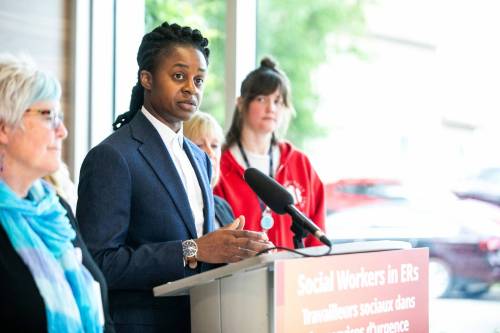
Foundations want to curb AI developers’ influence with $500 million aimed at centering human needs
Advertisement
Read this article for free:
or
Already have an account? Log in here »
To continue reading, please subscribe:

Digital Subscription
One year of digital access for only $205*
- Enjoy unlimited reading on winnipegfreepress.com
- Read the E-Edition, our digital replica newspaper
- Access News Break, our award-winning app
- Play interactive puzzles
*First annual payment billed as $205.00 + GST for one year. This annual subscription will automatically renew at $233.00 + GST every 52 weeks (10% off the regular annual price of $259.35). Offer available to new and qualified returning subscribers only. Cancel any time.
To continue reading, please subscribe:
Add Free Press access to your Brandon Sun subscription for only an additional
$1 for the first 4 weeks*
- Enjoy unlimited reading on winnipegfreepress.com
- Read the E-Edition, our digital replica newspaper
- Access News Break, our award-winning app
- Play interactive puzzles
*Your next Brandon Sun subscription payment will increase by $1.00 and you will be charged $17.95 plus GST for four weeks. After four weeks, your payment will increase to $24.95 plus GST every four weeks.
Read unlimited articles for free today:
or
Already have an account? Log in here »
Hey there, time traveller!
This article was published 14/10/2025 (297 days ago), so information in it may no longer be current.
NEW YORK (AP) — Artificial intelligence is a matter of design — not destiny.
That’s the message from ten philanthropic foundations aiming to loosen the grip that the technology’s moneyed developers, fueled by an investing frenzy, hold over its evolution. Launched Tuesday under the name Humanity AI, the coalition is committing $500 million across the next five years to place human interests at the forefront of the technology’s rapid integration into daily life.
“The future belongs to those who actively create it, and that shan’t be a few leaders in Silicon Valley. It’s all of us,” Mozilla Foundation Executive Director Nabiha Syed said in an emailed statement. “The systems shaping our lives must be powered by people, open by design, and fueled by imagination.”
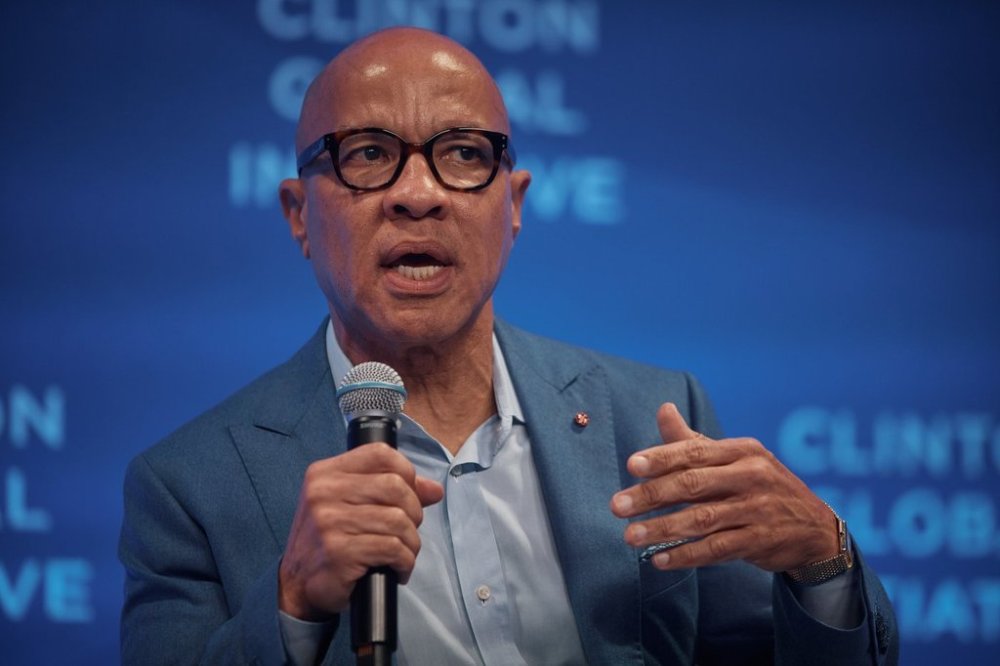
Artificial intelligence has been embraced as a productivity booster in fields such as software engineering or medicine. It could help students with a range of visual, speech, language and hearing impairments to execute tasks that come easily to others. Humanitarian groups are testing its ability to translate important documents for refugees. And some farmers find it useful for detecting pests in their hard-to-survey fields.
But others question whether its deployment is actually improving their quality of life. Some point out that real harms exist for children turning to AI chatbots for companionship. AI-generated deepfake videos contribute to the online spread of misinformation and disinformation. The electricity-hungry systems’ reliance on energy generated by fossil fuels contributes to climate change. And economists fear AI is taking jobs from young or entry-level workers.
The problem, according to Omidyar Network President Michele L. Jawando, is that tech giants aren’t investing en masse in the first set of use cases. They’re focused on products that may or may not help humans thrive.
Jawando pointed to OpenAI ‘s recent entrance into the online marketplace as an example. At its DevDay last week, the company touted ChatGPT’s new capabilities as a virtual merchant that can sell goods directly for Etsy sellers or deliver food from Uber Eats.
The coalition recognizes the private sector’s desire to maximize profits and governments’ interest in spurring innovation, according to Jawando. But between tech companies’ great influence and the Trump administration’s regulatory rollbacks to speed up AI technology construction, she said philanthropic leaders recognized the need for more capital and more collaboration to amplify the voice of civil society.
Jawando said Humanity AI’s role is identifying what “flourishing” looks like in a world with artificial intelligence.
“Most of what we’re offered right now is efficiency. But that’s not flourishing,” she said. “I don’t want my life to be efficient. I want my life to flourish. I want it to feel rich and robust and healthy and safe.”
Led by the MacArthur Foundation and Omidyar Network, Humanity AI seeks to take back agency by supporting technology and advocates centering people and the planet. Members must make grants in at least one of five priority areas identified by the coalition: advancing democracy, strengthening education, protecting artists, enhancing work or defending personal security.
MacArthur Foundation President John Palfrey said he is particularly focused on creating opportunity for early career professionals, regardless of their education levels.
He acknowledged that some young job seekers are questioning the ideal of the “American Dream,” that one can make a better life for themselves than the previous generation. But that wouldn’t be the case, he suggested, if decisions about artificial intelligence began with the question: how do we ensure a brighter future for individuals and their families?
“That’s a very different orientation than ‘How do we invest to make the LLMs be the biggest and fastest,’ right?” Palfrey told The Associated Press, referring to a form of AI known as a large language model that trains on massive bodies of text. “It’s an orientation that centers opportunity and young people.”
The alliance of a broad range of philanthropies underscores the widespread concern. Its ranks represent humanities funders such as the Mellon Foundation, tacklers of inequality in the Ford Foundation, an open internet grantmaker in the Mozilla Foundation, education funders such as Lumina Foundation, charitable behemoths such as the David and Lucile Packard Foundation, racial equity supporters such as the Kapor Foundation and groups like the Siegel Family Endowment that have long explored technology’s societal impacts.

They’re not the first philanthropic coalition to emerge this year with the goal of ensuring everyday people don’t get left behind. The Gates Foundation and Ballmer Group were among the funders who announced in July that they’d spend $1 billion over 15 years to help create AI tools for public defenders, parole officers, social workers and others who help Americans in precarious situations. Other efforts seek to improve AI literacy and expand access for entrepreneurs in low-income countries.
Humanity AI hopes to expand its coalition. Partners began coordinating grants this fall and will pool new money next year in a collaborative fund managed by Rockefeller Philanthropy Advisors.
Grantees include the National Black Tech Ecosystem Association, which builds diverse leadership pipelines in STEM; AI Now, a research institute at New York University studying AI’s social implications; and a Howard Law School initiative dedicated to developing AI solutions that advance civil rights. Palfrey said the MacArthur Foundation is increasing its grant to the Pulitzer Center as part of the effort.
___
Associated Press coverage of philanthropy and nonprofits receives support through the AP’s collaboration with The Conversation US, with funding from Lilly Endowment Inc. The AP is solely responsible for this content. For all of AP’s philanthropy coverage, visit https://apnews.com/hub/philanthropy.
Related Articles
The always and never of being watched
Advertisement Advertise With Us
Advertisement Advertise With Us