In a regional first, Uruguay passes a law allowing euthanasia

Advertisement

Advertise with us

MONTEVIDEO, Uruguay (AP) — Uruguay’s senate passed a law decriminalizing euthanasia on Wednesday, putting the South American nation among a handful of other countries where seriously ill patients can legally obtain help to end their lives.

Read this article for free:


or

Already have an account? Log in here »

To continue reading, please subscribe:

Subscribe and receive a limited-edition Free Press branded hat or tote.

Digital Subscription

One year of digital access for only $205*

  • Enjoy unlimited reading on winnipegfreepress.com
  • Read the E-Edition, our digital replica newspaper
  • Access News Break, our award-winning app
  • Play interactive puzzles

*First annual payment billed as $205.00 + GST for one year. This annual subscription will automatically renew at $233.00 + GST every 52 weeks (10% off the regular annual price of $259.35). Offer available to new and qualified returning subscribers only. Cancel any time.

To continue reading, please subscribe:

Add Free Press access to your Brandon Sun subscription for only an additional

$1 for the first 4 weeks*

  • Enjoy unlimited reading on winnipegfreepress.com
  • Read the E-Edition, our digital replica newspaper
  • Access News Break, our award-winning app
  • Play interactive puzzles
Start now

*Your next Brandon Sun subscription payment will increase by $1.00 and you will be charged $17.95 plus GST for four weeks. After four weeks, your payment will increase to $24.95 plus GST every four weeks.

Hey there, time traveller!
This article was published 15/10/2025 (314 days ago), so information in it may no longer be current.

MONTEVIDEO, Uruguay (AP) — Uruguay’s senate passed a law decriminalizing euthanasia on Wednesday, putting the South American nation among a handful of other countries where seriously ill patients can legally obtain help to end their lives.

It makes Uruguay the first country in predominantly Catholic Latin America to allow euthanasia via legislation. Colombia and Ecuador have decriminalized the practice through Supreme Court decisions.

In Chile, left-wing President Gabriel Boric recently revived a push for the approval of an euthanasia bill long stalled in the Senate.
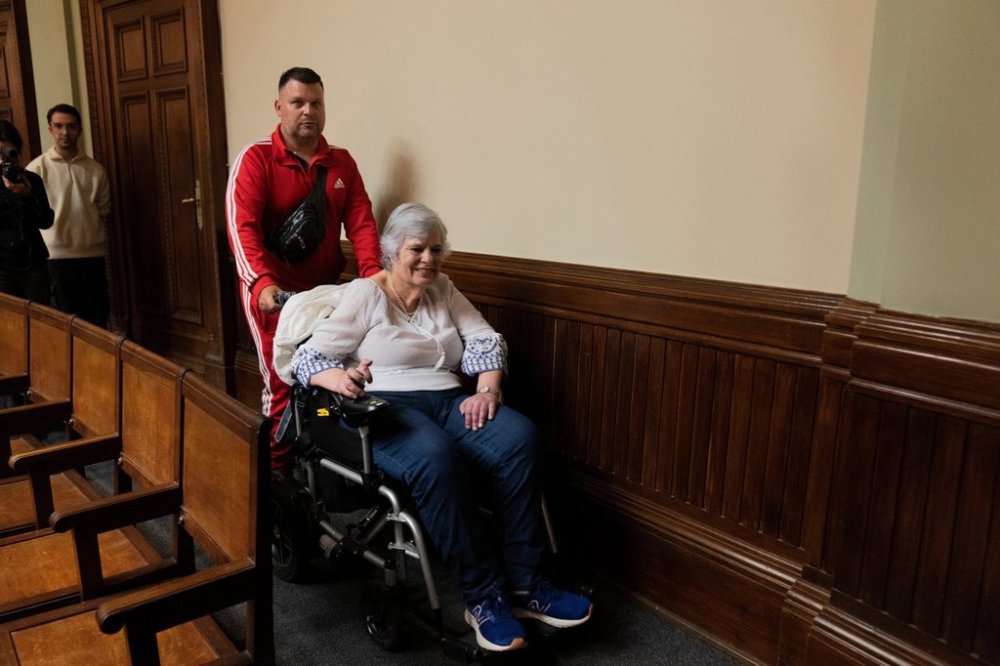
Beatriz Gelos, a woman suffering amyotrophic lateral sclerosis (ALS) leaves the Senate after attending part of a session on a bill to legalize euthanasia, which was approved by the lower house, in Montevideo, Uruguay, Wednesday, Oct. 15, 2025. (AP Photo/Matilde Campodonico)

Fierce debates and spirited activism around the practice has gripped the region in recent years.

“Public opinion is asking us to take this on,” Sen. Patricia Kramer of Uruguay’s governing leftist coalition told lawmakers in the country’s capital of Montevideo.

The law, which moved forward in fits and starts over the last five years, cleared its final hurdle on Wednesday as 20 out of 31 senators voted in favor. The lower house approved the bill in August with a large majority. All that’s left is for the government to implement the regulations.

During the debate, senators from the ruling Broad Front coalition delivered impassioned defenses of the right to die, comparing the euthanasia movement to the legalization of divorce and same-sex marriage.

“We all believe and feel that life is a right, both in health and in sickness, but it should never be an obligation because others don’t understand such unbearable suffering,” Sen. Daniel Borbonet said after quoting testimony from Uruguayan patients with irreversible medical conditions.

Most opposition to euthanasia in Uruguay came from the Catholic Church. Before the vote, Daniel Sturla, the archbishop of Montevideo, called on Uruguayans “to defend the gift of life and to remember that every person deserves to be cared for, accompanied and supported until the end.”

But secularization has eroded resistance to the practice in this country of 3.5 million people, which bans any mention of God in oaths of office and calls Christmas “Family Day.”

Officials hailed the law’s passage as reinforcing Uruguay’s reputation as among the most socially liberal nations in the region. The country was first in the world to legalize marijuana for recreational use and passed pioneering legislation allowing same-sex marriage and abortion over a decade ago.

“This is a historic event, which places Uruguay at the forefront in addressing deeply human and sensitive issues,” said Vice President Carolina Cosse.
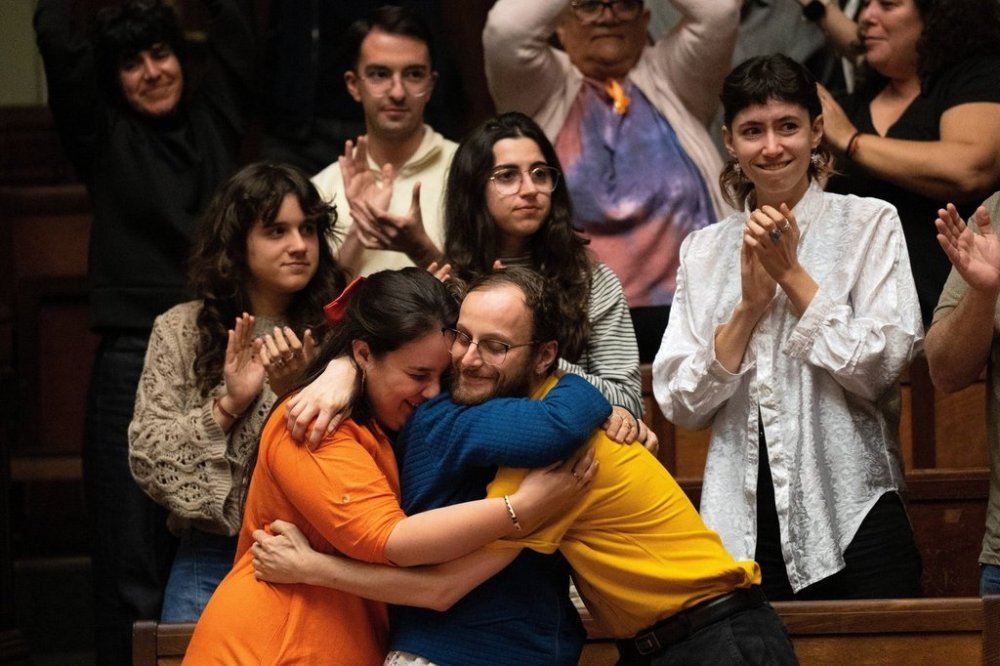
People celebrate after Uruguay's senate passed a law decriminalizing euthanasia, in Montevideo, Uruguay, Wednesday, Oct. 15, 2025. (AP Photo/Matilde Campodonico)

The legislation permits euthanasia, performed by a healthcare professional, but not assisted suicide, which involves a patient self-administering a lethal dose of prescribed medication.

Unlike laws in U.S. states, Australia and New Zealand restricting euthanasia to those with a life expectancy of no more than six months or a year, Uruguay sets no time limits. It also not does require a waiting period, and allows anyone suffering from an incurable illness that causes “unbearable suffering” to seek assisted death, even if their diagnosis is not terminal.

Uruguay requires that those seeking euthanasia to be mentally competent.

Although the law does not outright ban euthanasia for those with mental conditions like depression, it requires that patients get two doctors to rule that they are psychologically fit enough to make the decision.

Unlike Belgium, Colombia and the Netherlands, Uruguay will not allow euthanasia for minors.
Report Error Submit a Tip

More Stories

In a regional first, Uruguay passes a law allowing euthanasia

The Associated Press 4 minute read Preview

In a regional first, Uruguay passes a law allowing euthanasia

The Associated Press 4 minute read Wednesday, Oct. 15, 2025

MONTEVIDEO, Uruguay (AP) — Uruguay’s senate passed a law decriminalizing euthanasia on Wednesday, putting the South American nation among a handful of other countries where seriously ill patients can legally obtain help to end their lives.

It makes Uruguay the first country in predominantly Catholic Latin America to allow euthanasia via legislation. Colombia and Ecuador have decriminalized the practice through Supreme Court decisions.

In Chile, left-wing President Gabriel Boric recently revived a push for the approval of an euthanasia bill long stalled in the Senate.

Fierce debates and spirited activism around the practice has gripped the region in recent years.

Read
Wednesday, Oct. 15, 2025

Making a clear code of conduct for Winnipeg councillors

Editorial 4 minute read Preview

Making a clear code of conduct for Winnipeg councillors

Editorial 4 minute read Yesterday at 2:00 AM CDT

As Winnipeggers have recently been reminded in the case of Transcona city councillor Russ Wyatt, not all codes of conduct are created equal.

Read
Yesterday at 2:00 AM CDT

H.P. Tergesen & Sons General Market surpasses 127 years as family-run business in Gimli

Aaron Epp 7 minute read Preview

H.P. Tergesen & Sons General Market surpasses 127 years as family-run business in Gimli

Aaron Epp 7 minute read Yesterday at 6:00 AM CDT

GIMLI — Walk into the store. Meander past the clothing, candy and candles. Find him in the corner, his eyes scanning the bookshelves, a smile on his face as a half-dozen people explore this side of the shop.

Wearing grey shorts and a light blue shirt, Stefan Tergesen, the fourth-generation proprietor of H.P. Tergesen & Sons General Market, is explaining his vision for what’s widely recognized as the oldest general store in Western Canada.

“First and foremost, I want everybody to enjoy being in here,” he says. “I want you at some point to look and go, ‘Oh, cool!’ after seeing something that gets your blood flowing.”

If you ever find yourself on the west side of Lake Winnipeg, some 80 kilometres north of Manitoba’s capital, and you realize you forgot to pack something, there’s a good chance you’ll find it at Tergesen’s.

Read
Yesterday at 6:00 AM CDT

Manitoba Tories work to dig out of $500-K debt

Carol Sanders 5 minute read Yesterday at 6:18 PM CDT

The Progressive Conservative Party of Manitoba is digging its way out of a financial hole and preparing a war chest for the next election.

“We’re in better shape than we were in December,” PC party president Peter Smith said Monday.

The PCs filed its annual financial statement for the 2025 calendar year with Elections Manitoba last week, which showed a $505,024 deficit as of Dec. 31, 2025. At the end of 2024, the party was $689,000 in the hole.

“I’m pretty comfortable with where our fundraising is at and where our income is and our debt level,” Smith said.

Man sues WRHA, doctors after wrong leg amputated at Grace Hospital in 2024

Erik Pindera 4 minute read Preview

Man sues WRHA, doctors after wrong leg amputated at Grace Hospital in 2024

Erik Pindera 4 minute read Updated: Yesterday at 4:58 PM CDT

A man whose left leg was mistakenly amputated — rather than his infected lower right leg — at the Grace Hospital in 2024 has filed a lawsuit against the Winnipeg Regional Health Authority and two doctors involved in his care.

Jason Kennedy, who lives in Winnipeg and is a member of Bloodvein First Nation, filed his statement of claim in Court of King’s Bench last week, naming the WRHA and orthopedic surgeons Dr. David John Dillon and Dr. Yiyang Zhang as defendants.

He accuses the health authority and doctors of negligence and breach of duty, among other allegations.

Kennedy was 48 when he went to Seven Oaks General Hospital on Oct. 22, 2024, with pain and an infection in his right foot.

Read
Updated: Yesterday at 4:58 PM CDT

Driver, 21, killed in Interlake crash

1 minute read Yesterday at 11:44 AM CDT

A 21-year-old Thompson man was killed in a crash in the Interlake on Sunday.

RCMP said a southbound truck went into a ditch on Highway 6, just north of Moosehorn, and rolled multiple times at about 5 a.m.

The 21-year-old man, who died at the scene, was driving the truck, police said.

Six passengers suffered non-life-threatening injuries. A STARS air ambulance was called to the scene.