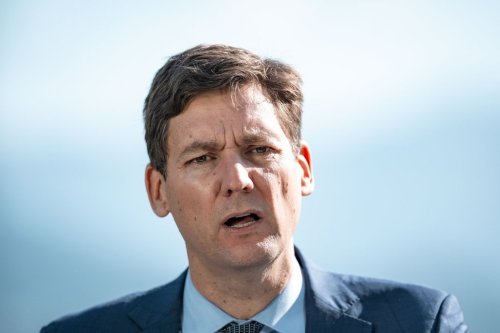
B.C. to add unpaid leave for ‘catastrophic’ illness, injury: Eby

Advertisement

Advertise with us

The British Columbia government has proposed changes to the province's Employment Standards Act to allow up to 27 weeks of unpaid leave each year for people facing a "catastrophic" illness or injury.

Read this article for free:


or

Already have an account? Log in here »

To continue reading, please subscribe:

Subscribe and receive a limited-edition Free Press branded hat or tote.

Digital Subscription

One year of digital access for only $205*

  • Enjoy unlimited reading on winnipegfreepress.com
  • Read the E-Edition, our digital replica newspaper
  • Access News Break, our award-winning app
  • Play interactive puzzles

*First annual payment billed as $205.00 + GST for one year. This annual subscription will automatically renew at $233.00 + GST every 52 weeks (10% off the regular annual price of $259.35). Offer available to new and qualified returning subscribers only. Cancel any time.

To continue reading, please subscribe:

Add Free Press access to your Brandon Sun subscription for only an additional

$1 for the first 4 weeks*

  • Enjoy unlimited reading on winnipegfreepress.com
  • Read the E-Edition, our digital replica newspaper
  • Access News Break, our award-winning app
  • Play interactive puzzles
Start now

*Your next Brandon Sun subscription payment will increase by $1.00 and you will be charged $17.95 plus GST for four weeks. After four weeks, your payment will increase to $24.95 plus GST every four weeks.

Hey there, time traveller!
This article was published 20/10/2025 (358 days ago), so information in it may no longer be current.

The British Columbia government has proposed changes to the province’s Employment Standards Act to allow up to 27 weeks of unpaid leave each year for people facing a “catastrophic” illness or injury.

Premier David Eby told a news conference in Victoria that the change would take effect this fall if the bill is passed by his New Democrat majority government.

The leave would ensure people undergoing treatment such as chemotherapy could take the time they need without being forced to choose between focusing on their health or their job, Eby said on Monday.
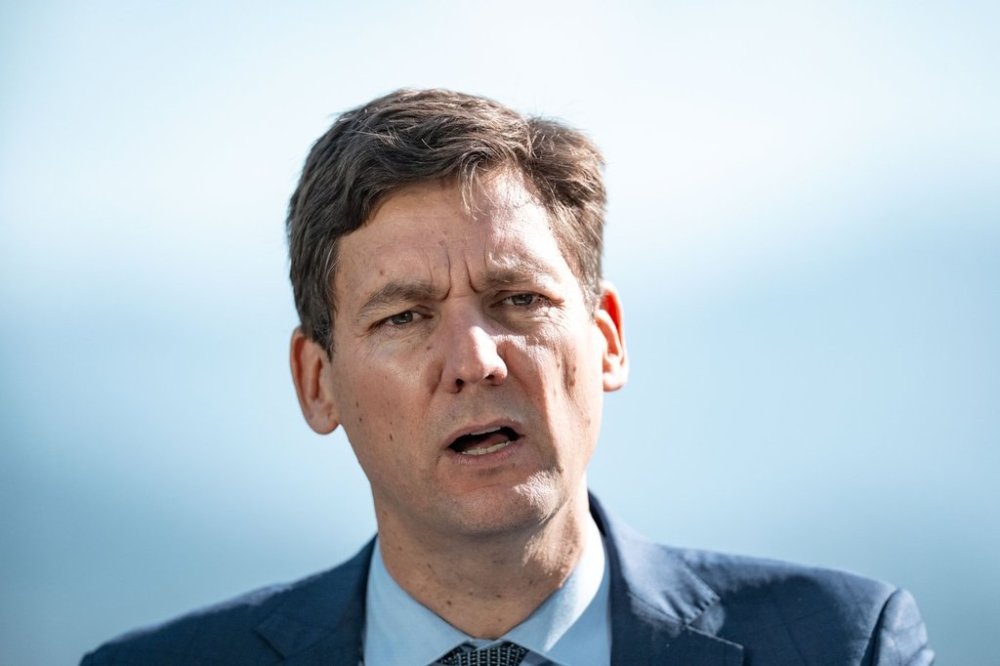
B.C. Premier David Eby speaks during a press conference in Vancouver, Monday, July 28, 2025. THE CANADIAN PRESS/Ethan Cairns

“It’s hard to imagine anything more challenging or awful than facing a diagnosis of a major, catastrophic health issue like this,” Eby said. “But knowing your job will be there when you’re completing treatment, when you’re able to return to employment, it’s just one less thing for people to have to worry about.”

Labour Minister Jennifer Whiteside joined Eby, saying workers deserve to return to their jobs once their health-care providers confirm they’re ready.

Whiteside said B.C.’s Human Rights Code prohibits discrimination on the basis of disability, but the current employment standards law does not include provisions to protect the jobs of people unable to work due to a long-term illness or injury.

The proposed changes would ensure the protection in the Human Rights Code is “built in” to the legislation, the minister said.

“For people facing a difficult diagnosis and maybe well a life-altering situation, whether it’s short term or long term, the certainty of knowing that their job will be there for them provides relief,” Whiteside told the news conference.

“It alleviates an unnecessary burden on their journey to recovery,” she said.

Whiteside said survivors of intimate partner violence, many of whom show signs and symptoms of traumatic brain injury, would also be covered by the law.

“We know that 90 per cent of intimate partner violence cases reported to police involve survivors ages 15 to 54 in their prime working years,” she said.

“For them, the guarantee of job protection may help invite survivors to feel safe in seeking services for their recovery.”

More than 31,000 people are diagnosed with cancer each year in B.C., Whiteside noted.

“It’s vital that we provide this important assurance to workers and their families,” Whiteside said of the proposed changes.

She said the changes would bring B.C.’s legislation in line with standards already in place in other Canadian jurisdictions, including Manitoba, Ontario and Quebec, as well as federally regulated industries and workplaces.

The protection would apply to all workers covered by the Employment Standards Act who have a serious personal illness or injury and who are unable to work for at least seven consecutive days, the Labour Ministry said in a statement.

The leave would not have to be taken at once and could be broken up throughout the year.

To access the leave, workers would have to obtain a certificate from a doctor or nurse practitioner saying they are unable to work due to medical reasons.

This report by The Canadian Press was first published Oct. 20, 2025.

Report Error Submit a Tip

More Stories

A question of public utility

Tom Pearson 5 minute read 2:00 AM CDT

The editorial page of the Free Press often provides perspectives that are thought-provoking and sometimes contradictory. Keeping the lights on, (Oct. 5) by Hal Turner and Wasteful operations should be held accountable, (Oct. 6) by Barry Prentice are both thought-provoking. They are not contradictory because they cover two quite different topics. Where they differ is in their delivery and the quality of the underlying facts.

Mr. Turner provides what is, in my view, the most cogent rationale for gas-fuelled generation that I have read. He highlights the essential aspect of power supply to Manitobans. He supports the argument for natural gas generation with succinct, relatable facts and anecdotes relating to what other comparable utilities have done. He states that, “Manitoba Hydro’s experts are neither anti-wind nor pro-fossil fuel.” They are simply seeking the best possible solution for Manitobans — a fact many special-interest groups either ignore or sadly, impugn.

Although some would argue the contrary, I believe that Mr. Turner’s position and longevity in the Manitoba Hydro organization lend gravitas to his column. Mr. Turner understands that “keeping the lights on” is a non-negotiable requirement and a public trust.

Before I turn to Mr. Prentice’s column, I should disclose that before I retired (it’s been a while), I was responsible at different times for Winnipeg’s regional water system and subsequently water supply from source to tap. In that context I was also responsible for the operation of the Greater Winnipeg Water District (GWWD) railway. Like Mr. Turner’s perspective on the supply of electricity to Manitobans, I regard the supply of safe drinking water to Winnipeggers as a public trust.

Tenants battling landlords find help in short supply from province

Scott Billeck 14 minute read Preview

Tenants battling landlords find help in short supply from province

Scott Billeck 14 minute read 6:00 AM CDT

For nearly three years, Quincy Houdayer and Avery Helm repeatedly pressed their landlord to address plumbing failures, water damage and other maintenance problems at their West Broadway apartment, with records showing some issues persisted until the couple turned to the Residential Tenancies Branch.

Emails and text messages between the tenants, Clearwater Management and the RTB reviewed by the Free Press document recurring leaks and flooding, periods without heat or hot water, concerns about mould and basement conditions and repeated followups from the couple seeking repairs.

“Most of the experiences we’ve had with them can be boiled down to, like, they either are very dismissive about it, they act like it’s not their problem… or they will just fully, blatantly ignore you,” Helm said, adding that the only way to get Clearwater to respond was to threaten going to the RTB, a provincial government agency.

RTB data obtained by the Free Press also shows 13 orders involving the three-building complex at 193-197 Furby St. in 2026 alone. All but one favoured the tenant, while the remaining order ruled in favour of both the tenant and landlord on different items.

Read
6:00 AM CDT

Hydro’s unpredictable fortunes

Editorial 4 minute read Preview

Hydro’s unpredictable fortunes

Editorial 4 minute read 2:00 AM CDT

Hope for rain. Or snow. Or both. There’s a truism buried deep in a financial outlook in Manitoba Hydro’s 2025-26 annual report, released in late September: “Manitoba Hydro’s net income is highly dependent on several uncontrollable factors.”

Read
2:00 AM CDT

Riding the Unity Bus to rally support for Canada in Alberta

Melissa Martin 8 minute read Preview

Riding the Unity Bus to rally support for Canada in Alberta

Melissa Martin 8 minute read Updated: Yesterday at 9:57 PM CDT

WAINWRIGHT, Alta. — The Unity Bus arrives right on time, pulling into a parking lot on the edge of this town of about 6,600 people close to the Alberta-Saskatchewan border. As the vehicle slows to a halt, resplendent in its patriotic red-and-white paint, a small group of supporters stand waiting, decked in their own maple leaf garb.

The Unity Bus’s doors open and former Alberta deputy premier Thomas Lukaszuk bounds to the ground. The supporters, volunteers with Lukaszuk’s Forever Canadian campaign, welcome him with applause; he greets them with open arms. He knows many by name, having been to Wainwright four times; some of them fondly call him “the boss.”

“Do you need some stickers?” he asks. “Do you need some swag to give away?”

It’s a chilly Thanksgiving Monday morning on the eastern edge of Alberta. A sharp wind nips at exposed skin and drab grey clouds hang low in the sky. Such weather does not encourage high spirits, but Lukaszuk and these volunteers can’t afford to let theirs falter: in just one week, on Oct. 19, Albertans will vote on a historic question on whether to remain in Canada.

Read
Updated: Yesterday at 9:57 PM CDT

Collaros turns back the clock in crucial win over Stamps

Taylor Allen 7 minute read Preview

Collaros turns back the clock in crucial win over Stamps

Taylor Allen 7 minute read Sunday, Oct. 11, 2026

It was around this time seven years ago that the Winnipeg Blue Bombers officially became Zach Collaros’s team.

Making his first start in blue and gold after being acquired via trade, Collaros ran backwards to escape a collapsing pocket before rolling to his right and firing a perfect pass to Darvin Adams in the back corner of the south end zone during a home game against the Calgary Stampeders.

The play marked the beginning of the Collaros era in Winnipeg.

And a similar play Saturday night, once again against the Stampeders, served as a reminder that the 38-year-old pivot isn’t done just yet.

Read
Sunday, Oct. 11, 2026

B.C. to add unpaid leave for ‘catastrophic’ illness, injury: Eby

Brenna Owen, The Canadian Press 3 minute read Preview

B.C. to add unpaid leave for ‘catastrophic’ illness, injury: Eby

Brenna Owen, The Canadian Press 3 minute read Monday, Oct. 20, 2025

The British Columbia government has proposed changes to the province's Employment Standards Act to allow up to 27 weeks of unpaid leave each year for people facing a "catastrophic" illness or injury.

Premier David Eby told a news conference in Victoria that the change would take effect this fall if the bill is passed by his New Democrat majority government.

The leave would ensure people undergoing treatment such as chemotherapy could take the time they need without being forced to choose between focusing on their health or their job, Eby said on Monday.

"It's hard to imagine anything more challenging or awful than facing a diagnosis of a major, catastrophic health issue like this," Eby said. "But knowing your job will be there when you're completing treatment, when you're able to return to employment, it's just one less thing for people to have to worry about."

Read
Monday, Oct. 20, 2025