Transplanting shrubs: Timing and technique for a thriving garden

Advertisement

Advertise with us

It’s the end of the gardening season, and those of us who’ve endured a less-than-perfect layout may be itching to move shrubs around. But proper timing is imperative.

Read this article for free:


By clicking the button above, an account will be created and you will begin to receive some of our recommended newsletters. You may opt out of any newsletter by visiting your Email and Communication Preferences page or by clicking "unsubscribe" at the bottom of any email.

or

Already have an account? Log in here »

To continue reading, please subscribe:

Digital Subscription

One year of digital access for only $1.44 a week*

  • Enjoy unlimited reading on winnipegfreepress.com
  • Read the E-Edition, our digital replica newspaper
  • Access News Break, our award-winning app
  • Play interactive puzzles

*Billed as $5.77 plus GST every four weeks. After 52 weeks, price increases to the regular rate of $19.95 plus GST every four weeks. Offer available to new and qualified returning subscribers only. Cancel any time.

To continue reading, please subscribe:

Add Free Press access to your Brandon Sun subscription for only an additional

$1 for the first 4 weeks*

  • Enjoy unlimited reading on winnipegfreepress.com
  • Read the E-Edition, our digital replica newspaper
  • Access News Break, our award-winning app
  • Play interactive puzzles
Start now

*Your next Brandon Sun subscription payment will increase by $1.00 and you will be charged $17.95 plus GST for four weeks. After four weeks, your payment will increase to $24.95 plus GST every four weeks.

Hey there, time traveller!
This article was published 21/10/2025 (371 days ago), so information in it may no longer be current.

It’s the end of the gardening season, and those of us who’ve endured a less-than-perfect layout may be itching to move shrubs around. But proper timing is imperative.

I inadvertently planted a Clethra bush too close to a peach tree, and their intertwining branches have been taunting me all summer. But because the Clethra is a late-season bloomer, I’ll have to wait a bit longer before I can safely move it.

As a general rule, shrubs (and perennials) that bloom in late summer and fall should be transplanted in spring, just after they emerge from dormancy. This timing provides ample time for roots to establish before the plant’s energy is redirected toward blooming.
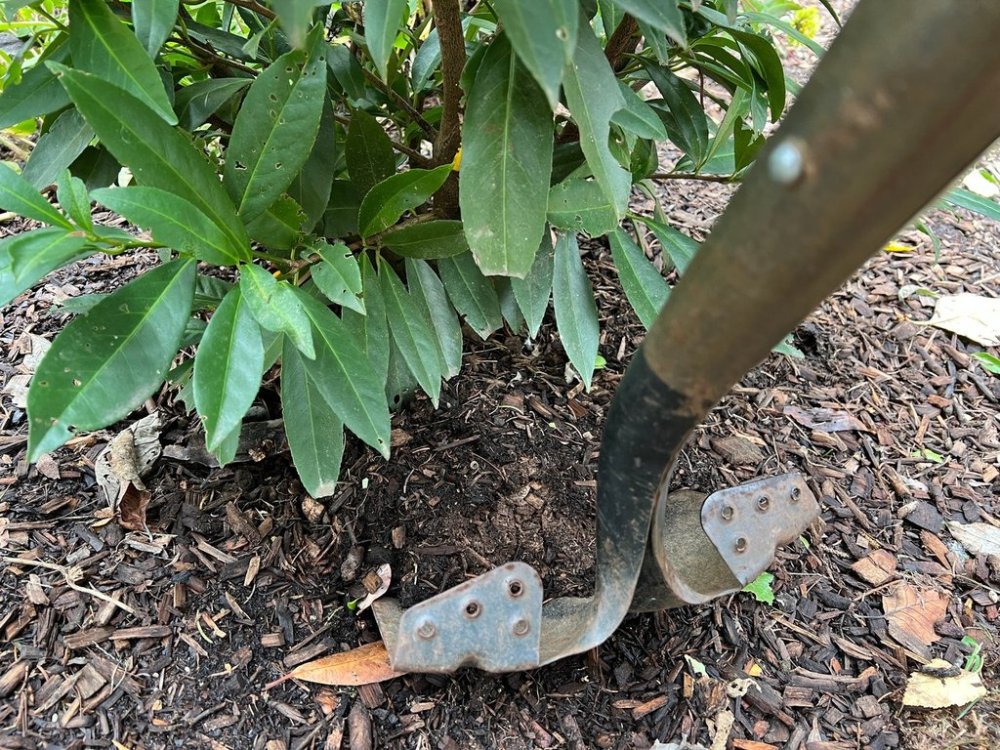
This Oct. 14, 2025, image provided by Jessica Damiano shows a shovel plunged into soil around a cherry laurel shrub. Gardeners can transplant spring- and early summer-blooming plants like cherry laurel in fall but should wait until spring to relocate late-summer and fall bloomers. (Jessica Damiano via AP)

Spring and early summer bloomers should be relocated in the fall, when their blossoms and, sometimes, foliage, are long gone.

Start with roots

Before attempting to dig up shrubs, research how deep and wide their roots typically grow. Shallow-rooted shrubs, like rhododendron, for instance, are easier to dig up than, say, manzanita, which have very deep root systems. Take the plant’s age into account, too, as mature shrubs will have larger roots than younger ones.

Your findings will guide your digging: New holes should be as close to twice the width of roots as possible — and exactly as deep.

Always dig a hole for the plant’s new home before removing it from the ground to minimize root exposure.

When possible, gently tie the plant’s branches together to get a better view of the area you’re digging. This step also helps prevent eye injuries from errant stems.

Take care to dig up as much of the roots as possible, plunging a sharp-edged shovel into the soil at what you estimate to be the roots’ farthest point and working your way around the perimeter of the plant. Then, retrace your steps, this time with more force to insert the tool deeply enough to lift roots out of the ground from underneath.

Tips on planting

To avoid losing soil and damaging roots — as well as your back — place the entire shrub onto a tarp and drag the tarp to the new hole you’ve prepared.

Carefully slide the rootball into the hole and assess its depth. If necessary, remove the plant from the hole to add or remove soil as needed to ensure the point where its roots meet the trunk —the plant’s crown —sits at the same level it was previously.

Plant too deeply, and the crown and trunk will eventually rot; too shallow, and the roots will dry out, suffer sun and cold damage, and struggle to spread horizontally.

When you’re satisfied the shrub is sitting straight and at the correct depth, begin backfilling the hole with soil, stopping periodically to firmly tamp it down to eliminate air pockets. Water the soil halfway through, then resume backfilling and tamping. Water the soil again, then apply mulch over the entire root zone to retain soil moisture, regulate soil temperature and repel weeds.

Water the plant regularly through frost during the entire first year in its new home, but don’t fertilize yet.

Apply a slow-release, low-nitrogen fertilizer in mid-to-late spring. Doing so earlier would force the plant to allocate its limited energy to growth rather than recovery and root development.

Allowing transplants time to settle in can mean the difference between a struggling shrub and one that thrives for years to come.

___

Jessica Damiano writes weekly gardening columns for the AP and publishes the award-winning Weekly Dirt Newsletter. You can sign up here for weekly gardening tips and advice.

___

For more AP gardening stories, go to https://apnews.com/hub/gardening.

Report Error Submit a Tip

More Stories

Connor Hellebuyck breaks silence after trade from Jets

Mike McIntyre 8 minute read Preview

Connor Hellebuyck breaks silence after trade from Jets

Mike McIntyre 8 minute read Saturday, Oct. 24, 2026

It took until the very end of his introductory news conference Saturday — right around the 15-minute mark — before Connor Hellebuyck was finally asked the question that hockey fans back in Winnipeg were likely waiting for.

“Is there anything you’d like to say to Jets fans?” a reporter who covers Hellebuyck’s new team, the New Jersey Devils, put to him during the session held inside the Prudential Center in Newark.

A short pause followed.

“I mean, there’s a lot. There’s a lot that I need to say,” Hellebuyck began, no doubt raising plenty of eyebrows around here and the hockey world in general.

Read
Saturday, Oct. 24, 2026

Opportunity knocks, and we must answer

Adrian Deer 5 minute read 2:00 AM CDT

Imagine being a young athlete who loves volleyball but attends a school without a net or even a ball.

For many students in Winnipeg, access to basic sporting equipment is something they rarely think about.

However, during my visit to Red Sucker Lake First Nation in northern Manitoba, I witnessed a very different reality. The local school did not have volleyball nets or balls. As someone who has had the opportunity to compete in volleyball across Canada and internationally, this experience made me realize how easily we take these opportunities for granted.

How can we expect young Indigenous athletes to discover their potential when they don’t even have the basic equipment needed to play? Talent and determination can exist in every community but without access to opportunities, that potential may never be realized.

Port of Churchill owners and Dubai-based DP World looking to boost trade route

Ian Bickis, The Canadian Press 2 minute read Preview

Port of Churchill owners and Dubai-based DP World looking to boost trade route

Ian Bickis, The Canadian Press 2 minute read Updated: Yesterday at 3:12 PM CDT

WINNIPEG - The owners of Manitoba's Port of Churchill say they're working with Dubai-based DP World Inc. to potentially boost traffic at the arctic port.

Indigenous-owned Arctic Gateway Group says the memorandum of understanding it has signed with DP World focuses on port operations and possibly creating a transportation corridor linking Manitoba to global markets.

The supply chain memorandum also includes the CentrePort Canada inland shipping hub based beside the Winnipeg airport, as well as the Hudson Bay Railway that links it to the Port of Churchill.

No dollar investment commitments were announced with the memorandum.

Read
Updated: Yesterday at 3:12 PM CDT

Man accused of assaulting unconscious woman has lengthy record of abuse

Erik Pindera 5 minute read Preview

Man accused of assaulting unconscious woman has lengthy record of abuse

Erik Pindera 5 minute read 2:01 AM CDT

A convicted sex offender accused of sexually assaulting an unconscious woman last week — only to be stopped in the process by police officers — has a lengthy history of abusing vulnerable victims.

Read
2:01 AM CDT

Jets players glad to have Hellebuyck trade behind them

Mike McIntyre 6 minute read Preview

Jets players glad to have Hellebuyck trade behind them

Mike McIntyre 6 minute read Saturday, Oct. 24, 2026

Relief? Regret? Rage?

How are the Winnipeg Jets feeling following Friday’s Connor Hellebuyck trade — particularly those with deep roots and strong bonds with the franchise goaltender who now finds himself a member of the New Jersey Devils?

“It was a bit of a cloud hanging over our heads,” captain Adam Lowry admitted on Saturday. “It’s nice we can look forward now. We don’t have to keep talking about it. We’ve got guys that want to be here.”

That was a bit of a common theme around the room following an outdoor practice at Princess Auto Stadium ahead of Sunday’s Heritage Classic game against the Montreal Canadiens.

Read
Saturday, Oct. 24, 2026

Express the merry widow you truly are

Maureen Scurfield 4 minute read 2:00 AM CDT

DEAR MISS LONELYHEARTS: My husband died a while back, and I don’t miss him! He had grown old in a strange and cranky way, and I’m a cheerful person by nature. It was hard to hear him shoot down every idea I had to go out and do things together.

He wasn’t physically ill — just finished with having any fun. He had gotten depressed and wouldn’t take anti-depressants, although he was fine with getting drunk and critical towards me.

He was particularly negative about seeing friends and relatives, and living the active way we used to — always the first to get tickets to concerts and encouraging other friends to go with us for dinners at new restaurants. We also went to a lot of sports games, and visited friends and relatives. We arrive with lots of good food and drink.

So now when people ask me in that pitying voice used for widows, “Poor darling, how are you doing?” I respond, “He was miserable towards the end, and it was a relief when he died.” They look shocked, but it’s the truth, and they know it.