Trump pardons Binance founder Changpeng Zhao, high-profile cryptocurrency figure

Advertisement

Advertise with us

WASHINGTON (AP) — President Donald Trump has pardoned Binance founder Changpeng Zhao, who created the world’s largest cryptocurrency exchange and served prison time for failing to stop criminals from using the platform to move money connected to child sex abuse, drug trafficking and terrorism.

Read this article for free:

or

Already have an account? Log in here »

To continue reading, please subscribe:

Subscribe and receive a limited-edition Free Press branded hat or tote.

Digital Subscription

One year of digital access for only $205*

  • Enjoy unlimited reading on winnipegfreepress.com
  • Read the E-Edition, our digital replica newspaper
  • Access News Break, our award-winning app
  • Play interactive puzzles

*First annual payment billed as $205.00 + GST for one year. This annual subscription will automatically renew at $233.00 + GST every 52 weeks (10% off the regular annual price of $259.35). Offer available to new and qualified returning subscribers only. Cancel any time.

To continue reading, please subscribe:

Add Free Press access to your Brandon Sun subscription for only an additional

$1 for the first 4 weeks*

  • Enjoy unlimited reading on winnipegfreepress.com
  • Read the E-Edition, our digital replica newspaper
  • Access News Break, our award-winning app
  • Play interactive puzzles
Start now

*Your next Brandon Sun subscription payment will increase by $1.00 and you will be charged $17.95 plus GST for four weeks. After four weeks, your payment will increase to $24.95 plus GST every four weeks.

Hey there, time traveller!
This article was published 23/10/2025 (286 days ago), so information in it may no longer be current.

WASHINGTON (AP) — President Donald Trump has pardoned Binance founder Changpeng Zhao, who created the world’s largest cryptocurrency exchange and served prison time for failing to stop criminals from using the platform to move money connected to child sex abuse, drug trafficking and terrorism.

The pardon caps a monthslong effort by Zhao, a billionaire commonly known as CZ in the crypto world and one of the biggest names in the industry. He and Binance have been key supporters of some of the Trump family’s crypto enterprises.

“Deeply grateful for today’s pardon and to President Trump for upholding America’s commitment to fairness, innovation, and justice,” Zhao said on social media Thursday.
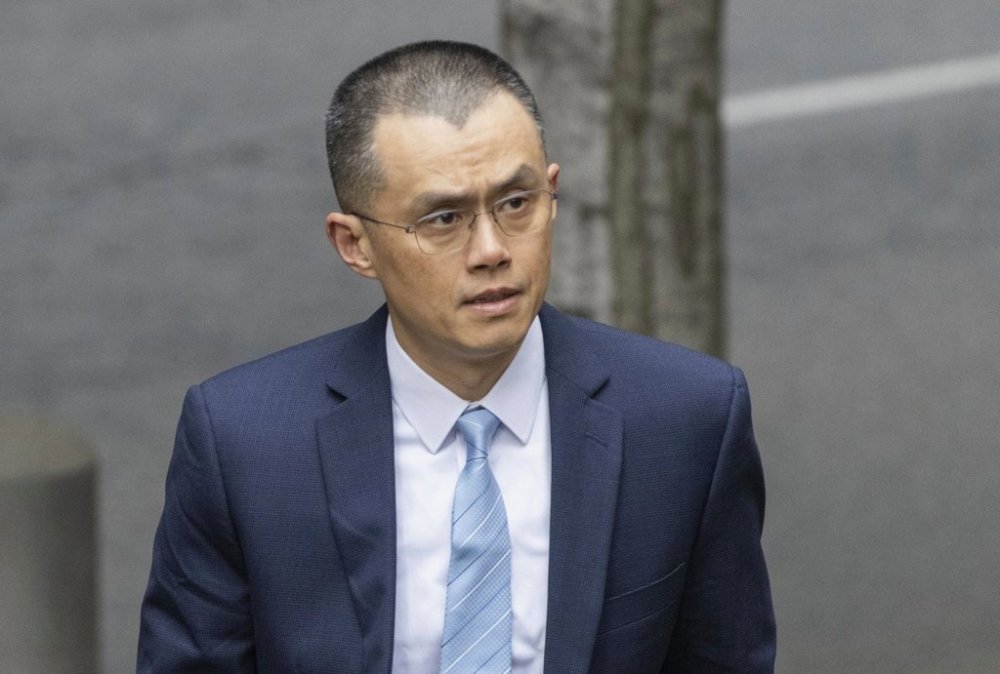
Changpeng Zhao, the founder of Binance, the world's largest cryptocurrency exchange, enters the Federal Courthouse in Seattle, April 30, 2024. (Ellen M. Banner/The Seattle Times via AP)

Zhao served four months in prison after reaching a deal with the Justice Department to plead guilty to charges of enabling money laundering at Binance. But, in explaining the pardon, Trump said of Zhao, “He was recommended by a lot of people.”

“A lot of people say that he wasn’t guilty of anything,” Trump said. “He served four months in jail and they say that he was not guilty of anything.”

The president added that he didn’t believe he’d ever met Zhao personally, but had “been told” he “had a lot of support, and they said that what he did is not even a crime.” He said Zhao had been “persecuted by the Biden administration.”

“I gave him a pardon at the request of a lot of very good people,” Trump said.

It’s the latest move by a president who has flexed his executive power to bestow clemency on political allies, prominent public figures and others convicted of crimes.

White House press secretary Karoline Leavitt announced the pardon in a statement and later told reporters in a briefing that the White House counsel’s office “thoroughly reviewed” the request. She said the administration of Democratic President Joe Biden pursued “an egregious oversentencing” in the case, was “very hostile to the cryptocurrency industry” and Trump “wants to correct this overreach.”

The crypto industry has also long complained it was subject to a “regulation by enforcement” ethos under the Biden administration.

Trump’s pardon of Zhao fits into a broad pattern of his taking a hands-off approach to an industry that spent heavily to help him win the election in 2024. His administration has dropped several enforcement actions against crypto companies that began during Biden’s term and disbanded the crypto-related enforcement team at the Justice Department.

Former federal prosecutor Mark Bini said Zhao went to prison for what “sounds like a regulatory offense, or at worst its kissing cousin.”

“So this pardon, while it involves the biggest name in crypto, is not very surprising,” said Bini, a white collar defense lawyer who handles crypto issues at Reed Smith.

Zhao was released from prison last year after being sentenced for violating the Bank Secrecy Act. He was the first person ever sentenced to prison time for such violations of that law, which requires U.S. financial institutions to know who their customers are, to monitor transactions and to file reports of suspicious activity. Prosecutors said no one had ever violated the regulations to the extent Zhao did.

The judge in the case said he was troubled by Zhao’s decision to ignore U.S. banking requirements that would have slowed the company’s explosive growth.

“Better to ask for forgiveness than permission,” was what Zhao told his employees about the company’s approach to U.S. law, prosecutors said. Binance allowed more than 1.5 million virtual currency trades, totaling nearly $900 million, that violated U.S. sanctions, including ones involving Hamas’ al-Qassam Brigades, al-Qaida and Iran, prosecutors said.

“I failed here,” Zhao told the court last year during sentencing. “I deeply regret my failure, and I am sorry.”

Zhao had a remarkable path to becoming a crypto billionaire. He grew up in rural China and his family immigrated to Canada after the 1989 Tiananmen Square massacre. As a teenager, he worked at a McDonald’s and became enamored with the tech industry in college. He founded Binance in 2017.

In addition to taking pro-crypto enforcement and regulatory positions, the president and his family have plunged headfirst into making money in crypto.

A stablecoin launched by World Liberty Financial, a crypto project founded by Trump and sons Donald Jr. and Eric, received early support and credibility thanks to an investment fund in the United Arab Emirates using $2 billion worth of World Liberty’s stablecoin to purchase a stake in Binance. Stablecoins are a type of cryptocurrency that are typically tied to the value of the U.S. dollar.

A separate World Liberty Finance token saw a huge spike in price on Thursday shortly after news of the pardon was made public, with gains that far outpaced any other major cryptocurrency, according to data from CoinMarketCap.

Zhao said earlier this year that his lawyers had requested a pardon.

It is not immediately clear what impact Trump’s pardon of Zhao may have on operations at Binance and Binance.US, a separate arm of the main exchange offering more limited trading options to U.S. residents.

___

Suderman reported from Richmond, Va.

Report Error Submit a Tip

More Stories

Toronto’s alternative crisis response model deemed a success

Scott Billeck 4 minute read Preview

Toronto’s alternative crisis response model deemed a success

Scott Billeck 4 minute read Yesterday at 2:01 AM CDT

A Toronto emergency response program that helped inspire Winnipeg’s proposed alternative crisis response model has already expanded city-wide, just four years after launching as a pilot project.

The Toronto Community Crisis Service, launched in 2022, has become the city’s fourth emergency service, providing a 24-7, community-based response to people experiencing mental health crises. The service has handled nearly 50,000 calls through 911 and 211, dispatched mobile crisis teams to more than 41,000 incidents, made more than 11,600 referrals to health and social services and resolved the majority of eligible 911 calls without police involvement.

Winnipeg Mayor Scott Gillingham last week proposed creating a similar “fourth crisis response pathway” that would allow 911 calls that aren’t violent or criminal in nature to be transferred to community-based crisis teams.

Under the proposal, which has support from both the Winnipeg Police Service and the Winnipeg Fire Paramedic Service, a centralized crisis dispatch and co-ordination hub would receive triaged calls and match them with citywide response teams, staffed in part through existing community organizations, including the Downtown Community Safety Partnership and The Link’s mobile crisis teams. The goal is to divert appropriate calls away from the WPS and WFPS.

Read
Yesterday at 2:01 AM CDT

Ticked off by Trump’s tantrums

Scott Forbes 5 minute read Preview

Ticked off by Trump’s tantrums

Scott Forbes 5 minute read Yesterday at 2:01 AM CDT

If Mr. Trump isn’t prepared to step up and better manage his ticks, he’s just blowing smoke.

Read
Yesterday at 2:01 AM CDT

Book gives patients tools for navigating the Canadian health-care system and getting treatment they need

Janine LeGal 8 minute read Preview

Book gives patients tools for navigating the Canadian health-care system and getting treatment they need

Janine LeGal 8 minute read Yesterday at 6:00 AM CDT

More than a few of us have been known to complain about the Canadian health-care system: the lack of staffing, the long ER waits, the challenge of finding a family physician, the lengthy waiting lists for specialized tests and surgeries. There’s been an outcry for answers for a long time.

The publication of The Canadian Health Care Guerrilla Handbook: How to Fight for What You Need is welcome news for anyone seeking those answers.

Written by Michael Decter, who served as cabinet secretary in Manitoba before his move to Ontario — and Mike McCarthy, patient advocate and consultant who brings a personal story of living with hemophilia, the book is a must-have, packed with answers to commonly asked questions that will help the reader navigate a complex and fractured system.

The book, written in plain language, talks about how to get what you want and need: a family doctor, diagnostic tests, appropriate medications, a second opinion, long-term care, home care, mental-health care — all of that and more is easily accessible in its 217 pages.

Read
Yesterday at 6:00 AM CDT

Manitoba Hydro’s $3 billion fossil fuel bet

James Beddome and Kent Elson 5 minute read Preview

Manitoba Hydro’s $3 billion fossil fuel bet

James Beddome and Kent Elson 5 minute read 2:00 AM CDT

Manitoba Hydro plans to spend $3 billion to build three new fossil fuel power generation turbines in 2030. This big bet on fossil fuel generation would be a big mistake for both the planet and Manitoban’s pocketbooks.

The initial $3 billion price tag is only part of the financial harm we will suffer if these plans go ahead. At ongoing public hearings at Manitoba’s Public Utilities Board, Manitoba Hydro admitted that gas plant costs will be higher than forecast but has declined to say by how much.

Even worse, the electricity produced by the fossil fuel turbines will be costly because it requires burning expensive gas — unlike hydroelectric, solar, and wind generation.

Also, Manitoba Hydro plans to build the least-efficient kind of gas plant (a simple-cycle gas turbine), increasing the volume of gas required (and cost) for every unit of electricity produced.

Read
2:00 AM CDT

Cyril Ramaphosa and South African law

Gwynne Dyer 5 minute read 2:01 AM CDT

It’s outrageous. You’re at your hobby farm in the country, just pottering around, so you stuff the $580,000 in your pocket under the sofa cushions temporarily, just to get it out of the way. Then you forget it when you are gathering things up to go back to the city. It could happen to anybody.

However, thieves break into your country house while you’re away and steal the money. You consider reporting it to the police, but you know they are struggling to keep up with the crime wave, so you decide to forget about it.

Even though it was foreign currency, you don’t report it to the tax authorities, either, because you never got to spend it. Or something like that.

But then events take a turn decidedly for the worse. A man called Arthur Fraser sends a dossier to the police reporting that you got the money and that it was not actually $580,000 but a whole $4 million. And since Mr. Fraser was the country’s former chief spy, they take him seriously and come to you looking for answers.

Building bridges for the next generation

Zoe Pierce 8 minute read Preview

Building bridges for the next generation

Zoe Pierce 8 minute read Yesterday at 6:00 AM CDT

Change has been the motivation behind Clayton Sandy’s work for decades.

A member of Sioux Valley Dakota First Nation, Sandy is an Indigenous knowledge keeper, cultural advisor and community advocate. His work has taken him into newcomer organizations, schools, hospitals and workplaces across Manitoba, where he teaches Indigenous history, mentors youth and helps build relationships between communities.

Sitting down for an interview with the Free Press, Sandy arrived with a busy calendar in hand, a reflection of the many projects and initiatives that continue to fill his days as he works to create change for future generations.

“I have two boys and I have five grandchildren. The racism I put up with was really bad,” Sandy said. “And I don’t want my grandchildren to put up with that garbage.”

Read
Yesterday at 6:00 AM CDT