SNAP has provided grocery help for 60-plus years; here’s how it works
Advertisement
Read this article for free:
or
Already have an account? Log in here »
To continue reading, please subscribe:

Digital Subscription
One year of digital access for only $205*
- Enjoy unlimited reading on winnipegfreepress.com
- Read the E-Edition, our digital replica newspaper
- Access News Break, our award-winning app
- Play interactive puzzles
*First annual payment billed as $205.00 + GST for one year. This annual subscription will automatically renew at $233.00 + GST every 52 weeks (10% off the regular annual price of $259.35). Offer available to new and qualified returning subscribers only. Cancel any time.
To continue reading, please subscribe:
Add Free Press access to your Brandon Sun subscription for only an additional
$1 for the first 4 weeks*
- Enjoy unlimited reading on winnipegfreepress.com
- Read the E-Edition, our digital replica newspaper
- Access News Break, our award-winning app
- Play interactive puzzles
*Your next Brandon Sun subscription payment will increase by $1.00 and you will be charged $17.95 plus GST for four weeks. After four weeks, your payment will increase to $24.95 plus GST every four weeks.
Read unlimited articles for free today:
or
Already have an account? Log in here »
Hey there, time traveller!
This article was published 31/10/2025 (284 days ago), so information in it may no longer be current.
The Supplemental Nutrition Assistance Program, or SNAP, is a major piece of the U.S. social safety net used by nearly 42 million, or about 1 in 8 Americans, to help buy groceries.
Originally known as the food stamp program, it has existed since 1964, serving low-income people, many of whom have jobs but don’t make enough money to cover all the basic costs of living.
Public attention has focused on the program since President Donald Trump’s administration announced last week that it would freeze SNAP payments starting Nov. 1 in the midst of a monthlong federal government shutdown. The administration argued it wasn’t allowed to use a contingency fund with about $5 billion in it to help keep the program going. But on Friday, two federal judges ruled in separate challenges that the federal government must continue to fund SNAP, at least partially, using contingency funds. However, the federal government is expected to appeal, and the process to restart SNAP payments would likely take one to two weeks.
Here’s a look at how SNAP works.
Who’s eligible?
There are income limits based on family size, expenses and whether households include someone who is elderly or has a disability.
Most SNAP participants are families with children, and more than 1 in 3 include older adults or someone with a disability.
Nearly 2 in 5 recipients are households where someone is employed.
Most participants have incomes below the poverty line, which is about $32,000 for a family of four, according to the Center on Budget and Policy Priorities.
The U.S. Department of Agriculture, which administers the program, says nearly 16 million children received SNAP benefits in 2023.
Who’s not eligible?
People who are not in the country legally, and many immigrants who do have legal status, are not eligible. Many college students aren’t either, and some states have barred people with certain drug convictions.
Under a provision of Trump’s big tax and policy law that also takes effect Nov. 1, people who do not have disabilities, are between ages 18 and 64 and who do not have children under age 14 can receive benefits for only three months every three years if they’re not working. Otherwise, they must work, volunteer or participate in a work training program at least 80 hours a month.
How much do beneficiaries receive?
On average, the monthly benefit per household participating in SNAP over the past few years has been about $350, and the average benefit per person is about $190.
The benefit amount varies based on a family’s income and expenses. The designated amount is based on the concept that households should allocate 30% of their remaining income after essential expenses to food.
Families can receive higher amounts if they pay child support, have monthly medical expenses exceeding $35 or pay a higher portion of their income on housing.
How do benefits work?
The cost of benefits and half the cost of running the program is paid by the federal government using tax dollars.
States pay the rest of the administrative costs and run the program.
People apply for SNAP through a state or county social service agency or through a nonprofit that helps people with applications. In some states, SNAP is known by another, state-specific name. For instance, it’s FoodShare in Wisconsin and CalFresh in California.
The benefits are delivered through electronic benefits transfer, or EBT, cards that work essentially like a bank debit card. Besides SNAP, it’s where money is loaded for the Temporary Assistance for Needy Families, or TANF, program, which provides cash assistance for low-income families with children, and the Special Supplemental Nutrition Program for Women, Infants, and Children.
The card is swiped or inserted in a store’s card reader at checkout, and the cardholder enters their PIN to pay for food. The cost of the food is deducted from the person’s SNAP account balance.
What can it buy?
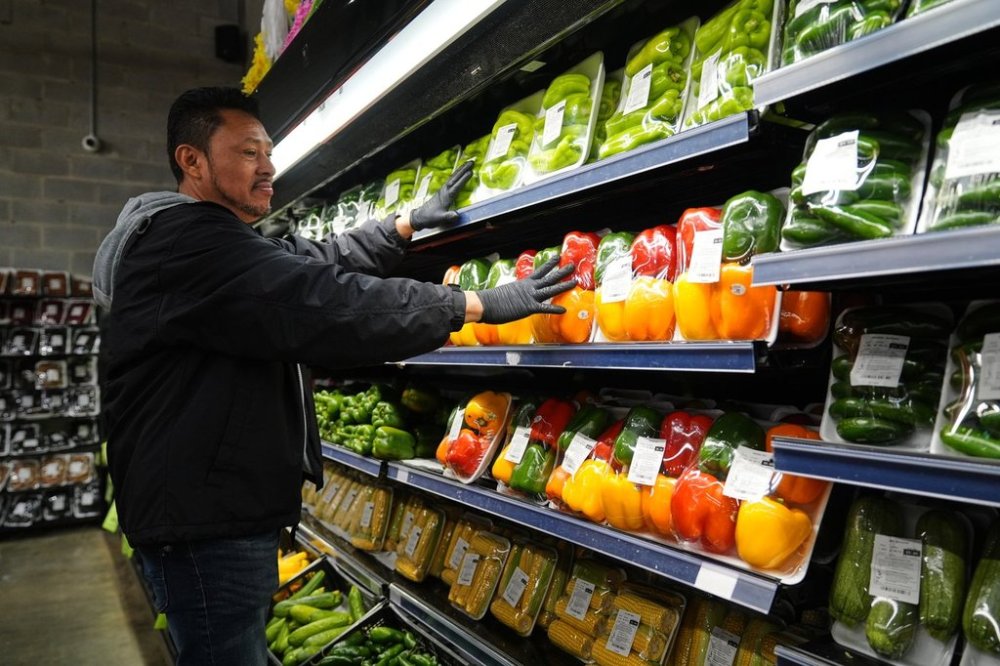
SNAP benefits can only be used for food at participating stores — mostly groceries, supermarkets, discount retail stores, convenience stores and farmers markets. It also covers plants and seeds bought to grow your own food. However, hot foods — like restaurant meals — are not covered.
Most, but not all, food stores participate. The USDA provides a link on its website to a SNAP retail locator, allowing people to enter an address to get the closest retailers to them.
Items commonly found in a grocery and other participating stores that can’t be bought with SNAP benefits include pet food, household supplies like toilet paper, paper towels and cleaning products, and toiletries like toothpaste, shampoo and cosmetics. Vitamins, medicines, alcohol and tobacco products are also excluded.
Sales tax is not charged on items bought with SNAP benefits.

Are there any restrictions?
There aren’t additional restrictions today on which foods can be purchased with SNAP money.
But the federal government is allowing states to apply to limit which foods can be purchased with SNAP starting in 2026.
So far, a dozen states — 11 of them Republican-controlled plus Colorado — have received permission to do so.
All of them will bar buying soft drinks, most say no to candy, and some block energy drinks.