Trump efforts to help US coal undercut by export drop during trade war
Advertisement
Read this article for free:
or
Already have an account? Log in here »
To continue reading, please subscribe:

Digital Subscription
One year of digital access for only $205*
- Enjoy unlimited reading on winnipegfreepress.com
- Read the E-Edition, our digital replica newspaper
- Access News Break, our award-winning app
- Play interactive puzzles
*First annual payment billed as $205.00 + GST for one year. This annual subscription will automatically renew at $233.00 + GST every 52 weeks (10% off the regular annual price of $259.35). Offer available to new and qualified returning subscribers only. Cancel any time.
To continue reading, please subscribe:
Add Free Press access to your Brandon Sun subscription for only an additional
$1 for the first 4 weeks*
- Enjoy unlimited reading on winnipegfreepress.com
- Read the E-Edition, our digital replica newspaper
- Access News Break, our award-winning app
- Play interactive puzzles
*Your next Brandon Sun subscription payment will increase by $1.00 and you will be charged $17.95 plus GST for four weeks. After four weeks, your payment will increase to $24.95 plus GST every four weeks.
Read unlimited articles for free today:
or
Already have an account? Log in here »
Hey there, time traveller!
This article was published 31/10/2025 (320 days ago), so information in it may no longer be current.
FORT COLLINS, Colo (AP) — President Donald Trump’s efforts to help the U.S. coal industry at home are being undermined by falling sales abroad amid his trade war with China, new government reports show.
China has stopped importing U.S. coal, accounting for most of a 14% decline in U.S. coal exports so far this year, according to analysts and the U.S. Energy Information Administration.
Trump’s meeting with Chinese leader Xi Jinping this week suggests trade progress. But whether it will include the U.S. coal industry is still uncertain.
“It’s hard to tell whether that’s just going to maintain the status quo or if that’s going to be an increase in exports of coal and soybeans to China,” coal analyst Seth Feaster with the Institute for Energy Economics and Financial Analysis said Friday.
Trump has been easing up on regulations and opening up mining on federal lands. The result has been to “keep our lights on, our economy strong, and America Energy Dominant,” Interior Department spokesperson Charlotte Taylor said in an e-mailed statement Friday.
The administration has also reduced royalty rates for coal extracted from federal lands and in September pledged $625 million to bolster coal power generation, including by recommissioning or modernizing old coal plants amid growing electricity demand from artificial intelligence and data centers.
Recent government coal lease sales in Montana, Wyoming and Utah, however, have failed to draw bids deemed acceptable by the Interior Department.
So far this year, U.S. coal production is up about 6%, due not to Trump policies but higher natural gas prices, Feaster said.
Meanwhile, coal exports fell 14% from January through September compared to the same time last year, according to an EIA report released Oct. 7.
The drop followed an additional Chinese tariff of 15% on U.S. coal in February and a 34% reciprocal Chinese tariff on imports from the U.S. in April, the EIA said in a report issued Friday.
The U.S. exports about one-fifth of the coal it produces. Most goes to India, the Netherlands, Japan, Brazil and South Korea.
China is not a top destination, taking in only about one-tenth of U.S. coal exports. But it has had an outsized effect on overall U.S. coal exports by halting all coal from the U.S. since April, said Andy Blumenfeld, a coal analyst at McCloskey by OPIS.
Almost three-quarters of U.S. coal exported to China last year was metallurgical coal used in steelmaking. The rest was thermal coal burned in power plants to produce electricity, according to Blumenfeld.
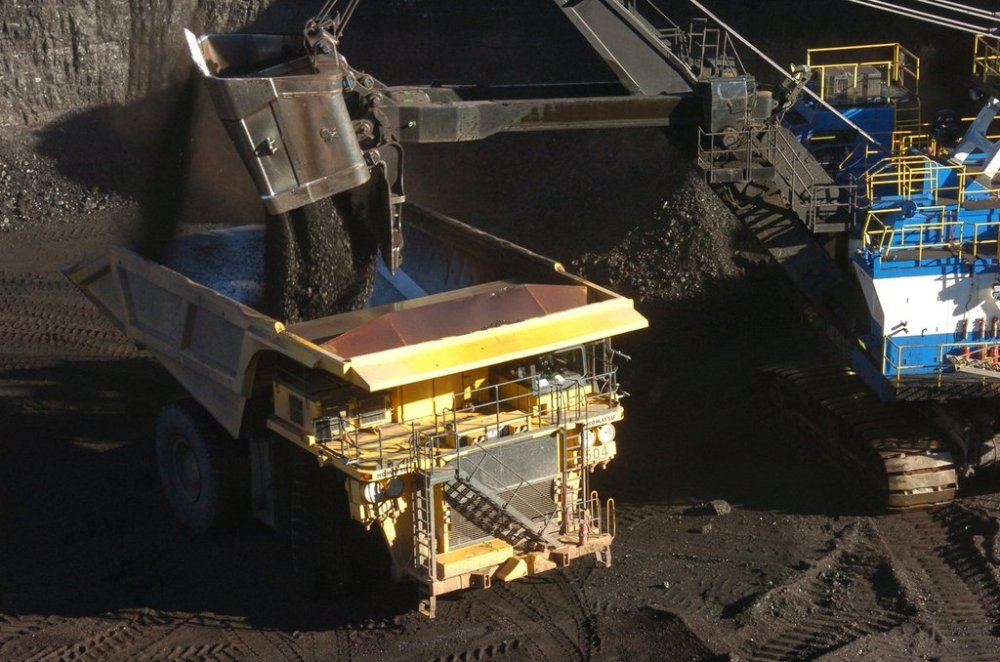
Nearly all U.S. metallurgical coal is mined in Appalachia, while the bulk of U.S. thermal coal comes from massive, open-pit mines in the Powder River Basin of Wyoming and Montana.
Appalachia would therefore benefit most from a resumption of U.S. coal exports to China, noted Blumenfeld by email.
“There is optimism,” Blumenfeld wrote. “But there is little documentation to back that up right now.”
Most coal headed for China last year went through Baltimore, with lesser amounts via the Norfolk, Virginia, area and Gulf of Mexico, according to Blumenfeld.
Relatively little thermal coal from the Western U.S. is exported due to the cost of hauling it by rail to the West Coast, where there has also been political resistance to building port facilities to export more coal.