No car? No problem. Building apartments near public transit could help address the housing crisis
Advertisement
Read this article for free:
or
Already have an account? Log in here »
To continue reading, please subscribe:

Digital Subscription
One year of digital access for only $205*
- Enjoy unlimited reading on winnipegfreepress.com
- Read the E-Edition, our digital replica newspaper
- Access News Break, our award-winning app
- Play interactive puzzles
*First annual payment billed as $205.00 + GST for one year. This annual subscription will automatically renew at $233.00 + GST every 52 weeks (10% off the regular annual price of $259.35). Offer available to new and qualified returning subscribers only. Cancel any time.
To continue reading, please subscribe:
Add Free Press access to your Brandon Sun subscription for only an additional
$1 for the first 4 weeks*
- Enjoy unlimited reading on winnipegfreepress.com
- Read the E-Edition, our digital replica newspaper
- Access News Break, our award-winning app
- Play interactive puzzles
*Your next Brandon Sun subscription payment will increase by $1.00 and you will be charged $17.95 plus GST for four weeks. After four weeks, your payment will increase to $24.95 plus GST every four weeks.
Read unlimited articles for free today:
or
Already have an account? Log in here »
Hey there, time traveller!
This article was published 12/11/2025 (334 days ago), so information in it may no longer be current.
BOSTON (AP) — After years of living on the street and crashing on friends’ couches, Quantavia Smith was given the keys to a studio apartment in Los Angeles that came with an important perk — easy access to public transit.
The 38-year-old feels like she went from a life where “no one cares” to one where she has a safe place to begin rebuilding her life. And the metro station the apartment complex was literally built upon is a lifeline as she searches for work without a car.
“It is more a sense of relief, a sense of independence,” said Smith, who moved in July. She receives some government assistance and pays 30% of her income for rent — just $19 a month for an efficiency with a full-market value of $2,000.
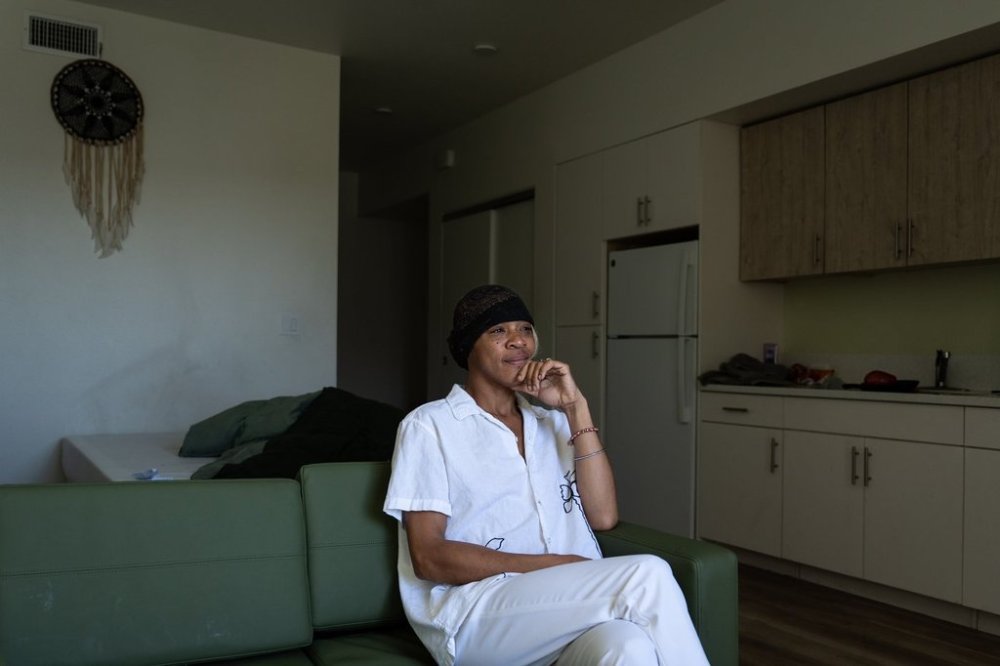
“Having your own space, you feel like you can do anything.”
Metro areas from Los Angeles to Boston have taken the lead in tying new housing developments to their proximity to public transit, often teaming up with developers to streamline the permitting process and passing policies that promote developments that include a greater number of units.
City officials argue building housing near public transit helps energize neglected neighborhoods and provide affordable housing, while ensuring a steady stream of riders for transit systems and cutting greenhouse gas emissions by reducing the number of cars on the road.
“Transit-oriented development should be one of, if not the biggest solution that we’re looking at for housing development,” said Yonah Freemark, research director at the Urban Institute’s Land Use Lab, who has written extensively on the topic.
“It takes advantage of all of this money we’ve spent on transportation infrastructure. If you build the projects and don’t build anything around the areas near them, then it’s kind of like money thrown down the drain,” Freemark said.
Transit housing projects from DC to LA
The Santa Monica and Vermont Apartments where Smith lives is part of an ambitious plan by the Los Angeles County Metropolitan Transportation Authority to build 10,000 housing units near transit sites by 2031 — offering developers land discounts in exchange for affordable housing development and other community benefits.
In Washington D.C., the transit authority has completed eight projects since 2022 that provided nearly 1,500 apartments and a million square feet of office space. About half were in partnership with Amazon, which committed $3.6 billion in low-cost loans and grants for affordable housing projects in Washington, as well as Nashville, Tennessee, and the Puget Sound area in Washington state. Almost all are within a half-mile of public transit.
“Big cities face the greatest challenges when it comes to traffic congestion and high housing costs,” Freemark said. “Building new homes near transit helps address both problems by encouraging people to take transit while increasing housing supply.”
Among projects Boston has built, the Pok Oi Residents in Chinatown is a 10-minute walk to the subway and a half-dozen bus stops. That’s a draw for Bernie Hernandez, who moved his family there from a Connecticut suburb after his daughter got into a Boston university.
“The big difference is commuting. You don’t need a car,” said Hernandez, who said he can walk to the grocery story and pharmacy. His 17-year-old daughter takes the subway to school. Now, his car mostly sits idle, saving him money on gas and time spent in traffic.
“You get to go to different places very quickly. Everything is convenient,” Hernandez said.
States take aim at zoning regulations
States from Massachusetts to California are passing laws targeting restrictive zoning regulations that for decades prohibited building multifamily developments and contributed to housing shortages.
Last month, California Gov. Gavin Newsom signed a state law allowing taller apartment buildings on land owned by transit agencies and near bus, train and subway lines.
“Building more homes in our most sustainable locations is the key to tackling the affordability crisis and locking in California’s success for many years to come,” said State Sen. Scott Wiener, a Democrat who authored the bill.
California joins Colorado, which requires cities to allow an average of 40 housing units per acre within a quarter-mile of transit, and Utah, which mandates about 50 units per acre. In Washington, the governor signed a bill this year allowing taller housing developments in mixed-use commercial zones near transit.
“We want to ensure that there are mixed-income, walkable, vibrant homes all around those transit investments and that people have the option of using cars less to improve the environmental health of our communities,” said Democratic Rep. Julia Reed, who authored the Washington bill.
“It’s about giving people the opportunity to drive less and live more.”
Housing takes center stage in Massachusetts

Massachusetts Democratic Gov. Maura Healey has made housing a priority.
Among her most potent tools is a 2021 law that requires 177 towns or communities nearby to create zoning districts allowing multi-family housing. The state provided nearly $8 million to more than 150 communities to help create these zones, while threatening to cut funding for those that don’t. More than 6,000 housing units are in development as a result.
“You put housing nearby public transit” Healey said. “It’s great for people. They can literally get up, leave their home, walk to a commuter rail and get to work.”
Among the first to comply was Lexington, which has approved 10 projects, including a $115 million complex with 187 housing units and retail space.
Walking past earth-moving equipment and dump trucks at the construction site earlier this year, project manager Quinlan Locke said: “This is a landscape yard. It’s commercial. It’s meant for trucking.”
But, he added, in “two years from now, it’s going to be meant for people who live here, work here and play here. This is going to become someone’s home.”
Opposition to zoning changes
Some advocates argue the lofty goals of transit housing are falling short due to fierce local resistance and lack of funding and support at the federal and state levels.
Higher mortgage interest rates, more government red tape, rising construction costs and lack of investment at transit stations also have contributed to a troubling trend — nine times more housing units built far from public transit versus near it in the past two decades, according to a 2023 Urban Institute study.
In Massachusetts, 19 communities still haven’t created new zones. Some unsuccessfully sued the state to halt the law, while residents rejected new zones in others. Lexington eventually shrank its zone from 227 acres to 90 acres after residents complained.
“If we allow the state to come in and dictate how we zone, what else are they going to come in and dictate?” said Anthony Renzoni, a selectman from the town of Holden, which sued the state and is drawing up a new zoning map after residents rejected the first one.

New housing, a new life
In Los Angeles, the six-story complex where Smith lives in East Hollywood is home to 300 new residents since opening in February. It’s revitalizing the area around the metro site, with a Filipino grocery, medical clinic and farmers market opening early next year.
Half the 187 units are reserved for formerly homeless residents like Smith, who had been living in a rundown motel paid for with a voucher and before that on the street. She’s been assigned a case worker and is getting help with basic life skills, budgeting and finding work.
Equally important: Smith, who can’t afford a car, doesn’t need one.
“I’m very very fortunate to be somewhere where the transit takes me where I want to go,” she said. “Where I want to go is not that far.”