Vatican’s return of Indigenous artifacts applauded, but is it really a gift?
Advertisement
Read this article for free:
or
Already have an account? Log in here »
To continue reading, please subscribe:

Digital Subscription
One year of digital access for only $205*
- Enjoy unlimited reading on winnipegfreepress.com
- Read the E-Edition, our digital replica newspaper
- Access News Break, our award-winning app
- Play interactive puzzles
*First annual payment billed as $205.00 + GST for one year. This annual subscription will automatically renew at $233.00 + GST every 52 weeks (10% off the regular annual price of $259.35). Offer available to new and qualified returning subscribers only. Cancel any time.
To continue reading, please subscribe:
Add Free Press access to your Brandon Sun subscription for only an additional
$1 for the first 4 weeks*
- Enjoy unlimited reading on winnipegfreepress.com
- Read the E-Edition, our digital replica newspaper
- Access News Break, our award-winning app
- Play interactive puzzles
*Your next Brandon Sun subscription payment will increase by $1.00 and you will be charged $17.95 plus GST for four weeks. After four weeks, your payment will increase to $24.95 plus GST every four weeks.
Read unlimited articles for free today:
or
Already have an account? Log in here »
Hey there, time traveller!
This article was published 22/11/2025 (299 days ago), so information in it may no longer be current.
When the Vatican announced this month that Pope Leo was giving a “gift” of 62 Indigenous artifacts to Canadian bishops, to be returned to their original communities, some Indigenous leaders celebrated it as a continuation of a reconciliation journey.
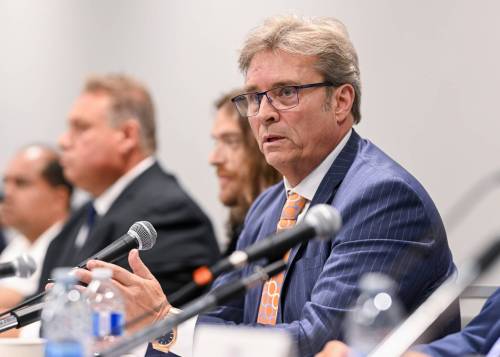
While Nisga’a scholar Amy Parent said she was pleased for the communities involved, many questions are left unanswered, and the biggest one is: “Why did it take so long?”
“I’m really happy for them, but also, again, it feels really bittersweet to know that one of the richest, wealthiest churches in the world has taken so long to do the right thing,” said Parent, who is a UNESCO Co-Chair in transforming Indigenous knowledge research governance and rematriation.
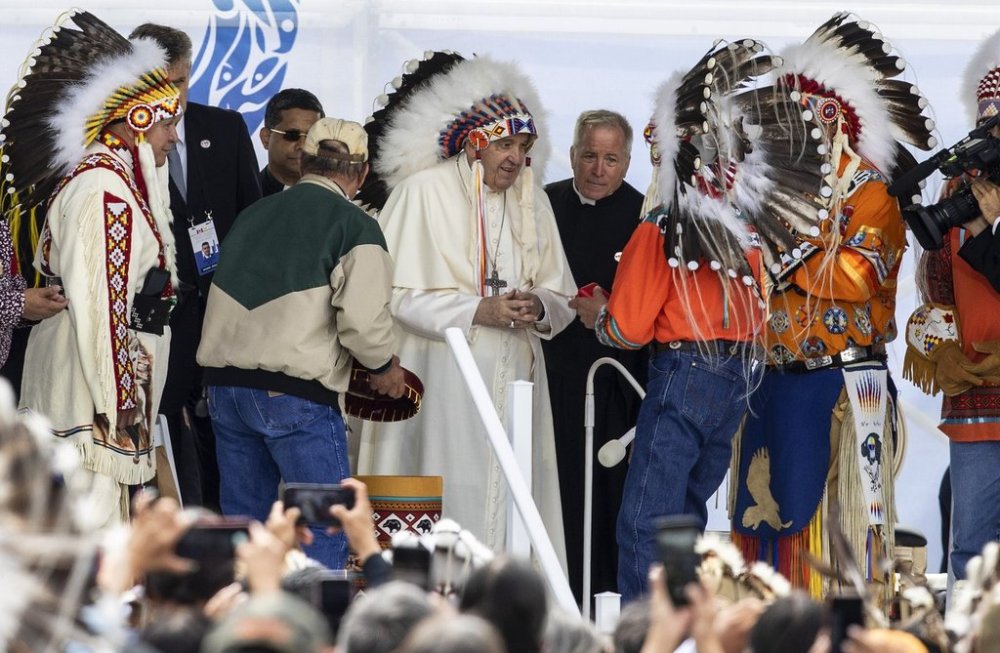
The Vatican said it had received the items — including an Inuit kayak, war clubs, a headdress, masks and wampum belts — as “patrimony” for the Vatican Missionary Exhibition of 1925, “to bear witness to the faith and cultural richness of peoples.”
She also didn’t accept the items were “gifts to the Vatican,” saying that nothing given to a colonizer or religious institution during “a time of genocide” could be considered a gift.
The announcement of the return of the artifacts on Nov. 15 also framed them as a “gift” to the Canadian Conference of Catholic Bishops, and they will be reunited with their originating communities after their arrival to Canada next month.
Cody Groat, an assistant professor in the department of history and the Indigenous Studies program at Western University said there was a long history of Indigenous nations giving items to settler societies or to church entities to build diplomatic relationships.
But when the artifacts in the Vatican’s collection were taken away in the 1920s, Groat said, it was a “coercive period” with the Indian Act at “its most assimilative,” cultural practices were “actively banned” and the residential school system was in full effect.
“So, when the Vatican is using this language of giftings, we have to be quite hesitant,” said Groat, who is a band member of the Six Nations of the Grand River in Ontario.
Groat said he had been following the story of the artifacts for many years, and the return was “a long time coming.”
The Vatican said the return was initiated by the late Pope Francis as a part of his 2022 papal visit to Canada.
“So, it’s been a very long, drawn-out process. There are still some flaws with the system we have in place, but I think it’s going to be the start of a good turning point,” said Groat.
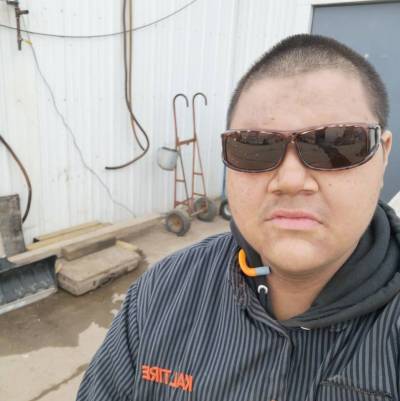
Hugh Braker, a member of the political executive of the First Nations Summit in B.C., said it was “very, very happy” moment for him when he heard the news.
Braker said the artifacts were taken away during the potlatch ban, which was established in the 1880s to assimilate Indigenous peoples by targeting their cultural, social, and economic practices. The ban was lifted in 1951.
“The unfortunate thing is that when the priests, Indian agents, and police raided some places of the potlatches, they would seize the regalia. Sometimes, they would keep some,” said Braker.
Braker said many people from Indigenous communities were aware their goods and regalia had been seized, and they would go to museums and the Catholic church to find them.
He said he hasn’t received any notice outlining the return of items. But he said there are questions arising from the process, including how the items will be transported home.
“That’s going to be a big problem, because many of these things will be fragile by now,” said Braker.
The Vatican has said the items will be returned to Canada on Dec. 6 and housed at the Canadian Museum of History in Ottawa, before they will be reunited with their originating communities.
Parent characterized the Vatican’s process as a “state-to-state, colonial approach” for the artifacts’ return.
Groat said the items were associated with a Vatican exhibition in 1925 focused on the church’s missionary successes.
The Canadian Conference of Catholic Bishops said in a statement that more information about the artifacts will be available in early December.
“The CCCB remains committed to ensuring that all communications around the return of these items align with an Indigenous-led process,” read the statement.

Groat said the Canadian Museum of History would assess the items and their condition before transferring them to national Indigenous organizations like the Assembly of First Nations, and from there, the relevant First Nations.
Braker said seeing their ultimate return would uplift Indigenous communities.
“The government tried very, very hard to stomp out our culture, our way of life, and our religion and our governance, but it certainly brings joy to my heart when I see young Indigenous children today singing songs in their own language and dancing,” said Braker
“I think it’s going to repair some of the First Nation people’s culture, and be able to use their artifacts from their ancestors, and it’s also going to give some impetus to the First Nations people to rescue their languages and their culture.”
This report by The Canadian Press was first published Nov., 2025.
The Free Press acknowledges the financial support it receives from members of the city’s faith community, which makes our coverage of religion possible.