Five things to know about the Quebec government’s new secularism bill

Advertisement

Advertise with us

MONTREAL - The Quebec government has tabled new legislation that would introduce broad new restrictions on religious practices in public and private spaces. 

Read this article for free:


or

Already have an account? Log in here »

To continue reading, please subscribe:

Subscribe and receive a limited-edition Free Press branded hat or tote.

Digital Subscription

One year of digital access for only $205*

  • Enjoy unlimited reading on winnipegfreepress.com
  • Read the E-Edition, our digital replica newspaper
  • Access News Break, our award-winning app
  • Play interactive puzzles

*First annual payment billed as $205.00 + GST for one year. This annual subscription will automatically renew at $233.00 + GST every 52 weeks (10% off the regular annual price of $259.35). Offer available to new and qualified returning subscribers only. Cancel any time.

To continue reading, please subscribe:

Add Free Press access to your Brandon Sun subscription for only an additional

$1 for the first 4 weeks*

  • Enjoy unlimited reading on winnipegfreepress.com
  • Read the E-Edition, our digital replica newspaper
  • Access News Break, our award-winning app
  • Play interactive puzzles
Start now

*Your next Brandon Sun subscription payment will increase by $1.00 and you will be charged $17.95 plus GST for four weeks. After four weeks, your payment will increase to $24.95 plus GST every four weeks.

Hey there, time traveller!
This article was published 27/11/2025 (292 days ago), so information in it may no longer be current.

MONTREAL – The Quebec government has tabled new legislation that would introduce broad new restrictions on religious practices in public and private spaces. 

On Thursday, Secularism Minister Jean-François Roberge said the bill is part of Quebec’s decades-long process of secularization. “This is how we live in Quebec, and this is how we’re going to continue to live,” he said. 

Here are five things to know about Quebec’s new secularism bill. 
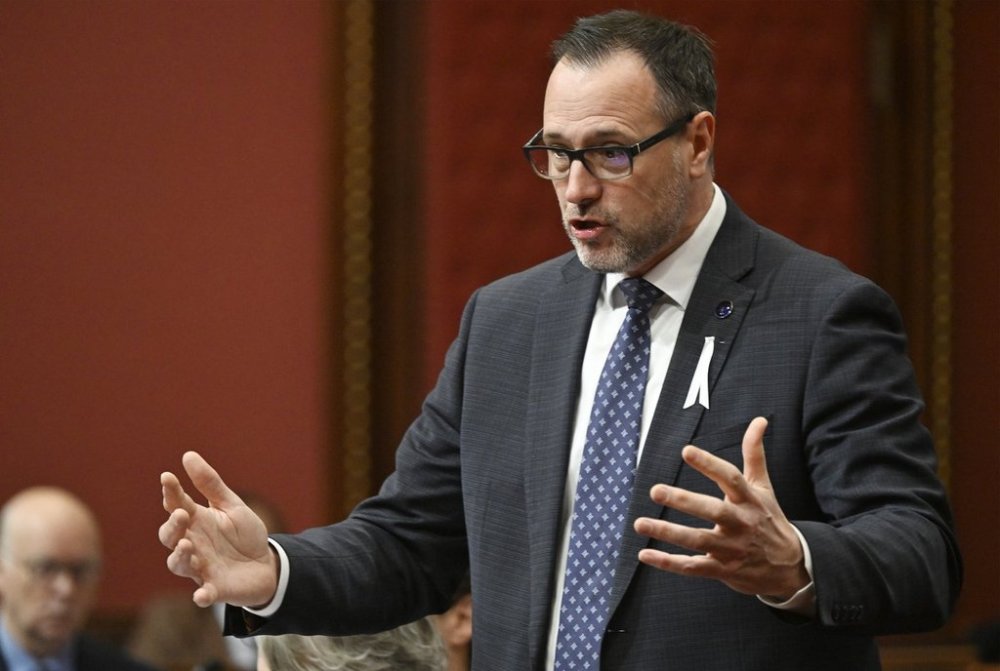
Quebec Secularism Minister Jean-François Roberge responds to the Opposition during question period at the legislature in Quebec City, Thursday, Nov. 27, 2025. THE CANADIAN PRESS/Jacques Boissinot

No more public prayer

The new legislation would ban “collective religious practice” on public roads and in parks, except for events that are authorized on a case-by-case basis by municipalities. The move comes in response to Muslim prayers taking place during pro-Palestinian demonstrations, which Roberge called a “provocation.” People could be fined for violating the ban. 

No more kosher-only meals

Public institutions would no longer be allowed to offer menus based exclusively on a religious tradition – for example, halal or kosher meals. On Thursday, Roberge said this would apply to facilities including Montreal’s Jewish General Hospital, which offers a kosher menu. The hospital could continue to offer kosher food, he said, but must offer other options as well. The rule would also apply to subsidized daycares. 

Limits on funding for private religious schools  

If the bill is passed, the government would no longer fund private schools that teach religion during classroom hours or that select students or staff based on religious criteria. Roberge was unable to say how many schools would be affected by the change, but said they will have three years to adapt. 

No more prayer rooms

Religious activities will no longer be allowed in public institutions, which means prayer rooms in colleges and universities will be closed by September 2026, Roberge said. Institutions where people live, including prisons and long-term care homes, will be exempt from the prohibition. 

Expanded ban on religious symbols

The bill would ban religious symbols, including hijabs and turbans, for people working in daycares, colleges and universities. It would also ban full face coverings, including the niqab, for anyone in those institutions, including students. The same rules have already been applied to elementary and high schools in a separate bill passed this fall. 

This report by The Canadian Press was first published Nov. 27, 2025. 

Report Error Submit a Tip

The Free Press acknowledges the financial support it receives from members of the city’s faith community, which makes our coverage of religion possible.
More Stories

A development infused with personal memory

Brent Bellamy 6 minute read Preview

A development infused with personal memory

Brent Bellamy 6 minute read 2:00 AM CDT

I haven’t written here in a while. Early this summer, my mom was unfairly taken from us — from me. Healing, as much as it’s possible, takes time.

Read
2:00 AM CDT

Mayoral candidate denounced for online comments

Morgan Modjeski 3 minute read Preview

Mayoral candidate denounced for online comments

Morgan Modjeski 3 minute read Sunday, Sep. 13, 2026

A Winnipeg mayoral candidate is facing criticism after he posted derogatory comments about immigrants and used the word “gay” as an insult online.

Read
Sunday, Sep. 13, 2026

Man serving time for 2018 second-degree murder pleads guilty to manslaughter in 2024 prison slaying

Dean Pritchard 3 minute read Preview

Man serving time for 2018 second-degree murder pleads guilty to manslaughter in 2024 prison slaying

Dean Pritchard 3 minute read 4:32 PM CDT

A Manitoba man is now serving his second life sentence in prison after an unexplained technical mistake resulted in a fatal seven-on-one attack on another inmate.

Randal Hastings pleaded guilty Monday to manslaughter for his part in the July 2024 killing of 37-year-old Dean Tyler Young at Stony Mountain Institution.

Hastings, 33, was previously convicted of second-degree murder for a 2018 killing in Thompson and, at the time of Young’s death, was serving a life sentence with no chance of parole until 2033. His latest sentence comes with a seven-year period of parole ineligibility.

“It may be a very long time before any parole board is asked to consider whether you can and ought to be safely released into the community,” Court of King’s Bench Justice Sarah Inness told Hastings.

Read
4:32 PM CDT

Puzzles Palace

1 minute read Monday, Jul. 27, 2026

To solve our puzzles, please subscribe with this special offer: |

Winnipeg venues saying no to AI-made advertisements

Sheldon Birnie 8 minute read Preview

Winnipeg venues saying no to AI-made advertisements

Sheldon Birnie 8 minute read Updated: Yesterday at 10:22 AM CDT

Although the days when telephone poles and notice boards across the city were thick with gig posters, either slopped up with wheat paste or wrapped tight with packing tape, are behind us, the art of making an appealing visual ad for live music events is still a vital part of the local creative scene.

However, a widespread backlash against a new kind of slop — the use of generative AI images — has been building, especially among creatives when it comes to promoting live music.

“Live music is and always has been a DIY type of scene, especially locally,” says Evan Simpson, who has been working as a graphic designer for nearly a decade.

“For years people have been making their own flyers, or if they have the budget, hiring a designer or artist to come up with some artwork for their flyers. It’s a whole ecosystem, a scene supporting itself. If you take away the visual side of it, the spark, individuality and uniqueness of each gig poster is lost. What a sad world it would be if all art were made by AI.”

Read
Updated: Yesterday at 10:22 AM CDT

A father and son arrested last month are accused of travelling across Canada — and using courier services and Canada Post — to supply their Winnipeg drug-trafficking operation, a recent court filing shows.