

Report says world’s biggest arms producers increased revenue by 5.9% last year to record level
Advertisement
Read this article for free:
or
Already have an account? Log in here »
To continue reading, please subscribe:

Digital Subscription
One year of digital access for only $205*
- Enjoy unlimited reading on winnipegfreepress.com
- Read the E-Edition, our digital replica newspaper
- Access News Break, our award-winning app
- Play interactive puzzles
*First annual payment billed as $205.00 + GST for one year. This annual subscription will automatically renew at $233.00 + GST every 52 weeks (10% off the regular annual price of $259.35). Offer available to new and qualified returning subscribers only. Cancel any time.
To continue reading, please subscribe:
Add Free Press access to your Brandon Sun subscription for only an additional
$1 for the first 4 weeks*
- Enjoy unlimited reading on winnipegfreepress.com
- Read the E-Edition, our digital replica newspaper
- Access News Break, our award-winning app
- Play interactive puzzles
*Your next Brandon Sun subscription payment will increase by $1.00 and you will be charged $17.95 plus GST for four weeks. After four weeks, your payment will increase to $24.95 plus GST every four weeks.
Read unlimited articles for free today:
or
Already have an account? Log in here »
Hey there, time traveller!
This article was published 30/11/2025 (315 days ago), so information in it may no longer be current.
STOCKHOLM (AP) — The world’s biggest weapons-producing companies saw a 5.9% increase in revenue from sales of arms and military services last year as demand was fed by the wars in Ukraine and Gaza as well as countries’ rising military spending, according to a report released Monday.
The Stockholm International Peace Research Institute, or SIPRI, said the revenues of the 100 largest arms makers grew to $679 billion in 2024, the highest figure it has recorded.
The bulk of the increase was down to companies based in Europe and the United States, but there were increases around the world — except in Asia and Oceania, where problems in the Chinese arms industry led to a slight fall.
Thirty of the 39 U.S. companies in the top 100 — including Lockheed Martin, Northrop Grumman and General Dynamics — posted increases. Their combined revenue was up 3.8% at $334 billion. But SIPRI noted that “widespread delays and budget overruns continue to plague development and production” in major U.S.-led programs, including the F-35 fighter jet.
Twenty-three of the 26 companies in Europe, excluding Russia, saw their arms revenue increase as the continent boosted spending. Their aggregate income rose by 13% to $151 billion, fueled by demand linked to the war in Ukraine and the perceived threat from Russia.
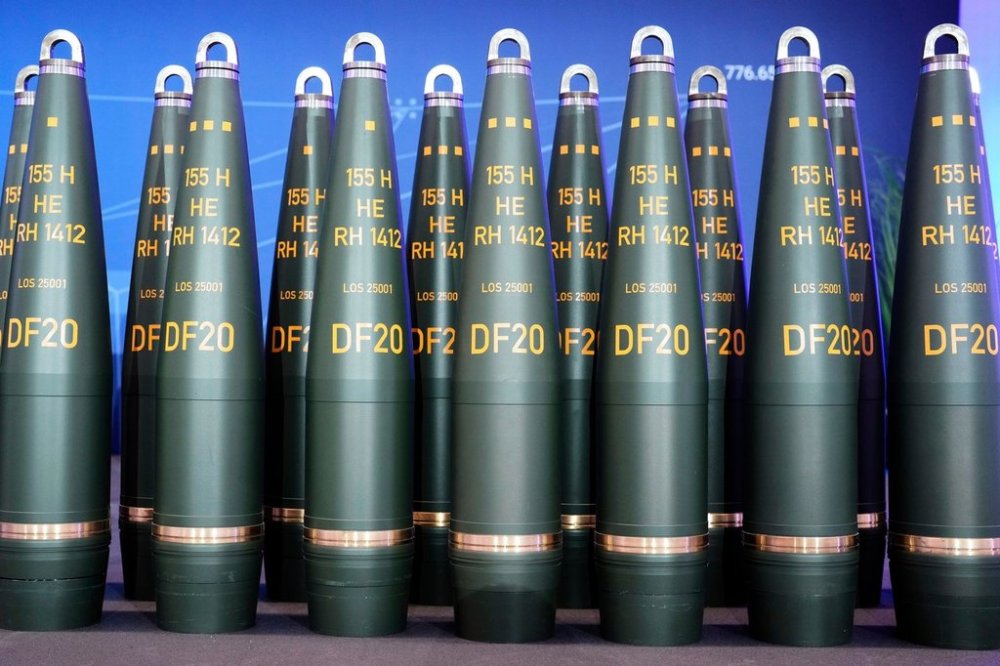
There were notably big gains for the Czech Republic’s Czechoslovak Group, whose revenue soared by 193% thanks in part to a government-led project to source artillery shells for Ukraine; and for Ukraine’s JSC Ukrainian Defense Industry, which had a 41% gain.
European firms are investing in new production capacity to meet greater demand, but SIPRI researcher Jade Guiberteau Ricard cautioned in a statement that “sourcing materials could pose a growing challenge,” with restructuring of supply chains for critical minerals a potential complication in light of Chinese export restrictions.
The two Russian companies in SIPRI’s list, Rostec and United Shipbuilding Corporation, saw arms revenues rise 23% to a combined $31.2 billion, despite sanctions leading to a shortage of components. SIPRI said that domestic demand was more than enough to offset falling arms exports, though a skilled labor shortage is a challenge.

Arms revenue also grew in the Middle East, and the three Israeli companies in the ranking had a 16% increase to $16.2 billion. In 2024, the backlash over Israeli actions in Gaza “seems to have had little impact on interest in Israeli weapons,’ SIPRI researcher Zubaida Karim said, and many countries continued to place new orders.
A 1.2% drop in revenue in Asia and Oceania to $130 billion was led by a 10% drop in the income of the eight Chinese companies in the index. That came as multiple corruption allegations in Chinese arms procurement led to major contracts being delayed or canceled last year, SIPRI said.