WEATHER ALERT

AI’s impact could worsen gaps between world’s rich and poor, a UN report says

Advertisement

Advertise with us

BANGKOK (AP) — Behind the hoopla over the promise of artificial intelligence lay difficult realities, including how such technology might affect people already disadvantaged in a data-driven world.

Read this article for free:


or

Already have an account? Log in here »

To continue reading, please subscribe:

Subscribe and receive a limited-edition Free Press branded hat or tote.

Digital Subscription

One year of digital access for only $205*

  • Enjoy unlimited reading on winnipegfreepress.com
  • Read the E-Edition, our digital replica newspaper
  • Access News Break, our award-winning app
  • Play interactive puzzles

*First annual payment billed as $205.00 + GST for one year. This annual subscription will automatically renew at $233.00 + GST every 52 weeks (10% off the regular annual price of $259.35). Offer available to new and qualified returning subscribers only. Cancel any time.

To continue reading, please subscribe:

Add Free Press access to your Brandon Sun subscription for only an additional

$1 for the first 4 weeks*

  • Enjoy unlimited reading on winnipegfreepress.com
  • Read the E-Edition, our digital replica newspaper
  • Access News Break, our award-winning app
  • Play interactive puzzles
Start now

*Your next Brandon Sun subscription payment will increase by $1.00 and you will be charged $17.95 plus GST for four weeks. After four weeks, your payment will increase to $24.95 plus GST every four weeks.

Hey there, time traveller!
This article was published 01/12/2025 (280 days ago), so information in it may no longer be current.

BANGKOK (AP) — Behind the hoopla over the promise of artificial intelligence lay difficult realities, including how such technology might affect people already disadvantaged in a data-driven world.

A new report by the United Nations Development Program notes most of the gains from AI are likely to be reaped by wealthy nations unless steps are taken to use its power to help close gaps in access to basic needs, as well as such advanced know-how.

The report released Tuesday likens the situation to the “Great Divergence” of the industrial revolution, when many Western countries saw rapid modernization while others fell behind.

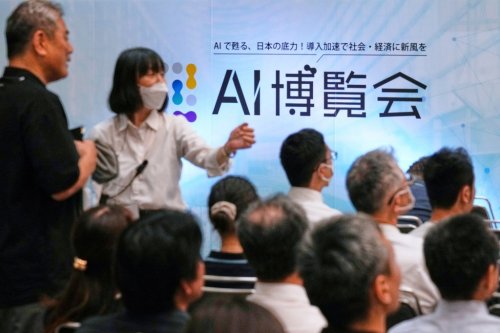
FILE - An usher directs an attendee to a seat for a seminar at a convention titled AI Expo in Tokyo, on Aug. 27, 2025. (AP Photo/Hiro Komae, File)

Questions over how companies and other institutions will use AI are a near universal concern given its potential to change or replace some jobs done by people with computers and robots.

But while much of the attention devoted to AI focuses on productivity, competitiveness and growth, the more important question is what it will mean for human lives, the authors note.

“We tend to overemphasize the role of technology,” said Michael Muthukrishna of the London School of Economics, the report’s main author, told reporters. “We need to ensure it’s not technology first, but it’s people first,” he said, speaking by video at the report’s launch in Bangkok.

The risk of exclusion is an issue for communities where most people are still struggling to access skills, electric power and internet connectivity, for older people, for people displaced by war, civil conflict and climate disasters. At the same time, such people may be “invisible” in data that will not take them into account, the report said.

“As a general-purpose technology, AI can lift productivity, spark new industries, and help latecomers catch up,” the report says.

Better advice on farming, analysis of X-rays within seconds and faster medical diagnoses, more effective weather forecasts and damage assessments hold promise for rural communities and areas prone to natural disasters.

“AI systems that analyze poverty, health, and disaster risks enable faster, fairer, and more transparent decisions, turning data into continuous learning and public value,” it says.

Still, even in wealthy nations like the United States, the potential for data centers to devour too large a share of electricity and water has raised concerns. Ramping up power generation to meet higher demand may hinder progress in limiting the emissions of carbon from burning fossil fuels that contribute to global warming, while also causing health hazards.

The technology raises ethical, privacy and cybersecurity concerns: researchers have found hackers using AI to automate portions of cyberattacks. There also is the problem of deepfakes that can misinform or facilitate criminal activity.

Asian nations including China, Japan, South Korea and Singapore are well placed to take advantage of AI tools, the report notes, while places like Afghanistan, the Maldives and Myanmar lack skills, reliable power and other resources needed to tap into the computing potential of AI. Inequalities between regions within countries mean some places even in advanced economies are prone to be left behind.

About a quarter of the Asia-Pacific region lacks online access, the report says.

If such gaps are not closed, many millions may be excluded from the kinds of devices, digital payment systems, digital IDs and education and skills that are required to participate fully in the global economy, falling further behind, said Philip Schellekens, the UNDP’s chief economist for the Asia Pacific.

Other risks include misinformation and disinformation, surveillance that violates rights to privacy and systems that can act as “black boxes,” reinforcing biases against minorities or other groups. So transparency and effective regulations are crucial guardrails for ensuring AI is used in fair and accountable ways, he said.

“We believe we need more balance, less hysteria and hype,” Schellekens said.

AI is becoming essential for modern life, like electricity, roads, and now the internet, so governments need to invest more in digital infrastructure, education and training, fair competition and social protections, the report says.

“The goal,” it says, “is to democratize access to AI so that every country and community can benefit while protecting those most at risk from disruption.”

Report Error Submit a Tip

More Stories

Art piece connects viewers to broader national landscape

Allison Gillmor 4 minute read Preview

Art piece connects viewers to broader national landscape

Allison Gillmor 4 minute read Yesterday at 2:01 AM CDT

WHAT IT IS: Copy Paperis a 2014 textile-based piece by Ontario-born, Winnipeg-based artist Kristin Nelson, currently on view at WAG-Qaumajuq as part of the exhibition Terra Cognita/Incognita.

Of the 125 works in the show — which uses historical and contemporary pieces from WAG-Qaumajuq’s permanent collection to explore how artists have represented the landscape over time and across cultures —probably the most attention-getting are the beautiful paintings of Canada’s lakes, plains, forests and mountains.

So, how does this seemingly modest, somewhat enigmatic work connect to Terra Cognita/Incognita’s larger themes?

WHAT IT’S ABOUT: In the middle of the exhibition, an antique desk holds several objects of beauty and utility, and this is where Copy Paper sneaks in, as something both “cognita and incognita,” known and unknown.

Read
Yesterday at 2:01 AM CDT

(Un)friendly competition

Ken Wiebe 6 minute read Preview

(Un)friendly competition

Ken Wiebe 6 minute read Yesterday at 5:26 PM CDT

REGINA – Jermarcus Hardrick knows exactly what kind of battle he is in for on Sunday in the 61st edition of the Labour Day Classic.

The Saskatchewan Roughriders right tackle has ample experience lining up opposite Winnipeg Blue Bombers defensive end Willie Jefferson, both as teammates and opponents during the past decade and change.

In this pivotal matchup between Prairie rivals jockeying for position in the CFL West Division, this head-to-head battle in the trenches figures to be must-see TV.

“Willie is one of my best friends, one of the best players in the league. It’s amazing to see what he’s doing on film, what he’s always done on film,” said Hardrick, who spent eight seasons with the Blue Bombers before joining the Roughriders in 2024 as a free agent. “With the way that you know he plays and what he can do to a team with his energy and knowing that’s on the other side from you all game, that’s a big challenge that you look forward to.

Read
Yesterday at 5:26 PM CDT

News briefs for Sunday, September 6, 2026

1 minute read Updated: 2:41 PM CDT

A collection of breaking news briefs filed on Sunday, September 6, 2026

Man injured in downtown shooting

2:40 PM

A man in his 20s is in critical condition after he was shot in downtown Winnipeg early Sunday morning.

Woman who saved child, father from Red River uncomfortable with hero label

Scott Billeck 5 minute read Preview

Woman who saved child, father from Red River uncomfortable with hero label

Scott Billeck 5 minute read Wednesday, Sep. 2, 2026

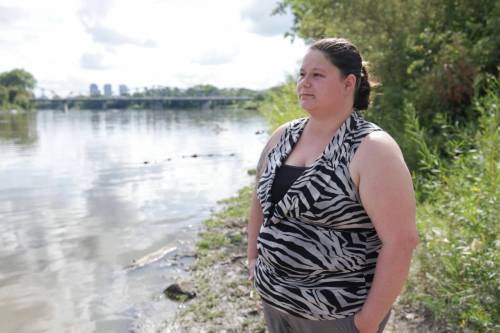
A Winnipeg woman who’s been hailed as a hero by police for saving a father and his young child from the Red River says she doesn’t feel like one.

“I’m a mom… and I would do it again,” said Jayclyn Morrissette, who was walking with her neighbour through St. John’s Park on Aug. 24 when they spotted a young girl flailing in the nearby river. “I was meant to be there and that was supposed to happen.”

Morrissette, who spoke to the Free Press Wednesday after police released details about the rescue, said she and her neighbour began looking for the child’s parents and found them at the nearby playground searching for her.

Morrissette waved them over. The father, who she said could not swim, jumped into the river first and immediately began to sink.

Read
Wednesday, Sep. 2, 2026

AI’s impact could worsen gaps between world’s rich and poor, a UN report says

Elaine Kurtenbach, The Associated Press 4 minute read Preview

AI’s impact could worsen gaps between world’s rich and poor, a UN report says

Elaine Kurtenbach, The Associated Press 4 minute read Tuesday, Dec. 2, 2025

BANGKOK (AP) — Behind the hoopla over the promise of artificial intelligence lay difficult realities, including how such technology might affect people already disadvantaged in a data-driven world.

A new report by the United Nations Development Program notes most of the gains from AI are likely to be reaped by wealthy nations unless steps are taken to use its power to help close gaps in access to basic needs, as well as such advanced know-how.

The report released Tuesday likens the situation to the “Great Divergence” of the industrial revolution, when many Western countries saw rapid modernization while others fell behind.

Questions over how companies and other institutions will use AI are a near universal concern given its potential to change or replace some jobs done by people with computers and robots.

Read
Tuesday, Dec. 2, 2025

Wonderful wines to help welcome autumn

Ben Sigurdson 4 minute read Preview

Wonderful wines to help welcome autumn

Ben Sigurdson 4 minute read Yesterday at 3:00 AM CDT

As we creep ever closer to fall, many wine drinkers will start to think about popping corks (or screwcaps, as it were) on wines that suit cooler temperatures.

But summer’s not quite done yet. Here are six new and/or notable wines ideal for sipping as we make the transition from warmer weather into the first hints of autumn…

Wines of the weekThe Willm NV Blanc de Noirs Crémant d’Alsace Brut (Alsace, France — $28.99, Liquor Marts and beyond) is a French bubbly made from the Pinot Noir grape in the traditional method (secondary fermentation, which creates the bubbles, happens in the bottle rather than in tanks before bottling).

It’s pale gold with a hint of pink, and on the nose offers ripe cherry, cranberry, bread dough and strawberry compote notes. On the palate it’s light-bodied and mainly dry, with an almost-wild herbal component coming with the strawberry, tart peach, cranberry, raspberry and bread dough flavours.

Read
Yesterday at 3:00 AM CDT