

Ontario auditor general finds province not properly overseeing doctor billings
Advertisement
Read this article for free:
or
Already have an account? Log in here »
To continue reading, please subscribe:
Monthly Digital Subscription
$1 per week for 24 weeks*
- Enjoy unlimited reading on winnipegfreepress.com
- Read the E-Edition, our digital replica newspaper
- Access News Break, our award-winning app
- Play interactive puzzles
*Billed as $4.00 plus GST every four weeks. After 24 weeks, price increases to the regular rate of $19.95 plus GST every four weeks. Offer available to new and qualified returning subscribers only. Cancel any time.
Monthly Digital Subscription
$4.99/week*
- Enjoy unlimited reading on winnipegfreepress.com
- Read the E-Edition, our digital replica newspaper
- Access News Break, our award-winning app
- Play interactive puzzles
*Billed as $19.95 plus GST every four weeks. Cancel any time.
To continue reading, please subscribe:
Add Free Press access to your Brandon Sun subscription for only an additional
$1 for the first 4 weeks*
*Your next subscription payment will increase by $1.00 and you will be charged $16.99 plus GST for four weeks. After four weeks, your payment will increase to $23.99 plus GST every four weeks.
Read unlimited articles for free today:
or
Already have an account? Log in here »
TORONTO – Ontario is not properly overseeing doctors’ billings, including cases of physicians billing for more than 24 hours in a day – money that could be going toward adding more family doctors, the auditor general has found.
Shelley Spence made the findings in her annual report released Tuesday, which contains a series of health-related audits that also found very few family doctors or people looking for a family doctor are participating in the province’s Health Care Connect system — key to helping Ontario meet its goal of attaching everyone to primary care — and the government hasn’t adequately planned its medical school expansion.
As part of the health audits, Spence found that the Ministry of Health system that doctors have been using since the 1980s to bill OHIP for services provided to patients can’t automatically flag high-risk billings, despite major technological advances since the office made similar findings nearly 10 years ago.
“If there is waste in the billing system — and we’re not saying there is, we’re just saying it needs to be reviewed — and if it could be recovered, you could use that money to hire more family physicians,” Spence said.
An analysis of claims over the last three years found that in each year at least 59 doctors billed for more than 24 hours of service in a day, Spence wrote, with a high of 82 doctors doing so in 2024/25.
The ministry hasn’t thoroughly reviewed those to determine reasons or if time-based fee codes need to be updated, and doesn’t use hourly billing data to select doctors to audit, she found.
“There may be valid reasons for billing a large number of hours a day; however, without flagging these instances for review, the ministry does not know if the billings are appropriate,” Spence wrote.
As well, more than 100 doctors in each of the last three years submitted claims for working all 365 or 366 days a year, which should have been flagged as high-risk, the auditor said. Numerous physicians also billed for services provided to more than 500 patients in a single day and were not subjected to post-payment audits, Spence found.
The ministry has conducted some post-payment audits on high-billing doctors, including one case that identified nearly $1.4 million in overpayment to a doctor billing more than 24 hours in a day 98 times over two years, including one day they billed 114 hours of services, the auditor wrote.
Health Minister Sylvia Jones was unavailable to answer questions Tuesday, and Anthony Leardi, Jones’ parliamentary assistant, defended the current system.
“The first thing that we need to appreciate about the billing system is that it encompasses a very complex system, which is the health-care system … there are actually approximately 5,000 different billing codes under the provincial health-care system and that’s a lot of billing codes, and sometimes those procedures overlap with one another,” Leardi said at a press conference.
“So we need not automatically jump to an assumption.”
Immediately after the press conference, Jones’ office issued a statement saying the ministry is indeed looking into cases raised by the auditor and will take action if wrongdoing is confirmed.
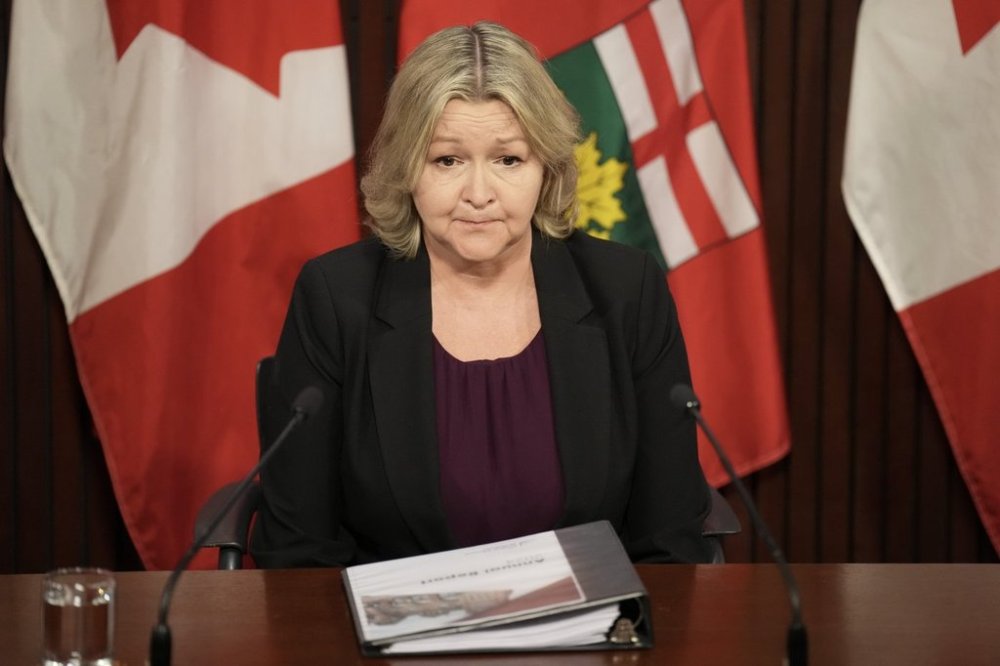
NDP Leader Marit Stiles called the billing findings “bananas.”
“This isn’t really about the individual doctors, as much as it is about the fact that the government refuses to put enough people in charge of monitoring these things,” she said.
Identifying cases for ministry audit is largely done through tips and complaints, a reactive approach rather than a proactive one, Spence said. The ministry audits recovered $8.1 million between 2022 and 2025 but adding more staff to the audit division could increase that number, she said. The ministry asked the government in 2017 for more audit staff but the number remains the same at eight, Spence found.
The Ontario Medical Association and the Ministry of Health agreed in 2019 to reduce “medically unnecessary services” such as “low value” tests to save $480 million per year, but so far only $87 million of that has been realized, the auditor wrote.
The health minister has said the province is committed to connecting all Ontarians to primary care by 2029, but the auditor said the province’s Health Care Connect system has not been as effective as it could be, leading to long wait times.
While half of the 197,000 people referred to family doctors through the wait list since 2020 waited fewer than 21 days, more than 100,000 people still waiting as of June had been waiting for more than a year.
The government has boasted of reducing the wait list by half, but the auditor said Tuesday that the number of people on that list is not representative of the true need for primary care, as only about 11 per cent of people without a family doctor are registered and just seven per cent of the doctors who work under a patient enrolment model accept patients who register through Health Care Connect.
Leardi downplayed the significance of those findings from the auditor general, saying many people are finding doctors and nurse practitioners without it.
“Health Care Connect is only one tool to get yourself connected to primary care,” he said.
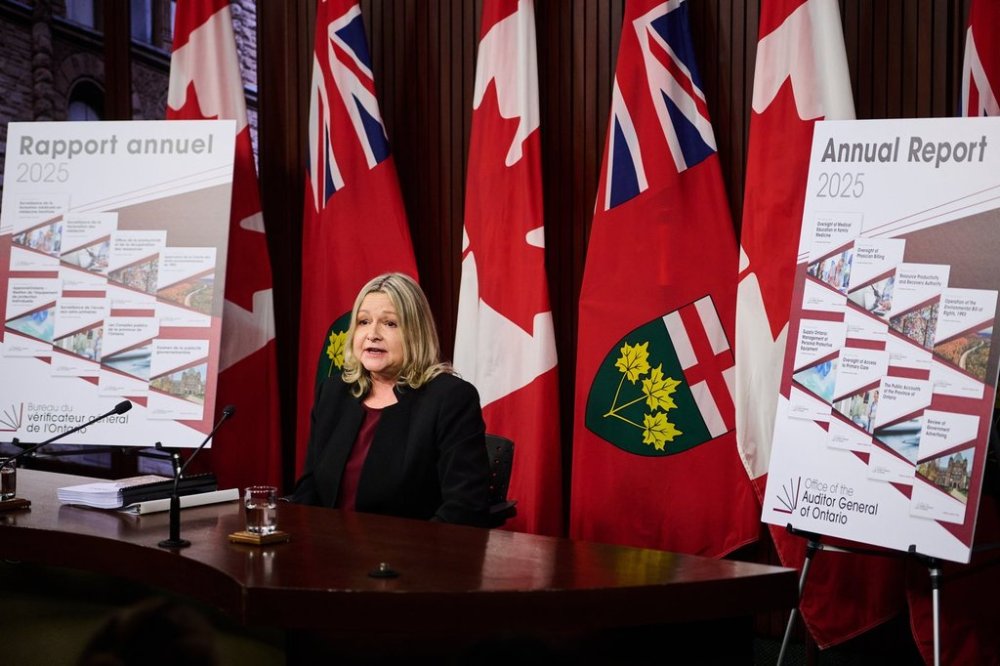
The government’s “Find a doctor or nurse practitioner” website says there are two ways to get attached to a family doctor. One is to register with Health Care Connect and the other is to call doctors personally.

The ministry and Ontario Health noted in an internal review two years ago that lack of awareness of Health Care Connect was an issue, but did nothing to rectify that, the auditor wrote.
As well, the auditor found that the government’s plan to add 340 undergraduate and 551 postgraduate medical school seats with a focus on family medicine was based on an underestimate of how many people have no primary care provider.
The decision was made in part using an estimate of 1.3 million Ontarians who need a family doctor but don’t have one, the auditor said, an estimate that came from a 2022 voluntary telephone survey of Ontarians’ experiences with the health-care system.
The ministry more recently conducted an analysis from its own databases in consultation with a group of researchers and estimated that two million Ontarians are “unattached,” which the auditor said would require about 2,000 more family doctors to provide care for all of them.
This report by The Canadian Press was first published Dec. 2, 2025.