

What to know about the administration’s plan to withhold states’ money to manage SNAP food aid
Advertisement
Read this article for free:
or
Already have an account? Log in here »
To continue reading, please subscribe:
Monthly Digital Subscription
$0 for the first 4 weeks*
- Enjoy unlimited reading on winnipegfreepress.com
- Read the E-Edition, our digital replica newspaper
- Access News Break, our award-winning app
- Play interactive puzzles
*No charge for 4 weeks then price increases to the regular rate of $19.00 plus GST every four weeks. Offer available to new and qualified returning subscribers only. Cancel any time.
Monthly Digital Subscription
$4.75/week*
- Enjoy unlimited reading on winnipegfreepress.com
- Read the E-Edition, our digital replica newspaper
- Access News Break, our award-winning app
- Play interactive puzzles
*Billed as $19 plus GST every four weeks. Cancel any time.
To continue reading, please subscribe:
Add Free Press access to your Brandon Sun subscription for only an additional
$1 for the first 4 weeks*
*Your next subscription payment will increase by $1.00 and you will be charged $16.99 plus GST for four weeks. After four weeks, your payment will increase to $23.99 plus GST every four weeks.
Read unlimited articles for free today:
or
Already have an account? Log in here »
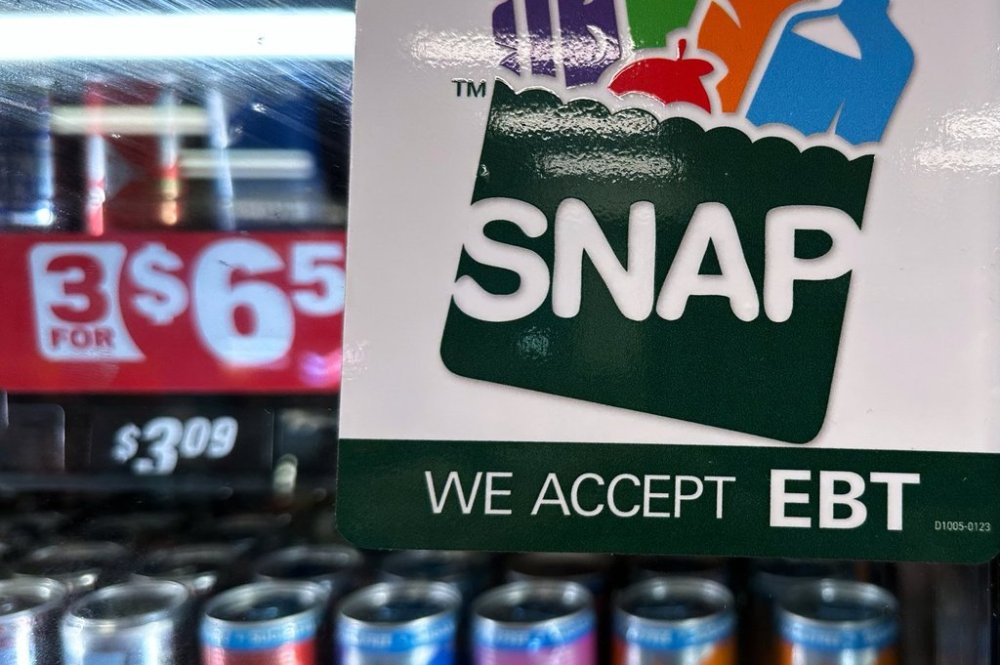
U.S. Agriculture Secretary Brooke Rollins said this week that the federal government would start withholding money to help run the SNAP food aid program from states that don’t provide data on participants, including their immigration status.
The department said the government needs the data to spot fraud in the Supplemental Nutrition Assistance Program, which helps 42 million Americans, or about 1 in 8, buy groceries.
The plan to withhold the administrative funds is an escalation of a legal battle that’s been going on since shortly after President Donald Trump took office. It’s decidedly partisan. Only states led by Democrats have failed to provide the information the administration seeks.
Here’s what to know.
Billions could be at stake for states
SNAP costs federal taxpayers about $100 billion a year. Of that, about $94 billion goes to benefits and the rest to administrative costs.
The federal government currently reimburses about half the states’ cost to manage SNAP, though that’s scheduled to drop to 25% next October.
The amount states receive varies widely, as does the portion of state SNAP funding that goes to administrative costs. When excluding bonus funds for the coronavirus pandemic, Wyoming, for example, got less than $9 million for administering SNAP during the 2023 fiscal year, the most recent time frame for which data is available. That represented 12% of its SNAP funding. California, the most populous state, received more than $1.2 billion for SNAP administration, nearly 10% of its total SNAP allocation. Florida received $84 million for administration, a little over 1% of its overall federal SNAP funding.
Some experts have warned that shifting costs to states — even short of withholding them entirely — could be such a major expense that some could drop SNAP.
Carolyn Wait Vega, who analyzes SNAP at the advocacy organization Share Our Strength, said losing federal money in the middle of the budget year would be hard for states. “They made all of their plans on the assumption that there would be a 50-50 cost share,” she said. “To have that rug pulled out from under them would be very challenging.”
Some states already are bracing to take on more of the costs. Connecticut recently set aside $500 million to offset potential federal funding cuts to states. It’s up to Gov. Ned Lamont, a Democrat, to decide whether to tap that for SNAP costs.
The money wouldn’t disappear immediately
USDA plans to notify states that have not provided the requested information that they’re not in compliance as soon as next week. The states would have more time to comply.
And after that, they could appeal.
Kansas was notified in September that it would lose administrative funds for its failure to share the requested data. That state is still appealing and hasn’t seen money cut off yet.
There’s already a court fight over the data
The administration began requesting data about SNAP recipients from states soon after President Donald Trump returned to office early in the year, saying it’s essential to catch fraud and abuse.
Since then, 28 states have sent the data; all of them except for North Carolina have Republican governors.
Twenty-two plus the District of Columbia — all with Democratic governors or attorneys general — have sued to block the request. A San Francisco-based federal judge put enforcement of it on hold for now. The states that are suing argue that there’s a privacy problem with sharing recipient information with the federal government.
“Even if you’re on SNAP and getting nutrition benefits, like 42 million Americans do, does that mean that your privacy should be invaded now or that you should be giving out this information unrelated to this program?” New York Gov. Kathy Hochul told Fox 5 New York on Wednesday.
One state — Nevada, which has a Republican governor and Democratic attorney general — has both complied and sued. Kansas, with a Democratic governor and Republican attorney general, has neither complied nor sued.
Whether the administration’s latest effort will be allowed is another question likely to be resolved by courts, too.
The USDA contends fraud is a big problem in SNAP
Rollins has said findings from the states that complied with the request have shed a new light on fraud.

She has said that it revealed 186,000 deceased people receiving benefits and about 500,000 getting them in more than one place. It’s not clear just how many of those instances represent fraud versus people dying or moving and the systems not catching up immediately — or how many are cases involving fictitious people created by criminal operations to receive benefits illegally.
“Any abuse of federal funding is an issue, no matter how big or small because it means that the people that need the program are not directly receiving it,” said U.S. Rep. Jahana Hayes, a Connecticut Democrat who is the ranking member of the subcommittee that deals with SNAP. “It is the most effective anti-hunger program that we have and it operates with a great deal of efficiency and transparency.”
Other SNAP requirements are ramping up
Under the sweeping tax and policy law Trump signed in July, more recipients will have to work, go to school or volunteer to get benefits for more than three months every three years. Adults ages 55 to 64, homeless people and people with children between 14 and 17 are among those affected.
Starting in 2028, states will have to chip in for benefit costs if they make mistakes in more than 6% of the payments.