

The family ties at the heart of NASCAR were highlighted throughout the trial
Advertisement
Read this article for free:
or
Already have an account? Log in here »
To continue reading, please subscribe:
Monthly Digital Subscription
$0 for the first 4 weeks*
- Enjoy unlimited reading on winnipegfreepress.com
- Read the E-Edition, our digital replica newspaper
- Access News Break, our award-winning app
- Play interactive puzzles
*No charge for 4 weeks then price increases to the regular rate of $19.00 plus GST every four weeks. Offer available to new and qualified returning subscribers only. Cancel any time.
Monthly Digital Subscription
$4.75/week*
- Enjoy unlimited reading on winnipegfreepress.com
- Read the E-Edition, our digital replica newspaper
- Access News Break, our award-winning app
- Play interactive puzzles
*Billed as $19 plus GST every four weeks. Cancel any time.
To continue reading, please subscribe:
Add Free Press access to your Brandon Sun subscription for only an additional
$1 for the first 4 weeks*
*Your next subscription payment will increase by $1.00 and you will be charged $16.99 plus GST for four weeks. After four weeks, your payment will increase to $23.99 plus GST every four weeks.
Read unlimited articles for free today:
or
Already have an account? Log in here »
CHARLOTTE, N.C. (AP) — The theme of family ties in motorsports was woven through Michael Jordan’s federal antitrust lawsuit against NASCAR, with witness after witness testifying to their emotional connections to the top motorsports series in the United States.
It began on the opening day when three-time Daytona 500 winner Denny Hamlin broke down in tears talking about his dying father introducing him to racing and financially leveraging the entire family to help his son make it to NASCAR.
Next came Jordan himself, a basketball Hall of Famer who was raised going on family weekend vacations to NASCAR races across the South with his father, a fan of Richard Petty. So began a love affair that led him to partner with Hamlin to launch 23XI Racing in 2021.
Bob Jenkins formed Front Row Motorsports after falling in love with NASCAR as a teenager in East Tennessee, and he’s hoped to hand the team down to his four sons.
Joe Gibbs Racing is a family business, the daughter-in-law of the Hall of Fame NFL coach testified, and Richard Childress said his 60-year-old team is meant to go to his grandsons, both current Cup Series drivers.
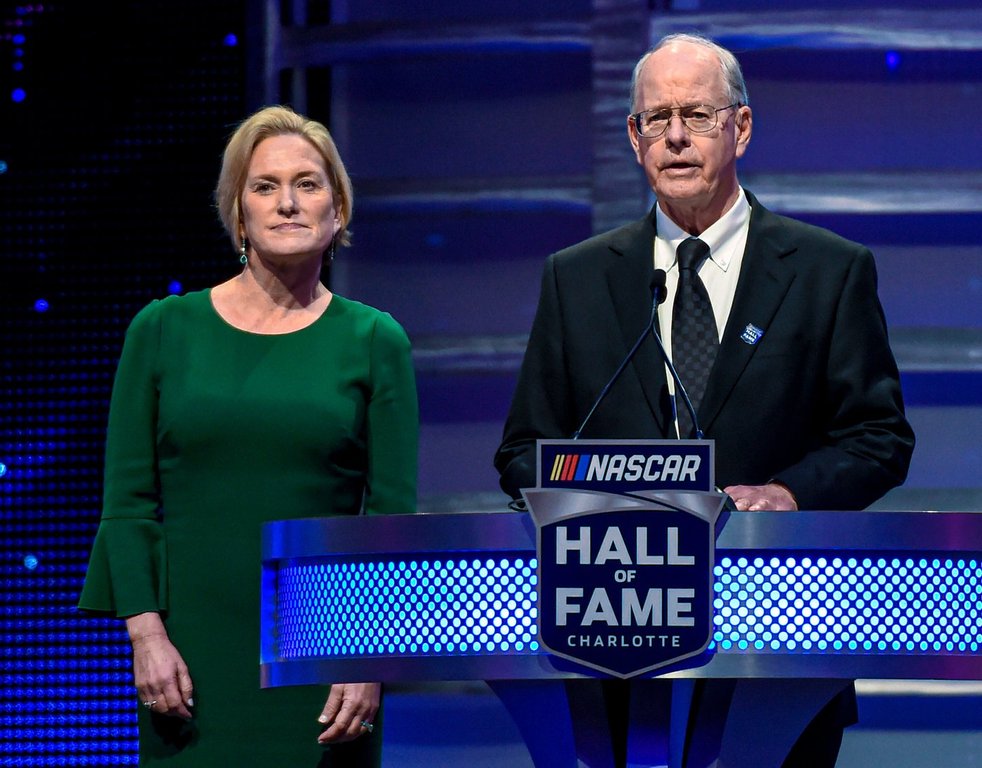
And then there is NASCAR itself: Bill France Sr. founded the sport in 1948 and to this day it is privately owned by the Florida-based France family. His youngest son is chairman, his granddaughter vice chair and great-grandson an executive on NASCAR’s board of directors.
It was core principles that Bill France passed down to his two sons that shaped the hardline stance Jim France took with teams as NASCAR chairman in negotiations for the 2025 revenue-sharing agreement.
The teams wanted charters — the equivalent of a franchise in other sports — to become permanent and not renewable. In NASCAR, a charter guarantees cars a spot in the 40-car field each week, as well as specified financial terms, and Jim France never considered permanency an option.
The case was abruptly settled Thursday when NASCAR relented and agreed to permanent charters, and the two teams and their attorneys headed to a Charlotte steakhouse for a celebratory lunch. Hamlin posted a photo on Instagram of a toast with Jordan and their lead attorneys
“My history for this sport, and certainly my passion, this doesn’t happen unless you’ve got a fire to really help and grow this sport, and that’s what happened today,” Hamlin said outside court. “I feel like everything within the settlement is going to grow this sport, and it’s going to be better for everyone, there’s no doubt about it.”
The case had not been going well for NASCAR through the first eight days of testimony. When NASCAR began its defense on Wednesday, it seemed focused on mitigating damages rather than showing it didn’t engage in anticompetitive behavior.
Jim France had testified that he relied on the core principles drilled into his head over dinner growing up in negotiations. His mother, credited with helping her husband build NASCAR from nothing, told her two sons to always pay their bills. Bill France Sr. advised them “do what you say you’re going to do.”
“I’ve just seen so much change over the years and things are changing at a fast pace and I don’t know how to put something in place — I don’t know how we could come to an agreement that covers forever,” he testified.
He later tied it directly to his parents’ advice: “I don’t have a sightline for the future and I don’t feel comfortable making a promise I can’t keep forever.”
France was also asked on the stand whether anyone can take NASCAR away from the family. France referenced the pandemic, when NASCAR shut down for nearly two months before leveraging its ownership of racetracks to become the first sport back up and running, albeit without fans in the grandstands.

“I don’t know,” he slowly said. “We were in business in 2020 of March and we woke up weren’t in business. I don’t know how to answer that.”
On Thursday, France left the courthouse with the family business still intact.
“I learned a lot of things,” he told The Associated Press. “And I always enjoy new learning experiences.”
___
AP auto racing: https://apnews.com/hub/auto-racing