

More unsettling sabre-rattling to the south of us
Advertisement
Read this article for free:
or
Already have an account? Log in here »
To continue reading, please subscribe:
Monthly Digital Subscription
$1 per week for 24 weeks*
- Enjoy unlimited reading on winnipegfreepress.com
- Read the E-Edition, our digital replica newspaper
- Access News Break, our award-winning app
- Play interactive puzzles
*Billed as $4.00 plus GST every four weeks. After 24 weeks, price increases to the regular rate of $19.95 plus GST every four weeks. Offer available to new and qualified returning subscribers only. Cancel any time.
Monthly Digital Subscription
$4.99/week*
- Enjoy unlimited reading on winnipegfreepress.com
- Read the E-Edition, our digital replica newspaper
- Access News Break, our award-winning app
- Play interactive puzzles
*Billed as $19.95 plus GST every four weeks. Cancel any time.
To continue reading, please subscribe:
Add Free Press access to your Brandon Sun subscription for only an additional
$1 for the first 4 weeks*
*Your next subscription payment will increase by $1.00 and you will be charged $16.99 plus GST for four weeks. After four weeks, your payment will increase to $23.99 plus GST every four weeks.
Read unlimited articles for free today:
or
Already have an account? Log in here »
America’s ambassador to Canada will have to forgive Canadians for being skeptical.
Pete Hoekstra, U.S. President Donald Trump’s representative in this country, is trying to assuage Canadian concerns that the U.S.’s new national security strategy means the administration may come to meddle in Canadian politics.
The strategy adds a “Trump corollary” to the Monroe doctrine of 1823, which was aimed at keeping European powers out of the affairs of the Western Hemisphere. Trump’s update re-asserts America as the No. 1 power in the hemisphere, vowing to “deny non-Hemispheric competitors the ability to position forces or other threatening capabilities, or to own or control strategically vital assets, in our hemisphere.”
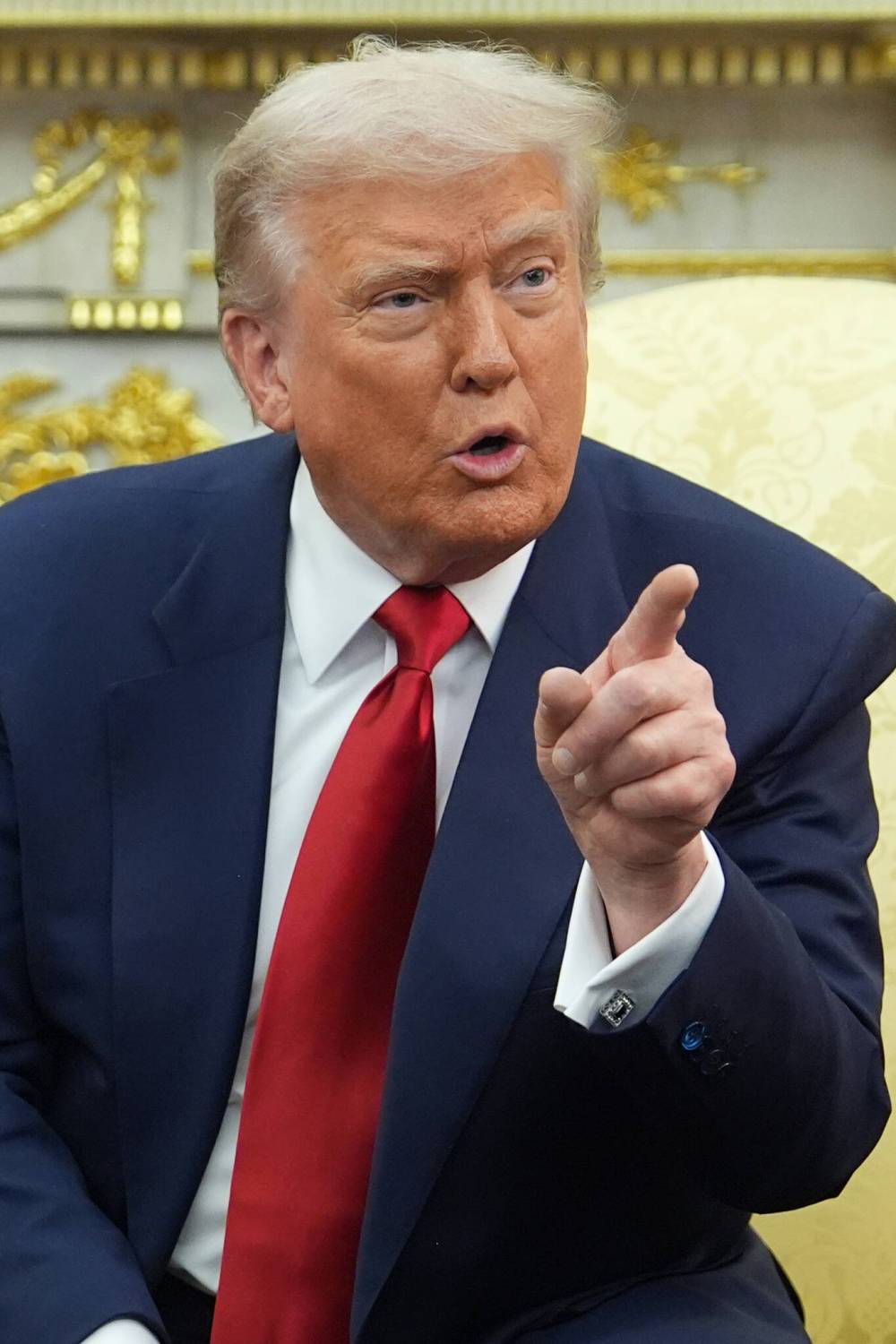
Evan Vucci / The Associated Press
U.S. President Donald Trump
It goes on to state the U.S.’s intention to “enlist” allies in the hemisphere to “control migration, stop drug flows, and strengthen ability and security on land and sea,” and “expand” its influence by “cultivating and strengthening new partners while bolstering our own nation’s appeal as the hemisphere’s economic and security partner of choice.”
Hoekstra told the Canadian Press, in a year-end interview, that the language in the document, which is available on the White House’s website, could have broad interpretations, advising “let’s just kind of see how this plays out.”
It is a poor way for an ambassador to address such concerns. When a major military power releases a security strategy stating outright it intention to ensure its primacy on an entire half of the map, “let’s see how this plays out,” and suggestions that the text is up for interpretation only make the document more concerning.
By this point, Canadians know what kind of administration is running things in the U.S., and what kind of president it serves. We have endured Trump’s once-frequent references to us as the “51st state” before his discussions with Prime Minister Mark Carney at least led him to stop making such remarks.
We can also see, in the security document, that the U.S. plans “a readjustment of our global military presence to address urgent threats in our hemisphere…”
Which threats? The U.S. is bordered only by allies and it cannot be reasonably said to be “threatened” by any South American nation, regardless of its fearmongering about Venezuelan drug-runners. The U.S.’s intention to bolster its Coast Guard and Navy presence “to control sea lanes, to thwart illegal and other unwanted migration, to reduce human and drug trafficking…” is mere gesturing at the boogeyman Trump often points to in order to play to his base.
Hoekstra counters that Canadians had little concern for when one of their own governments — that of Ontario Premier Doug Ford — interfered in American politics by running a TV ad decrying the Trump tariff scheme. However, a TV ad has far less impact than a tariff scheme, nor was it carried out by the federal government.
It’s a poor comparison.

While the strategy document is a mere 33 pages, this space too small to provide an exhaustive accounting of its contents. However, from these excerpts we can see the intention to focus U.S. military might at home, so that it may “protect” itself from phantom threats, all while expecting its neighbours to actively facilitate these goals, or at least cater to American whims.
There is no reason to believe the administration is not prepared to put its thumb on the scale in Canada, or Mexico, or beyond.
Honeyed words about “enlisting” allies count for little in the Trump era. We already know this administration cannot be trusted as does much of the world.
Hoekstra asks that we take his word for it that the U.S. doesn’t plan to meddle in our politics for its own gain.
We’d have to be fools to do so.