

Nova Scotia ready for private companies to start exploring for onshore natural gas
Advertisement
Read this article for free:
or
Already have an account? Log in here »
To continue reading, please subscribe:
Monthly Digital Subscription
$1 per week for 24 weeks*
- Enjoy unlimited reading on winnipegfreepress.com
- Read the E-Edition, our digital replica newspaper
- Access News Break, our award-winning app
- Play interactive puzzles
*Billed as $4.00 plus GST every four weeks. After 24 weeks, price increases to the regular rate of $19.95 plus GST every four weeks. Offer available to new and qualified returning subscribers only. Cancel any time.
Monthly Digital Subscription
$4.99/week*
- Enjoy unlimited reading on winnipegfreepress.com
- Read the E-Edition, our digital replica newspaper
- Access News Break, our award-winning app
- Play interactive puzzles
*Billed as $19.95 plus GST every four weeks. Cancel any time.
To continue reading, please subscribe:
Add Free Press access to your Brandon Sun subscription for only an additional
$1 for the first 4 weeks*
*Your next subscription payment will increase by $1.00 and you will be charged $16.99 plus GST for four weeks. After four weeks, your payment will increase to $23.99 plus GST every four weeks.
Read unlimited articles for free today:
or
Already have an account? Log in here »
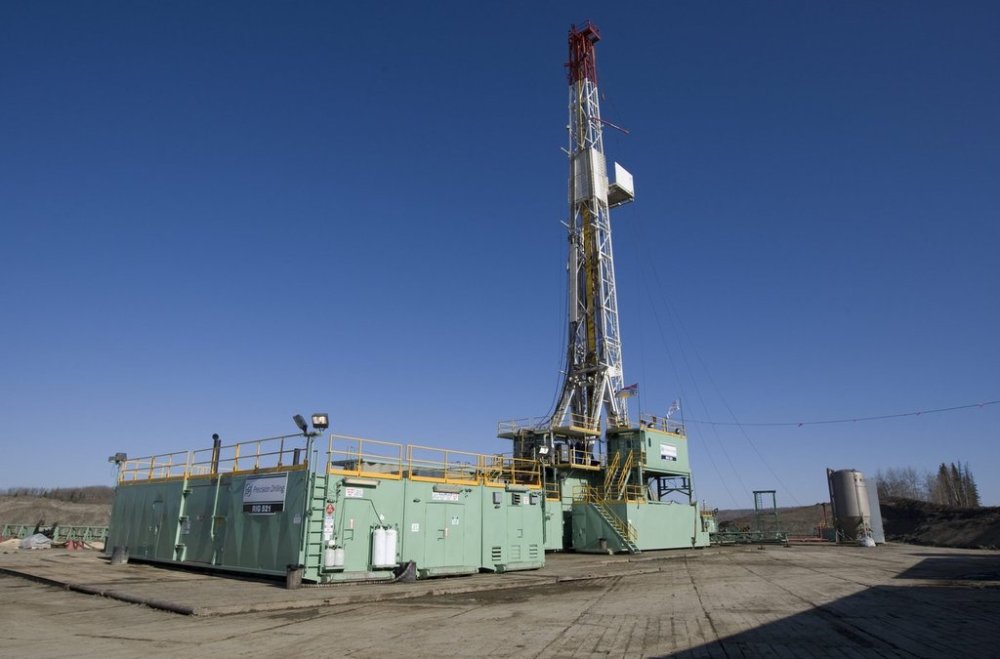
HALIFAX – The Nova Scotia government says it’s ready for companies to start exploring for onshore natural gas, with the province saying it may take ownership stakes in drilling projects to potentially give taxpayers a share of the profits.
During a news conference Monday, officials said the government has tapped Dalhousie University to administer a program in which the school’s researchers and the private sector will study the estimated 198-billion cubic metres of onshore natural gas in the province.
The $30-million investment program will see the region’s largest university issue a call for exploration proposals in the first quarter of 2026. Companies, however, will still need regulatory approval from the Department of Energy before any drilling can begin, officials said.
“We’re ranked 59th out of 60 in (gross domestic product) across North America and we want to improve that,” Karen Doane, the province’s executive director of energy resource development, told reporters.
“We want the lives of Nova Scotians to improve. So we’re excited to use our own resources.”
The program will offer financial incentives to companies as they explore natural gas reserves with a commitment to share their findings with researchers. All the data will be part of a public research paper to be published before the end of 2026.
Operators will be able to apply for up to 100 per cent reimbursement of their exploration expenses. Officials say the government may negotiate so that money becomes an equity investment, or it may sign royalty agreements. Either way, they say any government income will “disproportionately” be reinvested into local communities.
Taking ownership in a resource company is not unheard of in Canada. Doane pointed to Newfoundland and Labrador’s provincially owned OilCo, which retains percentages of the Hibernia, Hebron and White Rose offshore oil projects as one such example.
Officials say any wells that don’t produce natural gas could be assessed for other uses like geothermal energy or research and development on carbon capture and storage.
About 64 per cent of the Nova Scotian onshore reserves outlined in a 2017 government report are made up of shale gas, the kind usually requiring fracking to extract in commercial quantities. About 20 per cent of Nova Scotia’s reserves are coal bed methane with the rest conventional natural gas.
The Progressive Conservative government lifted a decade-long embargo on fracking, also known as hydraulic fracturing, in March but Doane said that doesn’t mean the companies involved will necessarily use the technique opposed by environmentalists and First Nations.
“So just because you drill an onshore petroleum well, doesn’t necessarily mean you have to use hydraulic fracturing technology. You don’t know that until you actually drill a well,” she said.
In lifting the fracking ban, Premier Tim Houston had said the province needed to exploit its natural gas and other resources to better withstand economic challenges from the United States, including President Donald Trump’s tariffs. Houston has since named himself energy minister but was not at Monday’s announcement.
When the ban was lifted, the Assembly of Nova Scotia Mi’kmaq Chiefs called out the premier for a lack of consultation and have said they may seek a legal injunction.

As part of the new program, Dalhousie will be tasked with setting up an oversight committee composed of academics, the public, government, the private sector and First Nations. The school’s acting vice-president of research and innovation, Graham Gagnon, said it has yet to reach out to the Mi’kmaq. He noted that the outreach will be handled by John Sylliboy, Dalhousie’s first vice-provost of Indigenous relations, a position created earlier this year.
Nova Scotia has had mixed results on resource development since the government made it a priority after the last election. The private sector has shown some interest in wind and hydrogen development but when the province lifted a ban on uranium mining earlier this year, no companies responded to a call for proposals.
The Sable and Deep Panuke offshore gas projects generated billions of dollars in royalties for the province but were shut down in 2018 after 25 years of exploration and development. There’s been little interest from the private sector in the province’s offshore sector since. The government issued a new call for proposals in the summer, which closes in April.
There’s about 90-billion cubic metres of gas confirmed to exist on the Scotian shelf and a potential for more than 10-times that amount, says the province.
This report by The Canadian Press was first published Dec. 22, 2025.