

PUB had no choice after province made wrong ones for Hydro

Advertisement
Read this article for free:
or
Already have an account? Log in here »
To continue reading, please subscribe:
Digital Subscription
One year of digital access for only $1.44 a week*
- Enjoy unlimited reading on winnipegfreepress.com
- Read the E-Edition, our digital replica newspaper
- Access News Break, our award-winning app
- Play interactive puzzles
*Billed as $5.77 plus GST every four weeks. After 52 weeks, price increases to the regular rate of $19.95 plus GST every four weeks. Offer available to new and qualified returning subscribers only. Cancel any time.
To continue reading, please subscribe:
Add Free Press access to your Brandon Sun subscription for only an additional
$1 for the first 4 weeks*
- Enjoy unlimited reading on winnipegfreepress.com
- Read the E-Edition, our digital replica newspaper
- Access News Break, our award-winning app
- Play interactive puzzles
*Your next Brandon Sun subscription payment will increase by $1.00 and you will be charged $17.95 plus GST for four weeks. After four weeks, your payment will increase to $24.95 plus GST every four weeks.
Read unlimited articles for free today:
or
Already have an account? Log in here »
Hey there, time traveller!
This article was published 02/01/2026 (287 days ago), so information in it may no longer be current.
You can pay me now or you can pay me later.
That old warning could be stamped on every Manitoba Hydro bill arriving in mailboxes this winter, after the Public Utilities Board ordered a four per cent interim increase in electricity rates — higher than the Crown utility itself requested.
It is a painful but predictable outcome of poor, politically self-serving policy by the Manitoba NDP government, which chose to freeze rates in 2025 (and implement a mere one per cent increase in 2024) even as Hydro was already under severe financial strain.
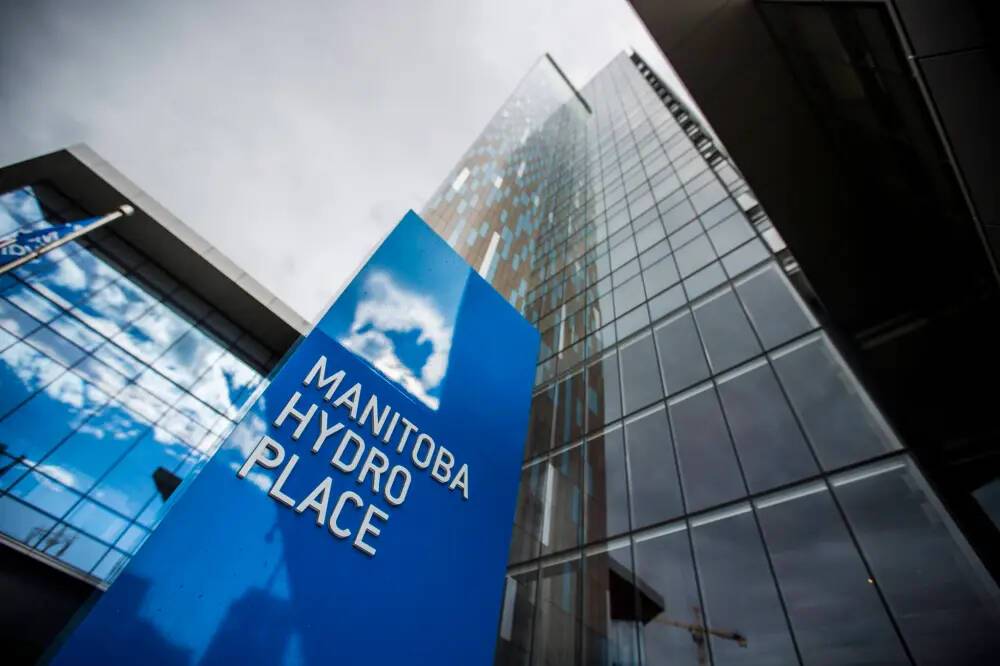
MIKAELA MACKENZIE / FREE PRESS FILES
The PUB concluded that a four per cent increase in electricity rates — the maximum allowed under the legislated rate cap — was necessary.
The PUB’s message this week was blunt. Faced with worsening drought conditions and a deteriorating balance sheet, it said it had no choice but to approve a larger increase than Hydro had sought, in order to protect the financial health of the utility.
“Water flows into Manitoba Hydro’s watershed are currently at the second-lowest level in 112 years,” the board said in its decision. “As a result of the severe drought, Manitoba Hydro’s financial metrics have deteriorated by more than $625 million.”
Those are not abstract numbers. They represent real losses caused by a lack of water to drive turbines, forcing Hydro to buy power on the open market or burn more expensive fuels, while still servicing a debt approaching $26 billion and trying to maintain aging transmission and generation infrastructure.
Add to that the need to invest in new energy sources to meet growing demand, and the financial vise tightens even further.
Yet instead of confronting those realities honestly, the NDP government chose to kick the can down the road. Freezing Hydro rates this year may have made for good politics — particularly as Manitobans struggle with the rising cost of groceries, rent and fuel — but it was bad policy.
It did nothing to improve Hydro’s underlying finances and virtually guaranteed that customers would “pay later,” through higher increases imposed by an independent regulator rather than modest, planned adjustments spread over time.
The PUB made clear that it is not in the business of political comfort. As an independent, quasi-judicial tribunal, it is required to balance the impact on customers with the financial requirements of the utility.
In this case, the board concluded that a four per cent increase — the maximum allowed under the legislated rate cap — was necessary. Hydro had applied for 3.5 per cent.
This interim hike will apply to most customers starting Jan. 1, until the board issues a final order on Hydro’s request for annual 3.5 per cent increases over the next three years. That final decision will come in the new year, but the direction of travel is already clear: rates are going up, because they have to.
Manitoba Hydro has not hidden from this reality. Spokesman Peter Chura said the utility has been clear about its challenges, including infrastructure replacement, the development of new energy sources and the worsening impact of low water levels. The drought forecast, he noted, has deteriorated since Hydro filed its application earlier this year.
“We’re pleased the PUB recognized the urgent need for increased rates to allow us to make essential investments in Manitoba’s energy future,” Chura said.
Consumer advocates have raised legitimate concerns. The Consumers Coalition — representing seniors, low-income Manitobans and community organizations — argued at PUB hearings that Hydro’s spending increases were unreasonable and that higher rates would disproportionately hurt the poor.
Those concerns deserve attention, particularly through targeted relief programs, exemptions or payment plans for low-income households.
But opposing rate increases altogether is not a solution; it is denial. As University of Winnipeg political scientist Malcolm Bird put it, Hydro is “in a really, really, really bad spot.” Its assets are aging, its debt enormous, and its costs rising faster than revenues.
“Hydro is simply too cheap in this province,” Bird said, noting that Manitobans are not covering the short-, medium- or long-term costs of producing electricity. That imbalance is precisely how the province ended up with tens of billions of dollars in Hydro debt in the first place.

Bird also pointed to the deeper structural problem: the lack of a clear separation between Hydro’s operations and the political interests of its owner, the provincial government. When rate decisions are driven by election promises rather than economic reality, the result is predictable — and painful.
That is the uncomfortable truth the government has tried to obscure. Cheap power has been treated as an entitlement rather than a service with real costs. Drought, climate change, infrastructure decay and growing demand have shattered that illusion.
Manitobans are now being asked to pay more — not because the PUB is heartless or Hydro is greedy, but because years of political avoidance have left no alternative.
You can pay me now, or you can pay me later. Thanks to a rate freeze that served politics over prudence, we are, as predicted, paying later. And we will continue to do so for the foreseeable future.
tom.brodbeck@freepress.mb.ca
Tom Brodbeck is an award-winning author and columnist with over 30 years experience in print media. He joined the Free Press in 2019. Born and raised in Montreal, Tom graduated from the University of Manitoba in 1993 with a Bachelor of Arts degree in economics and commerce. Read more about Tom.
Tom provides commentary and analysis on political and related issues at the municipal, provincial and federal level. His columns are built on research and coverage of local events. The Free Press’s editing team reviews Tom’s columns before they are posted online or published in print – part of the Free Press’s tradition, since 1872, of producing reliable independent journalism. Read more about Free Press’s history and mandate, and learn how our newsroom operates.
Our newsroom depends on a growing audience of readers to power our journalism. If you are not a paid reader, please consider becoming a subscriber.
Our newsroom depends on its audience of readers to power our journalism. Thank you for your support.
Tom Brodbeck is an award-winning author and columnist with over 30 years experience in print media. He joined the Free Press in 2019. Born and raised in Montreal, Tom graduated from the University of Manitoba in 1993 with a Bachelor of Arts degree in economics and commerce. Read more about Tom.
Tom provides commentary and analysis on political and related issues at the municipal, provincial and federal level. His columns are built on research and coverage of local events. The Free Press’s editing team reviews Tom’s columns before they are posted online or published in print – part of the Free Press’s tradition, since 1872, of producing reliable independent journalism. Read more about Free Press’s history and mandate, and learn how our newsroom operates.
Our newsroom depends on a growing audience of readers to power our journalism. If you are not a paid reader, please consider becoming a subscriber.
Our newsroom depends on its audience of readers to power our journalism. Thank you for your support.
Related Articles
New year, deeper pockets needed



Advertisement Advertise With Us
Advertisement Advertise With Us