‘Would you dare take it?’: Critics fear B.C. is deregulating Chinese medicine
Advertisement
Read this article for free:
or
Already have an account? Log in here »
To continue reading, please subscribe:

Digital Subscription
One year of digital access for only $205*
- Enjoy unlimited reading on winnipegfreepress.com
- Read the E-Edition, our digital replica newspaper
- Access News Break, our award-winning app
- Play interactive puzzles
*First annual payment billed as $205.00 + GST for one year. This annual subscription will automatically renew at $233.00 + GST every 52 weeks (10% off the regular annual price of $259.35). Offer available to new and qualified returning subscribers only. Cancel any time.
To continue reading, please subscribe:
Add Free Press access to your Brandon Sun subscription for only an additional
$1 for the first 4 weeks*
- Enjoy unlimited reading on winnipegfreepress.com
- Read the E-Edition, our digital replica newspaper
- Access News Break, our award-winning app
- Play interactive puzzles
*Your next Brandon Sun subscription payment will increase by $1.00 and you will be charged $17.95 plus GST for four weeks. After four weeks, your payment will increase to $24.95 plus GST every four weeks.
Read unlimited articles for free today:
or
Already have an account? Log in here »
Hey there, time traveller!
This article was published 06/01/2026 (278 days ago), so information in it may no longer be current.
VANCOUVER – Tom Whitfield takes a ferry from Nanaimo to a traditional Chinese medicine clinic in downtown Vancouver every Monday for acupuncture and other treatment.
The excursion sometimes consumes the entire day, but the retired forester from Qualicum Beach said it is worth the effort, and has relieved about 90 per cent of the pain in his cheek that followed skin cancer surgery.
He’s a believer in traditional Chinese medicine — but he said he would not trust care, or herbal medication, from an unlicensed practitioner.
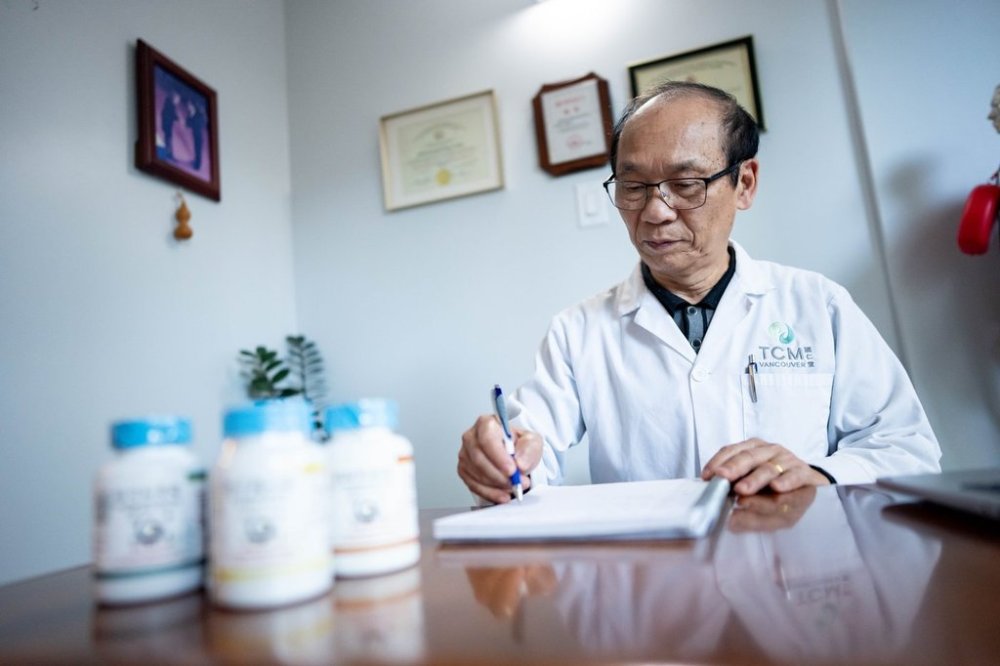
It’s a concern among both patients and licensed practitioners, as the industry fights provincial government plans that they say amount to deregulating the profession, by removing the prescribing, compounding, and dispensing of traditional Chinese herbal medicine from a list of restricted activities.
The move, which licensed practitioners fear will open up such treatment to unlicensed people, is scheduled to take place in April when the new Health Professions and Occupations Act comes into effect.
Whitfield said the move “doesn’t make any sense” and he worried that medicine from an unlicensed practitioner could make him sick.
“There’s no way I would buy medicine from just anybody and not even know what’s in it,” said Whitfield, who had just been treated at a clinic run by Dr. John Yang, who also chairs Kwantlen Polytechnic University’s Traditional Chinese Medicine program.
“It could be carcinogenic, for all I know, it could be anything, and there’s no coming back if that person isn’t accredited,” Whitfield said.
Yang, who has both a medical degree and traditional medicine qualifications earned in China, said the planned changes by the province have many licensed practitioners “deeply concerned.”
He said that removing regulation could endanger public health while undermining the integrity and credibility of the profession.
Practitioners held a news conference denouncing the plan last week and Yang organized a rally in opposition to it on Tuesday, which attracted about 100 protesters in the pouring rain.
Protesters waved placards that read “stop TCM deregulation” and “protect public safety.”
Tina Taylor, a registered practitioner from Squamish, B.C., said the move from the province would undermine professionalism.
“It’s just like doctors in conventional medicine, imagine if there’s no regulations on that? That would be crazy, right? How could that make sense?” asked Taylor, who was at the protest. “So, I just find this just pooh-poohs our profession.”
Lara Menzies, a student at KPU’s program, said that practitioners look at the whole person to get a complete picture of a their lifestyle, emotions, thoughts, and diet, rather than focusing on a symptom.
“So, it’s very complex. Every human is very complex,” said Menzies.
She said the medicine should be “held high on a pedestal,” and the provinces’ plan did not give the industry the merit that it deserved.
Health Minister Josie Osborne said in an interview on Tuesday that she understands the change has caused “consternation” among some, but said that the amendments do not amount to deregulation.
She said that the ministry does not “intend in any way to change the scope of practice of traditional Chinese medicine practitioners.”
Instead of listing activities that “no person other than” a licensed practitioner can perform — as stated in the current regulations — the new Health Professions and Occupations Act lists activities that licensed practitioners “may perform.”
Yang and others say the new rules are unclear because they don’t explicitly ban unlicensed people from certain activities.
But Osborne said that the restriction on prescribing by unlicensed people “hasn’t changed.”
“Instead, that activity is now encompassed within the scope of practice. So (the new act) lists, proactively, what TCM practitioners do … instead of explicitly listing one or more activities that other people could not do,” said Osborne.
She said she was committed to hearing from people to ensure the regulations are appropriate and they’re clearly understood.
In 2003, B.C. became the first province to require traditional Chinese medicine practitioners to register with the province.
To become a licensed practitioner often takes about four years of studying to get a diploma or obtain a bachelor’s degree, while students are required to pass exams and complete clinical practice, said Yang.
“Only a well-trained and licensed professional knows how to navigate and create a balance between different herbal ingredients by applying the right amount of dosage,” said Yang.
“If some herbal medicine is used in excessive doses or used for prolonged periods of time, it could cause damage to the body,” said Yang.
Yang is also worried that the province’s move could dampen students’ interest in applying to KPU’s traditional Chinese medicine program.
“If you don’t need a license to prescribe Chinese medicine, then why do students need to go through a rigorous training process to study? Of course, this move would also jeopardize this profession and undermine qualified practitioners who have spent years in training and studying.”
Yang said their worries have not been heard so far.
“The provincial government doesn’t show any respect to TCM professionals, creating a sense of unfairness to us,” said Yang.
Practitioner and acupuncturist Ronggang Li, who has trained thousands of acupuncturists since 2003, said the goal is not to politicize the issue.
“Let me put it this way — if someone without professional training or credentials prescribes traditional Chinese medicine for our premier or our B.C. health minister, I just want to ask them: would you dare to take it?” asked Li.
Osborne said her staff has been engaged in many conversations with practitioners to discuss the upcoming changes in the regulation, but she wasn’t able to attend Jan. 2’s press conference held by TCM professionals since she was not invited.
Osborne said she is also urging the public to seek care from a registered and licensed practitioner.
“We really value the training and expertise that they have and that people bring, and we want to make sure that people can continue to safely receive this and ensure that they are receiving this care from licensed and regulated professionals.”
This report by The Canadian Press was first published Jan. 6, 2026.