

Critics of proposed N.D. mega-dairies make case at Winnipeg conference

Advertisement
Read this article for free:
or
Already have an account? Log in here »
To continue reading, please subscribe:

Digital Subscription
One year of digital access for only $205*
- Enjoy unlimited reading on winnipegfreepress.com
- Read the E-Edition, our digital replica newspaper
- Access News Break, our award-winning app
- Play interactive puzzles
*First annual payment billed as $205.00 + GST for one year. This annual subscription will automatically renew at $233.00 + GST every 52 weeks (10% off the regular annual price of $259.35). Offer available to new and qualified returning subscribers only. Cancel any time.
To continue reading, please subscribe:
Add Free Press access to your Brandon Sun subscription for only an additional
$1 for the first 4 weeks*
- Enjoy unlimited reading on winnipegfreepress.com
- Read the E-Edition, our digital replica newspaper
- Access News Break, our award-winning app
- Play interactive puzzles
*Your next Brandon Sun subscription payment will increase by $1.00 and you will be charged $17.95 plus GST for four weeks. After four weeks, your payment will increase to $24.95 plus GST every four weeks.
Read unlimited articles for free today:
or
Already have an account? Log in here »
Hey there, time traveller!
This article was published 15/01/2026 (240 days ago), so information in it may no longer be current.
Opponents of two mega-dairies set for North Dakota hope findings of a cross-border commission will convince state and federal governments to reconsider the projects they say will threaten the waters of Lake Winnipeg.
The mega-barns, which are slated to open in 2027, would produce more than seven million kilograms of phosphorus and nitrogen yearly, opponents say. The manure would end up in Lake Winnipeg, exacerbating the lake’s already-high phosphorus levels and toxic blue-green algae blooms.
“Why would they allow all of that waste to be so close to our only water resource and really our main water resource for providing water to many,” asked Mary Sahl, who travelled to the International Red River Watershed Board’s annual conference in Winnipeg Thursday from her North Dakota home.
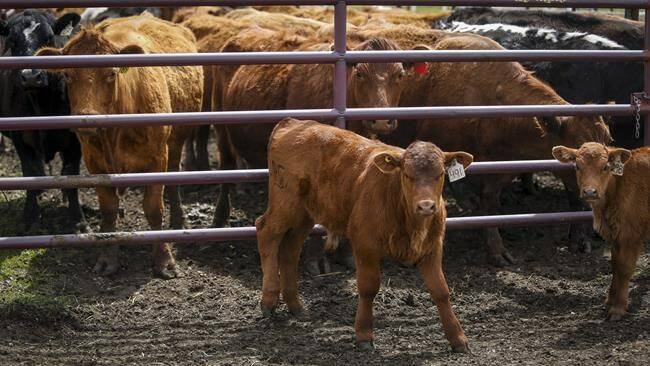
THE CANADIAN PRESS FILES
Manure from the proposed mega-dairies would end up in Lake Winnipeg, exacerbating the lake’s already-high phosphorus levels and toxic blue-green algae blooms.
Sahl’s family farm is two kilometres from the proposed Richland County Abercrombie Dairy, a 12,500-cow operation. That farm, as well as the Traill County Herberg Dairy, with 25,000 cows, is owned by Riverview Farms, based in Morris, Minn.
“The crux of the thing really is so much manure — 52 Canadian football fields at a depth of (six metres) to be applied to land close to the Red River every single year,” Vicki Burns, with the Save Lake Winnipeg Project, said in an interview.
The International Joint Commission, which aims to resolve Canada-U.S. cross-border water disputes, has directed the watershed board to evaluate the permits issued by North Dakota for the intensive livestock operations to determine whether impacts on water quality and aquatic ecosystems were sufficiently considered.
The board has no legal or regulatory authority to supersede what provincial, state and federal governments decide to do, commissioner Merrell-Ann Phare told the presenters who lined up to express concern about the impact of the farms.
“Although they do not have authority to stop them, I hope they can speak up loudly about what the harms are going to be that will result from this,” said Burns.
North Dakota overwhelmingly supported the election of U.S. President Donald Trump, who has made good on promises to roll back environmental regulations and protections.
Such massive industrial agriculture operations are new to North Dakota, Sahl said, noting the farms would quadruple the number of dairy cows in the state.
“All of our checklists that approve ag in our state are meant for small operations of maybe 200 cows, not for 12,000 and 25,000 head. So all the permitting has been done based on those standards and not on industrial ag standards,” she said before urging the board to investigate the impact of the proposed dairy operations.
“I hope the outcome will be that people will do a little critical thinking and ask some critical questions,” Sahl said.
The executive director of the Manitoba Eco-Network said the fight is far from over.
“By coming together across the border, bringing other organizations together, making that coalition, I do think we’ve had an impact,” James Beddome said in an interview.

Peguis First Nation’s Mike Sutherland told the board that there needs to be more input from Indigenous communities that have relied on the watershed.
“We live there,” he said. “We drink that water, or we used to. We hunt, trapped, fish, gather there. How long can we keep doing that?”
The Dakota Resource Council in October sued the North Dakota’s environment department over its approval of the 25,000-cow mega-dairy operation in the Red River Valley.
The council argued that the Red River is part of the drinking water supply to Fargo, West Fargo, Moorhead and Grand Forks, and that North Dakota should not follow the example of Iowa. After that state approved industrial mega-barns, its capital, Des Moines, spent millions of dollars to upgrade water treatment plants to handle excess nitrate levels from from animal operations upstream. It still had water restrictions in place for much of last summer.
carol.sanders@freepress.mb.ca
Carol Sanders
Legislature reporter
Carol Sanders is a reporter at the Free Press legislature bureau. The former general assignment reporter and copy editor joined the paper in 1997. Read more about Carol.
Every piece of reporting Carol produces is reviewed by an editing team before it is posted online or published in print — part of the Free Press‘s tradition, since 1872, of producing reliable independent journalism. Read more about Free Press’s history and mandate, and learn how our newsroom operates.
Our newsroom depends on a growing audience of readers to power our journalism. If you are not a paid reader, please consider becoming a subscriber.
Our newsroom depends on its audience of readers to power our journalism. Thank you for your support.
Carol Sanders
Legislature reporter
Carol Sanders is a reporter at the Free Press legislature bureau. The former general assignment reporter and copy editor joined the paper in 1997. Read more about Carol.
Every piece of reporting Carol produces is reviewed by an editing team before it is posted online or published in print — part of the Free Press‘s tradition, since 1872, of producing reliable independent journalism. Read more about Free Press’s history and mandate, and learn how our newsroom operates.
Our newsroom depends on a growing audience of readers to power our journalism. If you are not a paid reader, please consider becoming a subscriber.
Our newsroom depends on its audience of readers to power our journalism. Thank you for your support.
Advertisement Advertise With Us
Advertisement Advertise With Us