Palestine through a local lens
New exhibition features family heirlooms, contemporary art and activist ephemera

Advertisement
Read this article for free:
or
Already have an account? Log in here »
To continue reading, please subscribe:

Digital Subscription
One year of digital access for only $205*
- Enjoy unlimited reading on winnipegfreepress.com
- Read the E-Edition, our digital replica newspaper
- Access News Break, our award-winning app
- Play interactive puzzles
*First annual payment billed as $205.00 + GST for one year. This annual subscription will automatically renew at $233.00 + GST every 52 weeks (10% off the regular annual price of $259.35). Offer available to new and qualified returning subscribers only. Cancel any time.
To continue reading, please subscribe:
Add Free Press access to your Brandon Sun subscription for only an additional
$1 for the first 4 weeks*
- Enjoy unlimited reading on winnipegfreepress.com
- Read the E-Edition, our digital replica newspaper
- Access News Break, our award-winning app
- Play interactive puzzles
*Your next Brandon Sun subscription payment will increase by $1.00 and you will be charged $17.95 plus GST for four weeks. After four weeks, your payment will increase to $24.95 plus GST every four weeks.
Read unlimited articles for free today:
or
Already have an account? Log in here »
Hey there, time traveller!
This article was published 16/01/2026 (235 days ago), so information in it may no longer be current.
A new multimedia art exhibition at the Canadian Mennonite University campus includes contributions from more than 100 members of the Palestinian community and allies, with a special focus on local voices.
The Land Remembers, Palestine: Courage, Resilience, Resistance, which runs until Feb. 28, features textiles, family photos, paintings, a documentary by filmmaker Nilufer Rahman, posters and other mediums.
“We are a university art gallery. We welcome dialogue. We want people to engage with the contemporary lived experience of the Palestinian community, not just historical material culture,” says Sarah Hodges-Kolisnyk, director of the Mennonite Heritage Centre Gallery.
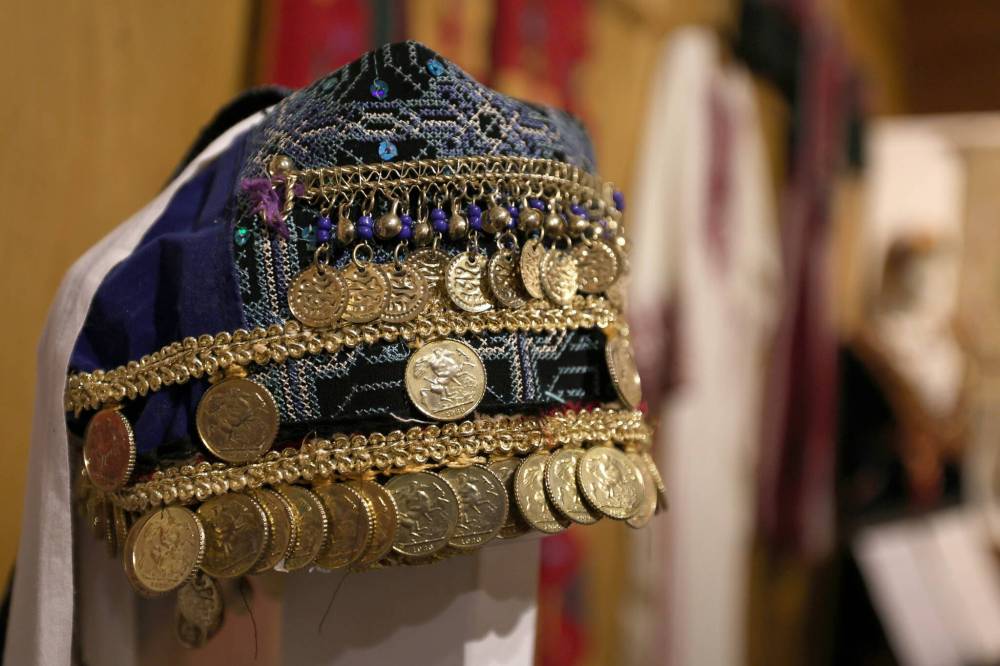
Ruth Bonneville / Free Press
The first floor of the exhibition holds an archive of Palestinian material culture.
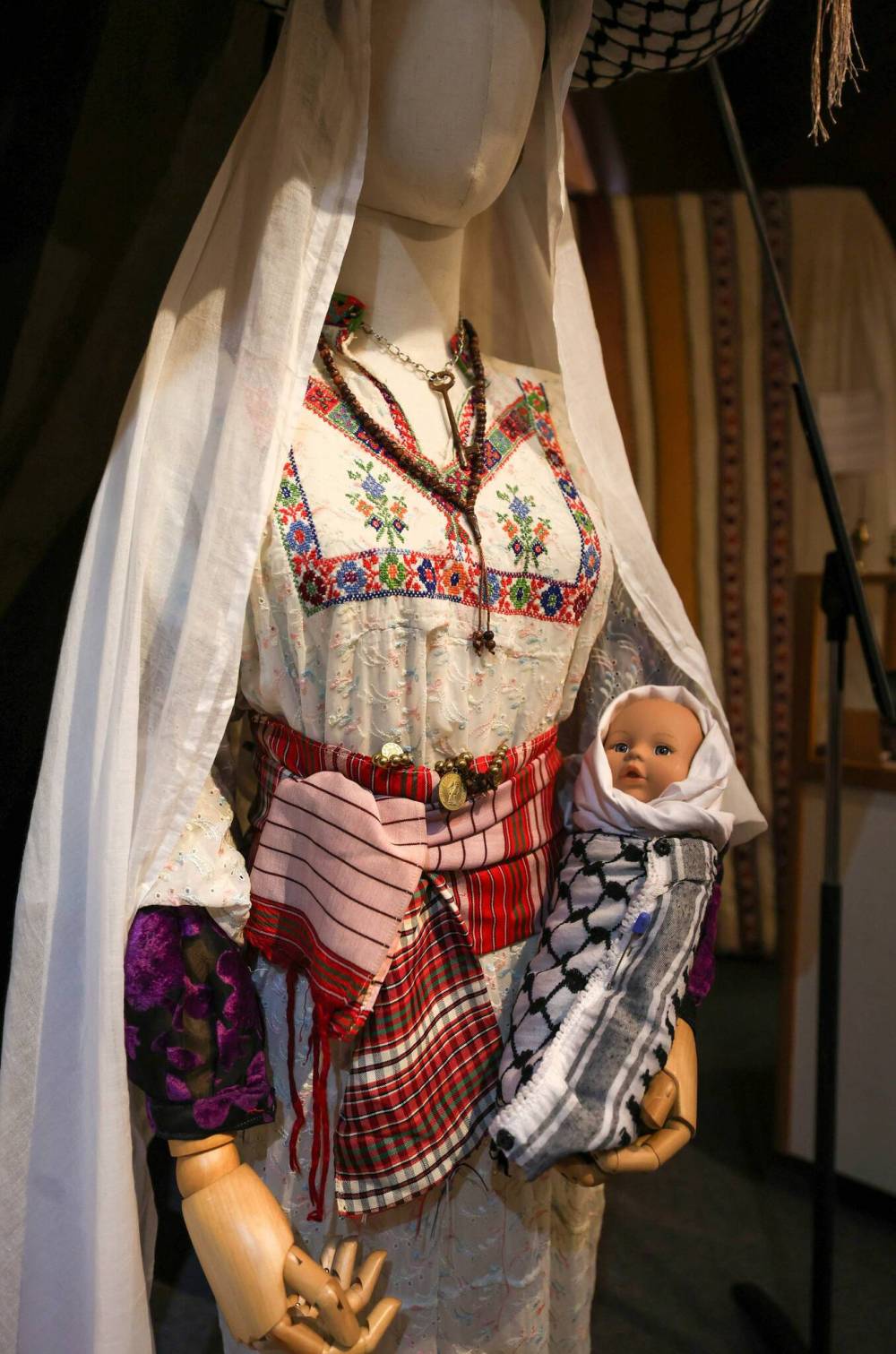
The exhibition features six unique “zones” on two floors. On the first floor is a striking breadth of cultural artifacts, including traditional Palestinian embroidery, dresses and pottery.
“All the pieces have been brought together by the community,” says artist and lead curator Rana Abdulla, who contributed several paintings and family belongings to the exhibition.
“So, this is what my mother embroidered for herself,” she says, gesturing to a pillowcase before moving on to a display of garments made by her family and others.
“The bride, before marriage, has to learn tatreez, and they have to do their own bedding, tablecloths, dresses, and it takes a long time. But all the women in the area, in the neighbourhood, they help.”
Tatreez, which means “embroidery” in Arabic, is Palestine’s traditional cross-stitch embroidery. Like English blackwork embroidery or Ukrainian vyshyvanka, tatreez communicates much more than its basic beauty. For instance, the olive tree, native to the eastern Mediterranean basin, evokes rootedness and proximity to the land.
Finer details, such as colour, can describe where in Palestine an artist hails from.
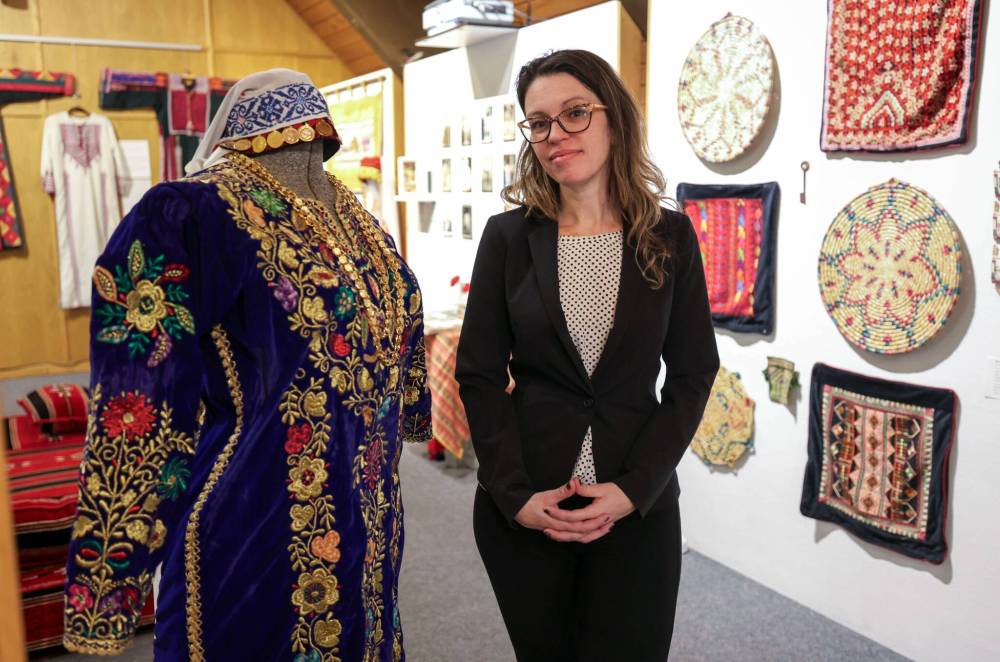
Ruth Bonneville / Free Press
MHC Gallery director Sarah Hodges-Kolisnyk says the gallery wants people to engage with the contemporary lived experience of the Palestinian community.
Abdulla unfolds the stories behind the stitches, but the sounds of an Arabic song, her phone’s ringtone, interrupts her.
“People are calling me like crazy — last-minute preparations,” she says during an interview before the exhibition opening last Friday.
She turns to another display of an old suitcase. Its eclectic contents, at first glance, only suggest a well-travelled owner.
“This is my father’s suitcase. In 1952, he packed and left, and he carried some of his stuff. Some of his stuff he gathered in Kuwait and some of it in Canada,” says Abdulla.
The first floor’s archive of Palestinian material culture is bound with narratives of displacement and struggle, emphasized by the exhibition’s panels and catalogue.
These themes assume a more assertive tone in the show’s contemporary artworks — such as woodwork depicting the West Bank barrier and paintings honouring killed journalists — and reach an apex in the two sections of the exhibition’s second floor.
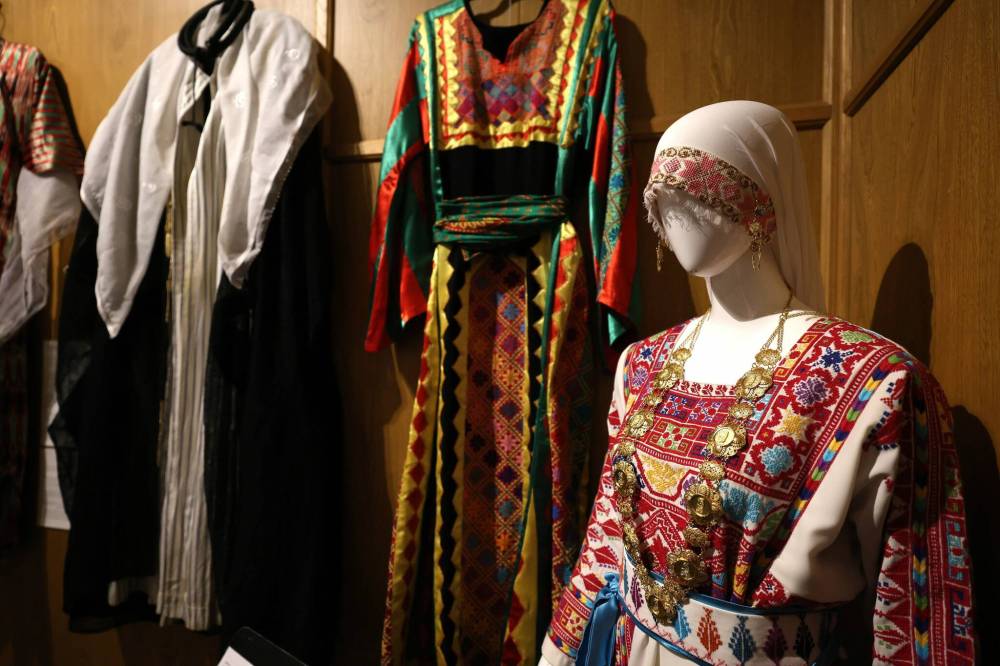
Ruth Bonneville / Free Press
The exhibition includes textiles, family photos and paintings.
One of these sections features 20,000 origami cranes bearing the names of Palestinian children reported killed in the Israel-Hamas conflict.
Entitled We Will Say Their Names, the work by Métis artist Michelle Pichette is situated beside drawings by Palestinian children living in Egypt.
Another section, curated by Sarah Story, Sherri Pelletier and Mary Ann Talbot of Craftivists United, is an archive of local activism. It features the creased banners, posters and protest slogans used by Winnipeggers, many of them non-Palestinians, in demonstrations since the beginning of the conflict in 2023.
“We wanted to be overwhelming with the solidarity. I think we nailed that,” says Story.

Hodges-Kolisnyk, who stresses the gallery does not take “a political stance with any one government,” says in its 27-year history the gallery has mounted four exhibitions platforming Jewish and Israeli voices on issues relating to oppression of the Jewish community.
She hopes this one will help address what she sees as the underrepresentation of Palestinian voices and advocates in the museum world.
Ruth Bonneville / Free Press
The exhibition displays works featuring tatreez, Palestine’s traditional cross-stitch embroidery.
“Of course, (the contributing artists) would have a passionate response. So those kinds of responses — we recognize are part of the discussion,” she says of the exhibition’s more pointed works.
“We hope people will come with open hearts and open minds to learn, reflect and engage with the material without the expectation of advocacy or judgment.”
winnipegfreepress.com/conradsweatman
Conrad Sweatman is an arts reporter and feature writer. Before joining the Free Press full-time in 2024, he worked in the U.K. and Canadian cultural sectors, freelanced for outlets including The Walrus, VICE and Prairie Fire. Read more about Conrad.
Our newsroom depends on a growing audience of readers to power our journalism. If you are not a paid reader, please consider becoming a subscriber.
Our newsroom depends on its audience of readers to power our journalism. Thank you for your support.
Exhibition Preview
The Land Remembers, Palestine: Courage, Resilience, Resistance
- MHC Gallery, 610 Shaftesbury Blvd.
- Now to Feb. 28
- Visit the gallery website for more information
Conrad Sweatman is an arts reporter and feature writer. Before joining the Free Press full-time in 2024, he worked in the U.K. and Canadian cultural sectors, freelanced for outlets including The Walrus, VICE and Prairie Fire. Read more about Conrad.
Our newsroom depends on a growing audience of readers to power our journalism. If you are not a paid reader, please consider becoming a subscriber.
Our newsroom depends on its audience of readers to power our journalism. Thank you for your support.
Advertisement Advertise With Us
Advertisement Advertise With Us
History
Updated on Friday, January 16, 2026 12:27 PM CST: Formats text