

Group accommodations
Kabul hotel a hub for chronicling the resilience of Afghans through various regimes, conflicts
Advertisement
Read this article for free:
or
Already have an account? Log in here »
To continue reading, please subscribe:
Monthly Digital Subscription
$1 per week for 24 weeks*
- Enjoy unlimited reading on winnipegfreepress.com
- Read the E-Edition, our digital replica newspaper
- Access News Break, our award-winning app
- Play interactive puzzles
*Billed as $4.00 plus GST every four weeks. After 24 weeks, price increases to the regular rate of $19.95 plus GST every four weeks. Offer available to new and qualified returning subscribers only. Cancel any time.
Monthly Digital Subscription
$4.99/week*
- Enjoy unlimited reading on winnipegfreepress.com
- Read the E-Edition, our digital replica newspaper
- Access News Break, our award-winning app
- Play interactive puzzles
*Billed as $19.95 plus GST every four weeks. Cancel any time.
To continue reading, please subscribe:
Add Free Press access to your Brandon Sun subscription for only an additional
$1 for the first 4 weeks*
*Your next subscription payment will increase by $1.00 and you will be charged $16.99 plus GST for four weeks. After four weeks, your payment will increase to $23.99 plus GST every four weeks.
Read unlimited articles for free today:
or
Already have an account? Log in here »
History — as a field, a craft, a way of thinking, a body of knowledge or a way of examining the human condition — fundamentally captures the human experience so that we might come closer to the truth of why we exist and how we might progress.
People’s histories take historical thinking one step further. Histories of everyday people and their experiences counter hierarchical and hegemonic narratives, which tend to silence critical voices while propping themselves up for political and economic gain.
In her latest, The Finest Hotel in Kabul: A People’s History of Afghanistan, Canadian journalist and BBC correspondent Lyse Doucet has set out to point a spotlight on the history of Afghanistan through extraordinary people who might normally be overlooked in the tomes of history.

Paula Bronstein photo
Lyse Doucet, seen here in the lobby of the Inter-Continental Hotel, arrived in Kabul in 1992.
Through the backdrop of Kabul’s Inter-Continental hotel — the most storied and fabulous hotel in the city which, to this day, looks out onto the white-tipped mountains of the Hindu Kush — Doucet embarks on making spaces for the voices who worked and lived in the hotel between 1971 and 2021. It’s a 50-year expanse of time that bears witness to crowns, coups, communists, the Taliban, western puppets and the return of the Taliban.
The temptation would be to tell the stories of leaders, define timelines and distill the lament of leaders past and present. Conversely, Doucet argues that history, and a people’s history, “moves in a multitude of singular stories that carry far bigger truths.”
Through the stories, truths and experiences of staff at the Inter-Con, as it is known, Doucet makes the case that histories are not about winners or losers, but rather “a mother’s anxious eyes, the song of a soldier, a soul-soothing camaraderie, the pause before going out the door.”
As a key correspondent in much of this period and a patron of the Inter-Con, Doucet (who, after the first-person prologue, refers to herself in the third person in these stories) unpacks the experiences of Hazrat, Sadeq, Abida, Mohammad, Sharif and a myriad of other individuals whose lives were and are wrapped up intimately with the fate of the grand hotel on the hill, as well as the slow, tumultuous and heartbreaking history of Kabul and Afghanistan.
Through beautiful prose and the highest respect for people and their stories, Doucet weaves together a beautiful analogy between the fate of the country and the hotel — underlying the scars that pock a people and a five-star building, but also their resilience.
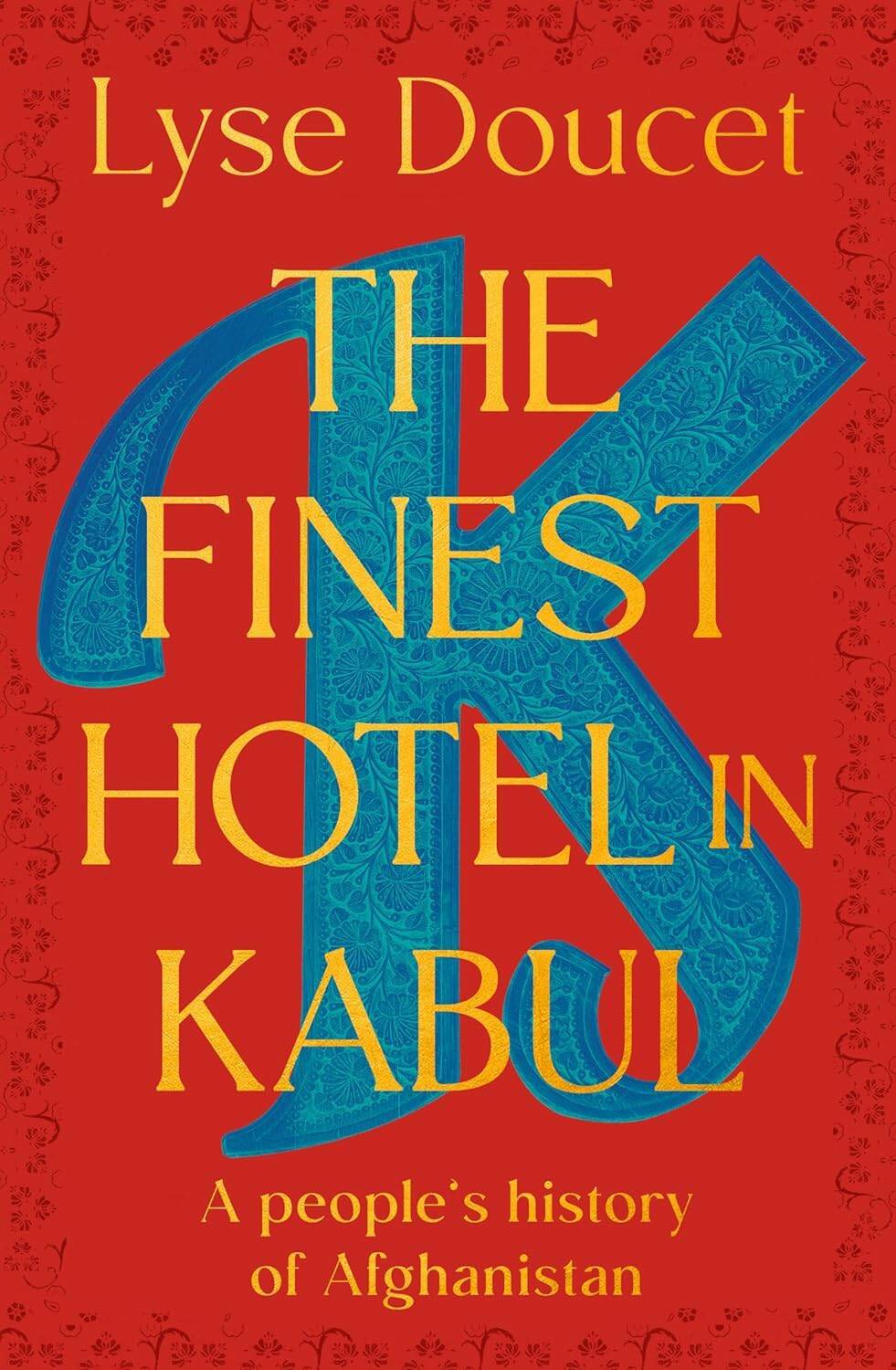
The Finest Hotel in Kabul
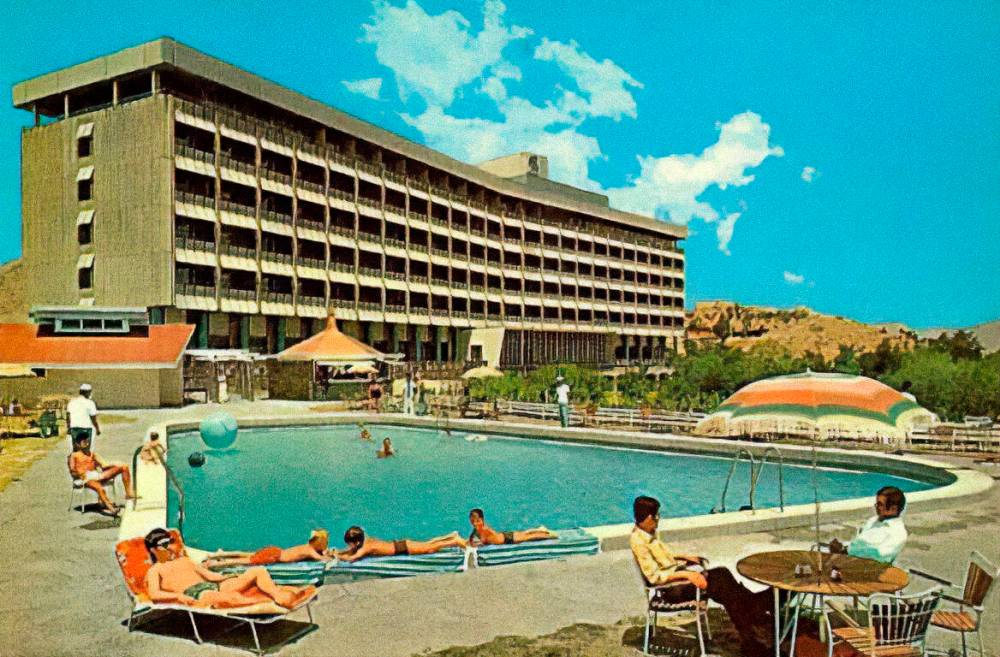
Beginning in 1971, Doucet describes a Kabul and Inter-Con that were both cosmopolitan, secular and hopeful. A relatively benign monarchy represented by Zahir Shah created the conditions for the Inter-Con to take its place as one of luxury — hosting dinners, cocktails, western diplomats and grand weddings — as well as a place where the storytellers within Doucet’s book experience a country perpetually located in the crosshairs of warlords, cold wars and power vacuums.
But while much was transpiring in capitals across the globe, hotel staff and much of the country were unaware of the ramifications of regime changes. Even following the coup of 1973, which saw the displacement of the king and the rise of a new president, life continued on at the Inter-Con.
“The coup had changed nothing; a changing of the guard meant little to villagers who lived simple lives so many miles away,” Doucet reflects.
Similarly, hotel employees such as Hazrat simply went on “living from one day to the next, focused on supporting his family, catching up on courses to complete his high school education, and now his military service for his country.”
Life goes on.

Lyse Doucet photo
Employees of Kabul’s Inter-Continental Hotel such as Hazrat saw the hotel ‘fading faster than his memories,’ and lived his life ‘focused on supporting his family.’

Since 1919 and independence from Great Britain, Afghanistan has struggled to resist the long reach of warring, vengeful and greedy outsiders. Pushing back Russian control, the rise of the U.S.-backed mujahideen in the 1990s and then the advent of the Taliban, it is the people who have suffered most from the insatiable need for power.
As Doucet first arrives at the Inter-Con in 1992, she bears witness to the experiences of staff there. Through their stories, she is able to tell of a hotel and country that bends and cracks at the whim of violent men. For Hazrat, “his hotel was fading faster than his memories.” As was his country.
But there is hope in the experiences and stories Doucet highlights. Despite the rockets, tanks and suicide bombers of various regimes, the stories of love, marriage, pride and human connection is what makes a people. As Doucet elegantly describes, “A people who had survived decades of war, who knew how swiftly the living could become the dead, knew that the only solution was to live.”
The Finest Hotel in Kabul is a testament to the astonishing resistance and resilience of Afghans. It reminds us that the experiences of ordinary people illuminate a deeper truth: humanity is best understood not through grand events, but through the daily acts of those who endure them.
Matt Henderson is superintendent of the Winnipeg School Division.
Supplied photo
In the early 1970s, the Inter-Continental Hotel was cosmopolitan, secular and hopeful; the relatively benign monarchy of the time created conditions for the hotel to take its place as one of luxury.