Riding through history Online database, city hall exhibit showcase photos of civic transit over the decades
Read this article for free:
or
Already have an account? Log in here »
To continue reading, please subscribe:

Digital Subscription
One year of digital access for only $205*
- Enjoy unlimited reading on winnipegfreepress.com
- Read the E-Edition, our digital replica newspaper
- Access News Break, our award-winning app
- Play interactive puzzles
*First annual payment billed as $205.00 + GST for one year. This annual subscription will automatically renew at $233.00 + GST every 52 weeks (10% off the regular annual price of $259.35). Offer available to new and qualified returning subscribers only. Cancel any time.
To continue reading, please subscribe:
Add Free Press access to your Brandon Sun subscription for only an additional
$1 for the first 4 weeks*
- Enjoy unlimited reading on winnipegfreepress.com
- Read the E-Edition, our digital replica newspaper
- Access News Break, our award-winning app
- Play interactive puzzles
*Your next Brandon Sun subscription payment will increase by $1.00 and you will be charged $17.95 plus GST for four weeks. After four weeks, your payment will increase to $24.95 plus GST every four weeks.
Read unlimited articles for free today:
or
Already have an account? Log in here »
Hey there, time traveller!
This article was published 25/01/2026 (245 days ago), so information in it may no longer be current.
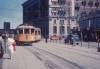
The transit buses, trolleys, and Red River carts that carried Winnipeggers around for nearly 150 years are the driving force behind a new city project.
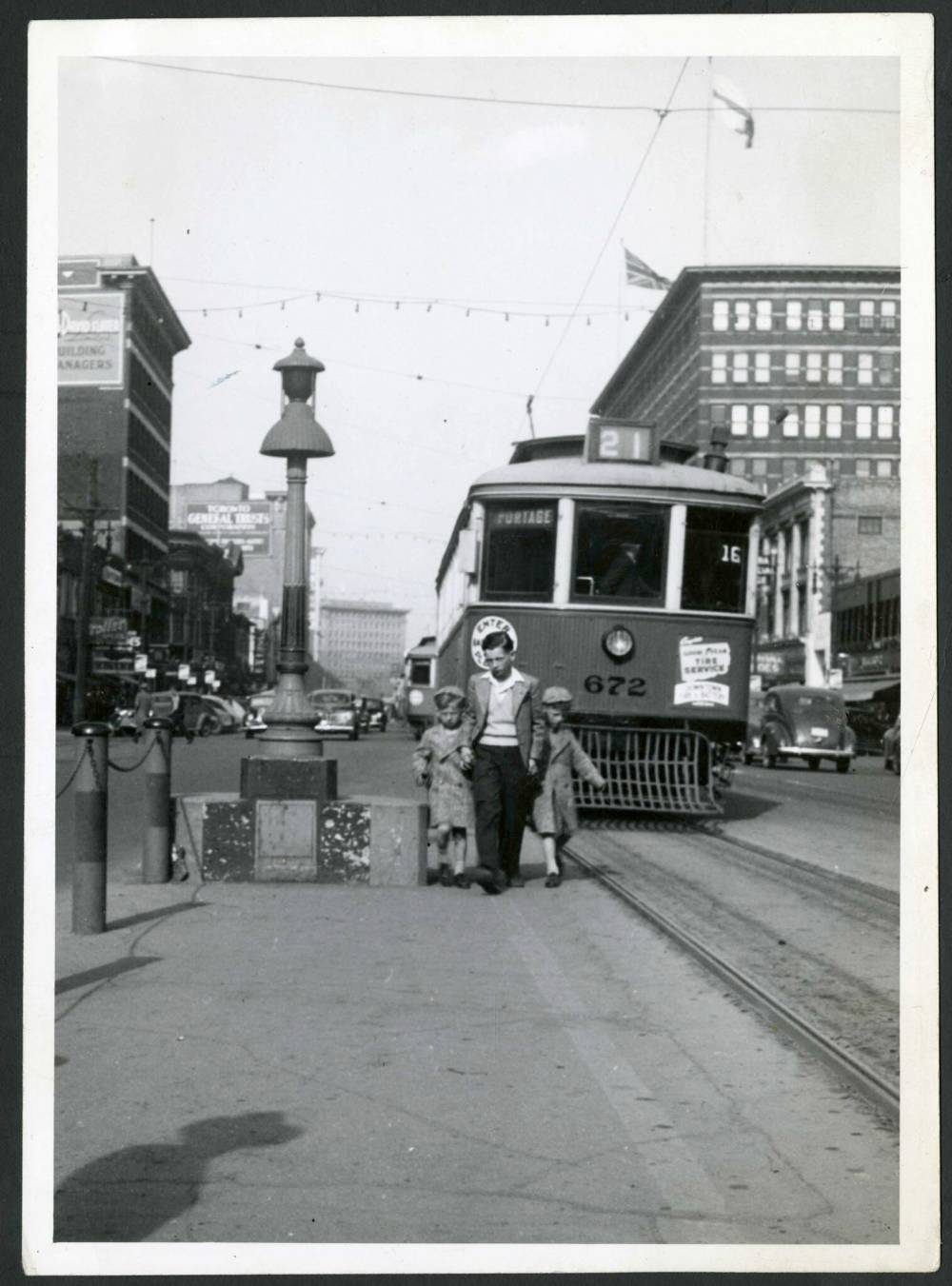
The city’s archives department is in the process of preserving thousands of photos showing the history of civic transit in Winnipeg. Hundreds of photos are already available to view from a searchable database online. A select few will be part of a temporary exhibit at city hall.
Until recently, the photos were sitting unseen in the yellowing pages of more than two dozen photo albums on shelves tucked away at Winnipeg Transit’s complex on Osborne Street.

MIKE DEAL / FREE PRESS
Sarah Ramsden (left), senior archivist, and Gwen Friesen (right), archival intern at the City of Winnipeg Archives, with the binders in which archival transit photos were stored.
Members of the Manitoba Transit Heritage Association said they are thrilled the public will have the collection at their fingertips any time they want.
“I think this is a really wonderful project,” said David Wyatt, secretary of the association. “We’ve seen some of the historic photos through the many, many years and they are great.”
Alex Regiec, the heritage association’s vice president, spent 30 years working at Winnipeg Transit in its operations department. He said the organization helped city archivists identify some of the photos.
“When I worked at Transit they were in a series of binders close to my office,” he said. “I put the annual calendar together and drew on the photos for it. They were in good shape.
“I’m very happy they are in very good hands.”
Sarah Ramsden, senior archivist with the archives, said her department is pleased to house the collection.
She said 600 of the 6,000 photos her department received are now online, with others to follow. Those that can’t go online due to copyright, will still be preserved and the records available at the archives.
“The exhibit is to make this collection better known,” said Ramsden. “We wanted to give people a little taste of what we have.”
Greg Ewankiw, director of Winnipeg Transit, is also pleased the public will now have access, especially since between himself, his dad, brother, son and son-in-law, his family has spent 83 years at the public transit agency.
“I drove a bus for 14 years,” Ewankiw said. “My father drove (an electric trolley).

“We are so pleased the archivists could take this on and preserve it for everyone.”
“We are so pleased the archivists could take this on and preserve it for everyone.”
Gwen Friesen, an archival intern at the archives, recalls spending much of 2025 going through the photo collection and adding information to each including the photographer’s name, the type of vehicle, and where the photo was taken.
“It was overwhelming to see so many and to know each one of them was going to get a description,” Friesen said. “It was a bit daunting at first… when I first saw them they were on a couple of shelves in very thick binders full of thousands of photos.”
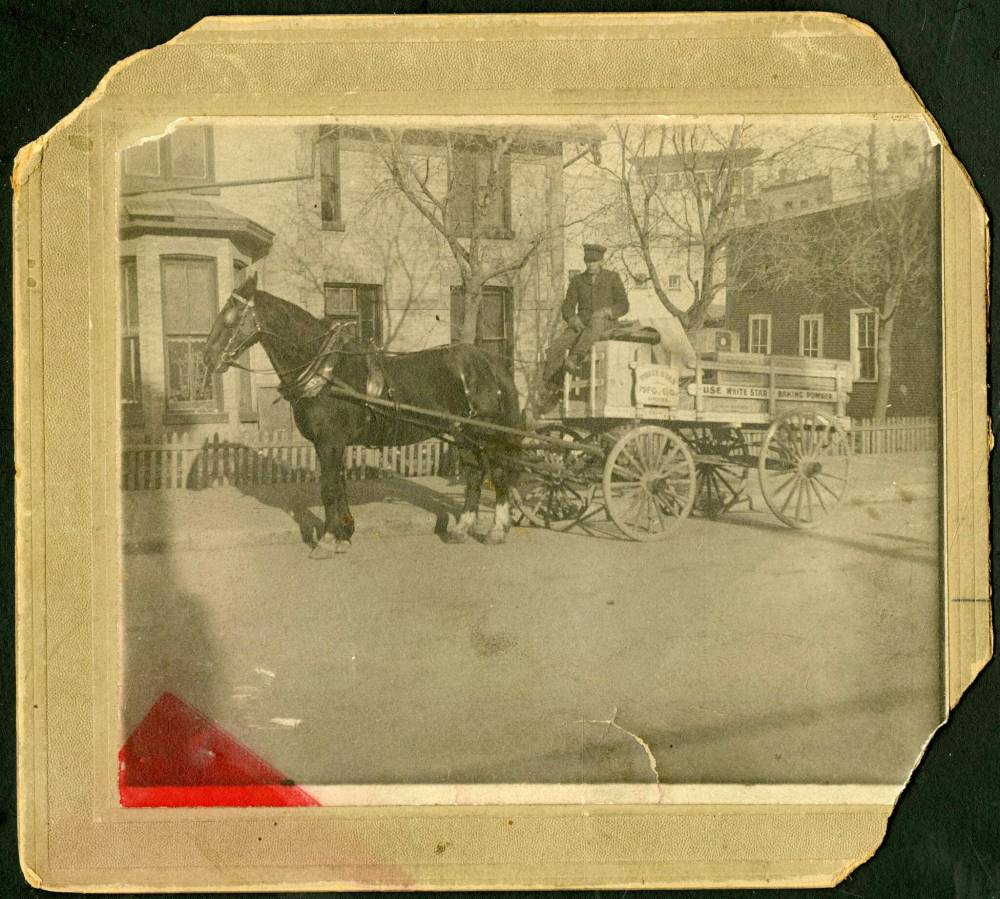
Friesen said the oldest photo in the collection is from 1882, showing a horse pulling an enclosed car. There is an even older photo from 1880, showing people being pulled in a Red River cart, but that image belongs to the Manitoba Archives Collection.

Within a few years there was rail on the road, electric lines in the air, and streetcars were pushing aside the horsecars.
From there came trolleys and, ultimately, different types of diesel buses over the decades.
Friesen said the most recent photo is from 2005, when the first low-floor buses came into service.
Regiec, whose organization preserves a collection of more than a dozen former Winnipeg Transit buses and others from Grey Goose, Northern Bus Lines and Beaver Bus Lines, said his favourite photos are ones showing trolleys.
“I grew up in Winnipeg and, with my mom, I went on the North Main-Corydon route,” he said.


“I have memories of the pole coming off the (electrical line) at Selkirk and Main Street and the driver, no matter what the weather, would have to go out and connect it again.
“Now everyone can see what they looked like at the time.”
The photos can be viewed at: wfp.to/transitarchive.
The temporary exhibit is set up on the main floor of the Susan A. Thompson building at city hall at 510 Main St. It is open from 8:30 a.m. to 4:30 p.m.
kevin.rollason@freepress.mb.ca


Kevin Rollason
Reporter
Kevin Rollason was a general assignment reporter at the Free Press.
Our newsroom depends on a growing audience of readers to power our journalism. If you are not a paid reader, please consider becoming a subscriber.
Our newsroom depends on its audience of readers to power our journalism. Thank you for your support.