Scientists recover the oldest wooden tools from a site in Greece
Advertisement
Read this article for free:
or
Already have an account? Log in here »
To continue reading, please subscribe:

Digital Subscription
One year of digital access for only $205*
- Enjoy unlimited reading on winnipegfreepress.com
- Read the E-Edition, our digital replica newspaper
- Access News Break, our award-winning app
- Play interactive puzzles
*First annual payment billed as $205.00 + GST for one year. This annual subscription will automatically renew at $233.00 + GST every 52 weeks (10% off the regular annual price of $259.35). Offer available to new and qualified returning subscribers only. Cancel any time.
To continue reading, please subscribe:
Add Free Press access to your Brandon Sun subscription for only an additional
$1 for the first 4 weeks*
- Enjoy unlimited reading on winnipegfreepress.com
- Read the E-Edition, our digital replica newspaper
- Access News Break, our award-winning app
- Play interactive puzzles
*Your next Brandon Sun subscription payment will increase by $1.00 and you will be charged $17.95 plus GST for four weeks. After four weeks, your payment will increase to $24.95 plus GST every four weeks.
Read unlimited articles for free today:
or
Already have an account? Log in here »
Hey there, time traveller!
This article was published 26/01/2026 (234 days ago), so information in it may no longer be current.
NEW YORK (AP) — Two artifacts found at a lake shore in Greece are the oldest wooden tools to be uncovered so far and date back 430,000 years.
One is a spindly stick about 2 1/2 feet (80 centimeters) long that could have been used for digging in the mud. The other is a smaller, more mysterious handheld chunk of willow or poplar wood that may have been used to shape stone tools, according to research published Monday in the journal Proceedings of the National Academy of Sciences.
Scientists think ancient humans wielded a whole litany of tools made from stone, bone and wood. But it’s particularly difficult to find evidence of wooden tools today because wood rots so quickly. Such tools are only preserved in specific environments like in ice, caves or underwater.
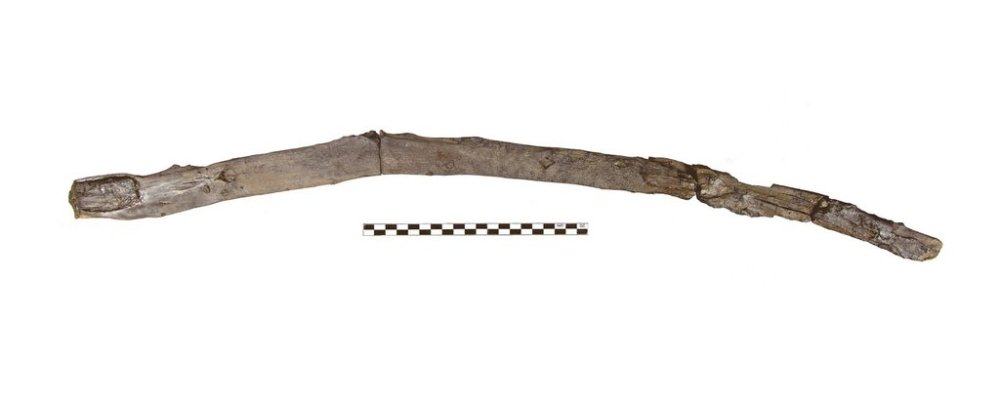
The newest tools, found in Greece’s Megalopolis basin, were possibly buried quickly by sediment and preserved by a wet environment over time. For years, researchers have found other remnants at the site, including stone tools and elephant bones with cuts on them. While scientists didn’t directly date the wooden tools, the site is about 430,000 years old, which provides insight into the objects’ age.
“I’ve always just been thrilled to be able to touch these objects,” said study author Annemieke Milks with the University of Reading.
Human remains haven’t been found at the site yet, so it’s not yet clear who used the tools. The owners could have been Neanderthals, early human ancestors or someone else.
The site in Greece probably has more gems from the past that are waiting to be found, said archaeologist Jarod Hutson with the Smithsonian National Museum of Natural History. But the unassuming appearance of these two new tools makes them harder to interpret.

“It’s difficult to get excited about these because they don’t strike you immediately as wooden tools. And we don’t know what they were used for,” said Hutson, who was not involved with the new study.
Other examples of ancient wooden tools include a set of spears from Germany and 300,000-year-old Chinese digging sticks that may have been used to harvest plants.
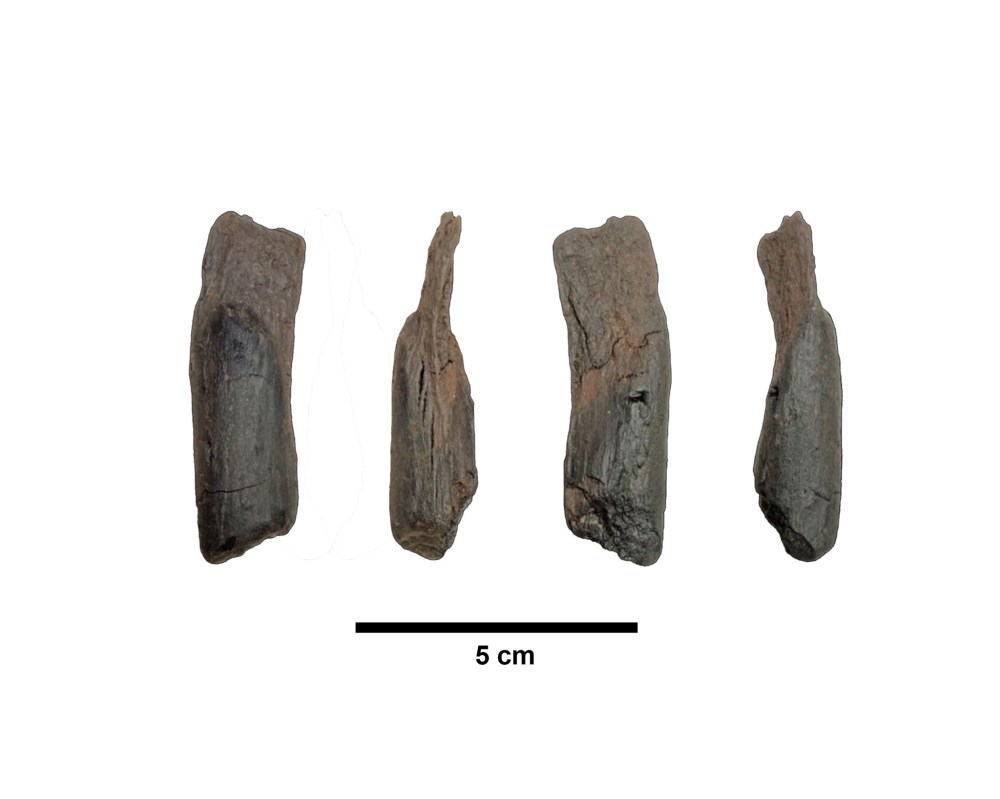
The new find offers a rare look into the varied collection of tools used to survive — a glimpse at a “little known aspect of the technology of early humans,” study author Katerina Harvati with the University of Tübingen said in an email.
—-
The Associated Press Health and Science Department receives support from the Howard Hughes Medical Institute’s Department of Science Education and the Robert Wood Johnson Foundation. The AP is solely responsible for all content.