

N.S. on track for 2030 green energy target, Wind West project not yet in development
Advertisement
Read this article for free:
or
Already have an account? Log in here »
To continue reading, please subscribe:
Monthly Digital Subscription
$1 per week for 24 weeks*
- Enjoy unlimited reading on winnipegfreepress.com
- Read the E-Edition, our digital replica newspaper
- Access News Break, our award-winning app
- Play interactive puzzles
*Billed as $4.00 plus GST every four weeks. After 24 weeks, price increases to the regular rate of $19.95 plus GST every four weeks. Offer available to new and qualified returning subscribers only. Cancel any time.
Monthly Digital Subscription
$4.99/week*
- Enjoy unlimited reading on winnipegfreepress.com
- Read the E-Edition, our digital replica newspaper
- Access News Break, our award-winning app
- Play interactive puzzles
*Billed as $19.95 plus GST every four weeks. Cancel any time.
To continue reading, please subscribe:
Add Free Press access to your Brandon Sun subscription for only an additional
$1 for the first 4 weeks*
*Your next subscription payment will increase by $1.00 and you will be charged $16.99 plus GST for four weeks. After four weeks, your payment will increase to $23.99 plus GST every four weeks.
Read unlimited articles for free today:
or
Already have an account? Log in here »
HALIFAX – Even without the Wind West project, Nova Scotia’s Energy Department says the province is on track to meet one of its green energy goals by relying on 80 per cent renewable energy by 2030.
Karen Gatien, the deputy energy minister, said Tuesday that Nova Scotia could “easily” hit the 2030 goal with a combination of onshore wind farms, solar farms, energy batteries and other small projects.
Gatien said there are five new onshore wind farms set to be completed by the end of this year, and another four on track to be finished by the end of 2028.
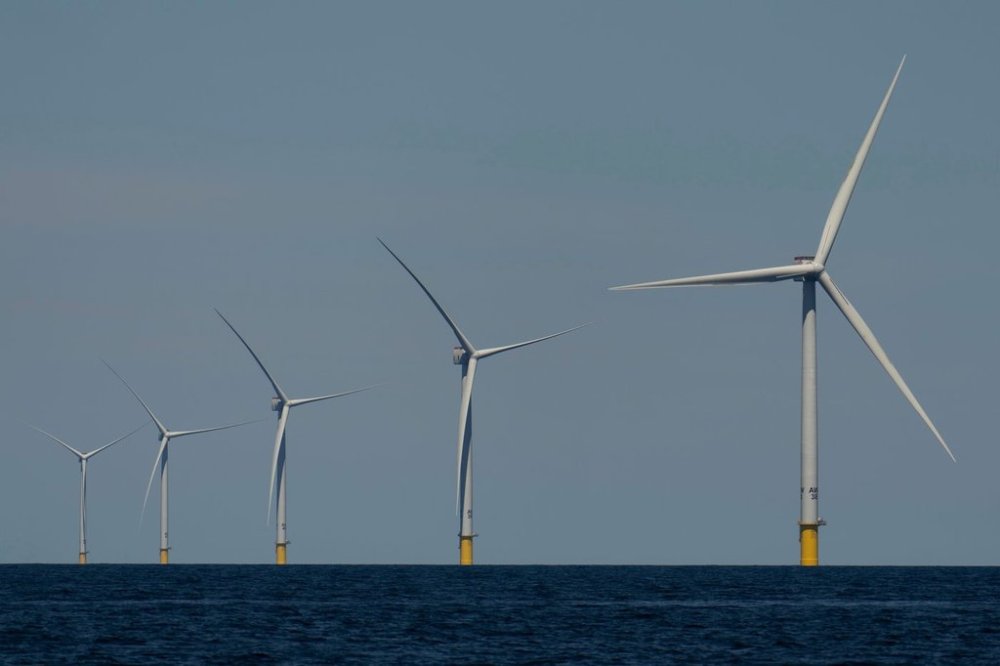
“Benjamin Mills is one of these wind farms. It started delivering clean energy to the grid in December,” Gatien said at a committee meeting. “Higgins Mountains is close on its heels and should be operational very soon. Weavers Mountain, Wedgeport and Goose Harbour Lake should be online by the end of this calendar year.”
Between those five wind farms, Gatien said the province will have an additional 480 megawatts of wind energy. By the end of 2028, the onshore wind farms could create close to 1,000 megawatts of energy, or roughly an additional 30 per cent of renewable energy.
When it comes to offshore wind, however, the details are less clear.
Gatien said she’s “optimistic” that the request for development bids on the much-touted Wind West project could go out by this summer, calling the project’s potential a “once-in-a-generation shift that could make Nova Scotia a ‘have’ province.”
The timeline for a larger Wind West project is not yet clear. Gatien said there could be energy coming onto the power grid from Wind West as early as 2033.
While other projects have taken multiple decades, Gatien said that Nova Scotia could potentially move faster because of its familiarity with offshore management of natural gas.

Last fall, the federal government committed to work with the province to develop Wind West, a project with an estimated $60-billion price tag.
David Miller, the executive director of energy planning with the Energy Department, said the province is looking at a four per cent levy on the gross revenues of Wind West. Miller said that could give $100 million back to the province annually.
“The four per cent is an estimate of where we think would create value for Nova Scotians, but not unreasonably increase the price of power generated by these projects,” Miller said.
Both Miller and Gatien said they are open to many different options on Wind West, and will consider varying proposals.
This report by The Canadian Press was first published Jan. 27, 2026.