

‘It’s a miracle I’m here’
Barbecue explosion in Hawaii last winter left Winnipegger at death’s door; relearned to eat, walk after being thrown 30 feet

Advertisement
Read this article for free:
or
Already have an account? Log in here »
To continue reading, please subscribe:

Digital Subscription
One year of digital access for only $205*
- Enjoy unlimited reading on winnipegfreepress.com
- Read the E-Edition, our digital replica newspaper
- Access News Break, our award-winning app
- Play interactive puzzles
*First annual payment billed as $205.00 + GST for one year. This annual subscription will automatically renew at $233.00 + GST every 52 weeks (10% off the regular annual price of $259.35). Offer available to new and qualified returning subscribers only. Cancel any time.
To continue reading, please subscribe:
Add Free Press access to your Brandon Sun subscription for only an additional
$1 for the first 4 weeks*
- Enjoy unlimited reading on winnipegfreepress.com
- Read the E-Edition, our digital replica newspaper
- Access News Break, our award-winning app
- Play interactive puzzles
*Your next Brandon Sun subscription payment will increase by $1.00 and you will be charged $17.95 plus GST for four weeks. After four weeks, your payment will increase to $24.95 plus GST every four weeks.
Read unlimited articles for free today:
or
Already have an account? Log in here »
Hey there, time traveller!
This article was published 28/01/2026 (193 days ago), so information in it may no longer be current.
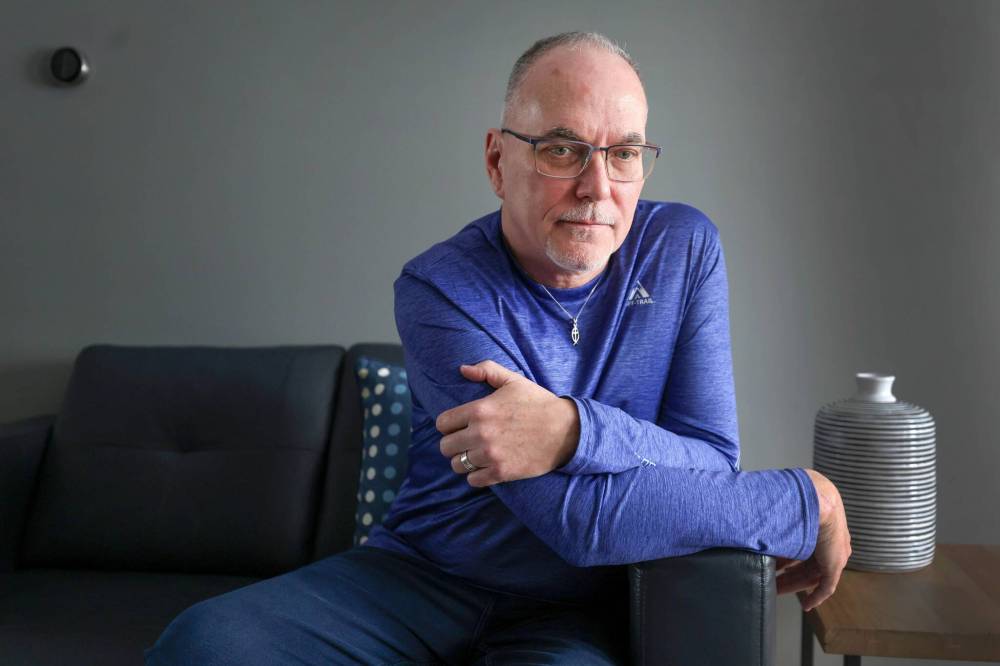
Darren Stevenson feared he would die while he lay broken, burned and surrounded by chaos following a gas-barbecue explosion that left him facing a years-long recovery.
The 60-year-old Winnipegger, who was in critical condition in the aftermath, had to learn how to walk again after suffering catastrophic injuries at a Hawaii resort nearly a year ago.
“It’s a miracle I’m here speaking to you. Even the litany of injuries I incurred, they could have been a lot worse,” Stevenson said during an emotional interview Wednesday.
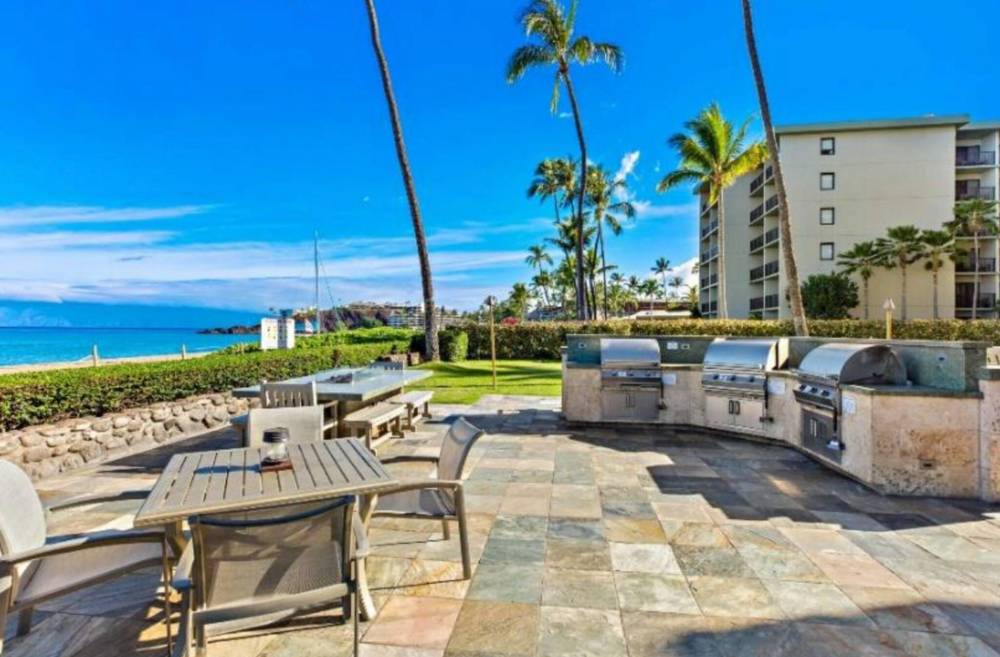
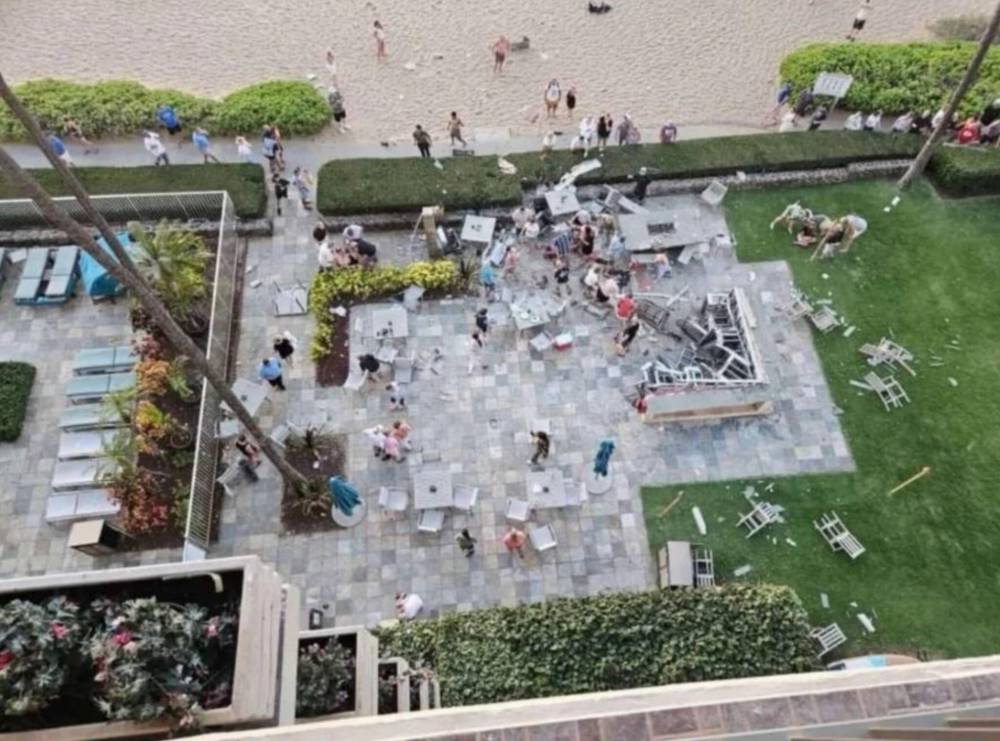
The explosion happened Feb. 20, 2025 while Stevenson and other people cooked dinner on a multi-grill barbecue at the Whaler on Kaanapali Beach condo complex in Maui.
More than a dozen people were injured. The blast, which hurled debris onto the beach, was likened to a bomb. Some witnesses initially feared it was a terror attack.
“What I remember is a concussive force hitting my body. I either said or thought — I don’t really know — ‘WTF,’” Stevenson said. “Unbeknownst to me, I was thrown 30 feet.”
His wife, Diane, had just reached the patio to join him, after doing some dinner prep in their rented condo. Her physical injuries weren’t as serious. Both continue to experience emotional trauma.
“I was thrown 30 feet.”
Two vacationing firefighters came to Stevenson’s aid after he was blown off his feet.
“I could hear screaming, and it was my wife’s voice that I could pinpoint,” he said. “I said to the firefighter, “Is my wife OK?’”
After being reassured she was not seriously hurt, he shared his fear that he wouldn’t survive.
“I said something like, ‘My (right) leg’s a blanking disaster, but you’ve got to get me out of here alive,” Stevenson said.
He has few memories of the next 24 hours, other than a “pink room event,” before he woke up intubated in a hospital on Oahu, a different Hawaiian island.
“This isn’t real, but this is what my brain was experiencing — that I was in a pink room with pink walls and floors and ceilings,” Stevenson said.
“I remember a warm feeling coming over my body and a voice saying, ‘I’ve got you.’ Take that for what you will, but I believe that was God saying, ‘You’re going to be OK.’”
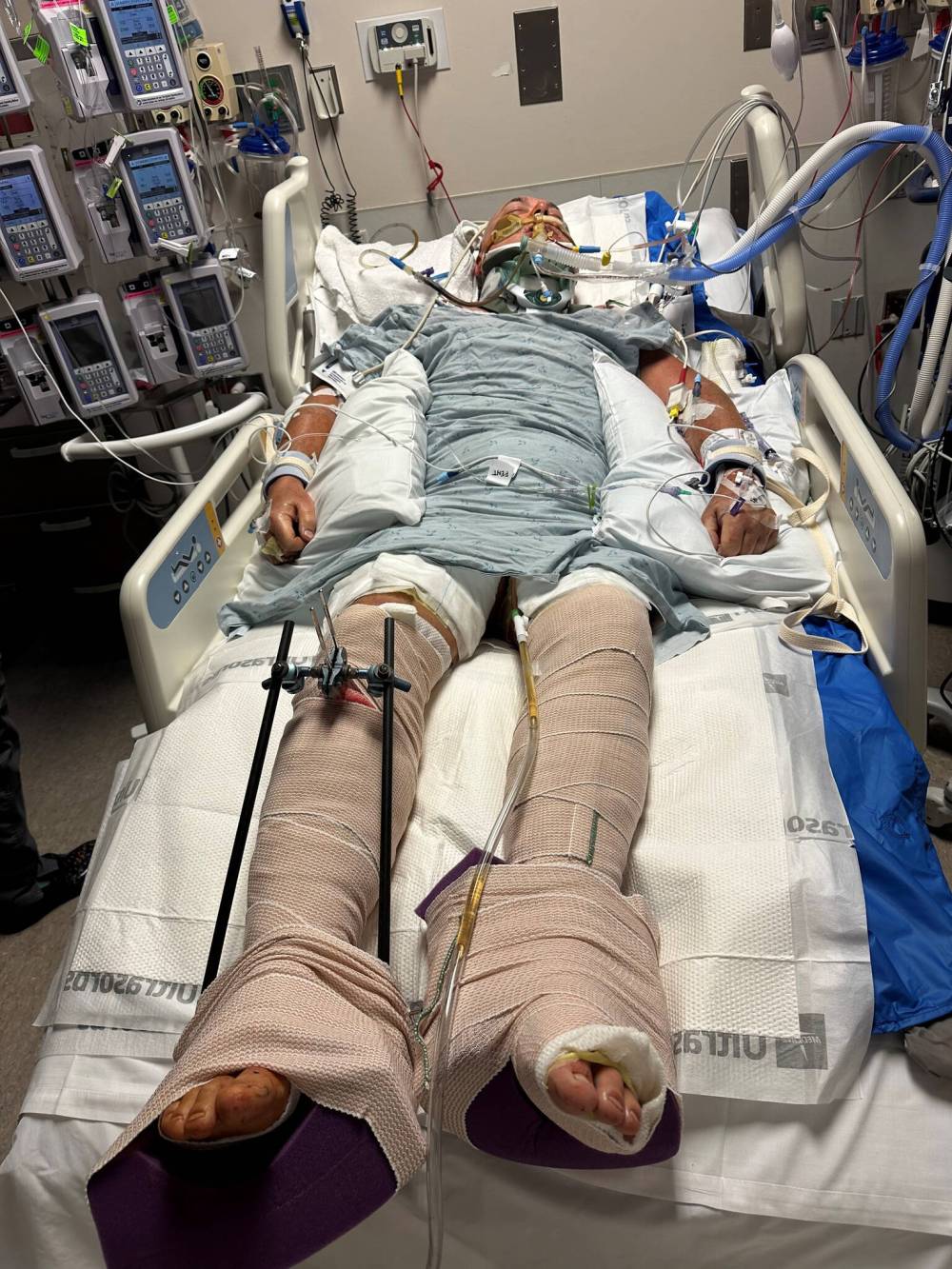
Stevenson’s injuries included burns to up to 25 per cent of his body, a broken right leg with an open wound, a broken jaw, nine broken ribs, lacerations and lost teeth. He has lasting scars. Debris is embedded in his legs.
“As recently as a couple of weeks ago a piece of rock came out of one of my legs,” he said. “There’s no way to get them out. They either stay in there or find their way out.”
“I would not be here if your prayers and support weren’t there.”
Stevenson decided to speak about his experience to thank family, friends, strangers, health-care workers and others who’ve helped him or offered messages of support.
“I haven’t got through this alone. I would not be here if your prayers and support weren’t there,” he said.
Stevenson underwent multiple surgeries at the trauma centre in Oahu, where his wife stayed by his side. He was stable enough to be flown home on a medical jet about two weeks after the explosion.
He spent about a month at Health Sciences Centre in Winnipeg, undergoing additional surgeries. A rod was inserted in his right leg. Skin from his left thigh was transplanted onto his right shin to repair the wound.
The thought of recovering at home with family kept him focused and motivated. He hopes to one day return to a touch football league, where he played alongside his son and son-in-law before the blast.
After being released from HSC, Stevenson temporarily lived with his daughter and son-in-law while his home, which has more stairs, was modified. He was using a wheelchair and a walker at the time.
“When I got into her house, I was crying profusely. I don’t know if I said it or I thought it, but ‘I made it,’” Stevenson said.
He started learning how to eat again and walk without aid.
“Both of those aren’t 100 per cent at this point. There’s still a lot of pain,” said Stevenson, whose jaw, which broke in half at the chin, was wired shut for weeks.
A nurse visited three times a week to change his burn dressings. He is undergoing physiotherapy, and he needs up to five more surgeries on his leg.
Stevenson, the chief financial officer at Palliser Furniture, is unable to work.
Insurance policies helped cover U.S. medical bills and costs at home, but the Stevensons have been left with out-of-pocket expenses. A friend set up an online fundraiser to offset some of them.
There have been many firsts during Stevenson’s recovery. One of the brightest moments for the longtime Blue Bombers season-ticket holder was his return to his usual seat at Princess Auto Stadium last season.
He used crutches to get up and down the stairs, days after the football club invited him to do a “test run” in an empty stadium. The team gave him a signed helmet to welcome him back.
Stevenson said his ordeal is proof that life can change in an instant. It has given him a new perspective.
“I didn’t think I was taking life for granted, but I really was,” he said. “I promised myself I wouldn’t get angry anymore over silly things or get upset about stuff that doesn’t matter. Life is too short.”
“I promised myself I wouldn’t get angry anymore over silly things.”
Lawyers for the Stevensons and 11 other victims filed a lawsuit against eight defendants last week. The suit said the blast happened “without warning” after gas leaked and became trapped in the barbecue structure.

The barbecue wasn’t tested for leaks, and the grills weren’t ventilated to allow gas to escape, said the 20-page complaint.
The lawsuit claims a gas line or lines were not properly reconnected, or they were compromised and/or damaged when a grill was removed and put back in during maintenance a few hours before the blast.
“The emotional trauma arising from the horrific blast persists, and for those who suffered serious physical injuries in particular, each day is a struggle,” said lawyer Aimee Lum, who represents some of the plaintiffs, including the Stevensons. “They endure chronic pain and continue to undergo medical procedures, treatments, and rehabilitation.”
A spokeswoman for the Whaler on Kaanapali Beach declined to comment.
chris.kitching@freepress.mb.ca
Chris Kitching is a general assignment reporter at the Free Press. He began his newspaper career in 2001, with stops in Winnipeg, Toronto and London, England, along the way. After returning to Winnipeg, he joined the Free Press in 2021, and now covers a little bit of everything for the newspaper. Read more about Chris.
Every piece of reporting Chris produces is reviewed by an editing team before it is posted online or published in print — part of the Free Press‘s tradition, since 1872, of producing reliable independent journalism. Read more about Free Press’s history and mandate, and learn how our newsroom operates.
Our newsroom depends on a growing audience of readers to power our journalism. If you are not a paid reader, please consider becoming a subscriber.
Our newsroom depends on its audience of readers to power our journalism. Thank you for your support.
Chris Kitching is a general assignment reporter at the Free Press. He began his newspaper career in 2001, with stops in Winnipeg, Toronto and London, England, along the way. After returning to Winnipeg, he joined the Free Press in 2021, and now covers a little bit of everything for the newspaper. Read more about Chris.
Every piece of reporting Chris produces is reviewed by an editing team before it is posted online or published in print — part of the Free Press‘s tradition, since 1872, of producing reliable independent journalism. Read more about Free Press’s history and mandate, and learn how our newsroom operates.
Our newsroom depends on a growing audience of readers to power our journalism. If you are not a paid reader, please consider becoming a subscriber.
Our newsroom depends on its audience of readers to power our journalism. Thank you for your support.
Related Articles
Winnipegger severely burned, broken in Hawaii barbecue explosion, eight others injured
Advertisement Advertise With Us
Advertisement Advertise With Us