How the Super Bowl halftime show evolved from pageantry to pop culture’s biggest stage
Advertisement
Read this article for free:
or
Already have an account? Log in here »
To continue reading, please subscribe:

Digital Subscription
One year of digital access for only $205*
- Enjoy unlimited reading on winnipegfreepress.com
- Read the E-Edition, our digital replica newspaper
- Access News Break, our award-winning app
- Play interactive puzzles
*First annual payment billed as $205.00 + GST for one year. This annual subscription will automatically renew at $233.00 + GST every 52 weeks (10% off the regular annual price of $259.35). Offer available to new and qualified returning subscribers only. Cancel any time.
To continue reading, please subscribe:
Add Free Press access to your Brandon Sun subscription for only an additional
$1 for the first 4 weeks*
- Enjoy unlimited reading on winnipegfreepress.com
- Read the E-Edition, our digital replica newspaper
- Access News Break, our award-winning app
- Play interactive puzzles
*Your next Brandon Sun subscription payment will increase by $1.00 and you will be charged $17.95 plus GST for four weeks. After four weeks, your payment will increase to $24.95 plus GST every four weeks.
Read unlimited articles for free today:
or
Already have an account? Log in here »
Hey there, time traveller!
This article was published 02/02/2026 (223 days ago), so information in it may no longer be current.
LOS ANGELES (AP) — Once upon a time, the Super Bowl halftime show belonged to marching bands and pageantry. But these days, it belongs to global pop stars, cinematic production and moments that ripple beyond the stadium.
Over the years, the league’s brief intermission has transformed into one of entertainment’s biggest stages, hosting era-defining performances from Prince in the rain to Rihanna’s record-setting return, Usher’s tightly choreographed showcase and Kendrick Lamar’s layered, visually driven storytelling.
What began as intermission filler has evolved into a global spectacle, rivaling the NFL’s championship game itself for attention from more than 100 million viewers worldwide.
That evolution continues this year as Bad Bunny prepares to take the halftime stage, placing Latin culture and Spanish-language music at the center of America’s most-watched television event.
“The halftime performance has come a long way,” said Dan Marino, the Hall of Fame quarterback who played 17 seasons with the Miami Dolphins and competed in the 1985 Super Bowl. As an NFL analyst, Marino’s had a front-row seat to several halftime shows.
“Not a lot of people really watched it,” he continued. “But now, people love to watch the halftime show.”
That shift did not happen overnight. For decades, the halftime show reflected the NFL’s family-friendly image, built around marching bands, drill teams and patriotic spectacle. As the Super Bowl grew into an unofficial national holiday — and a global broadcast event — the league began rethinking the power of those 12 to 15 minutes, gradually turning the break into a cultural platform capable of launching careers, shaping narratives and, at times, sparking national conversation.
Last year, Lamar used the halftime stage as a narrative space, weaving choreography, costuming and staging to explore themes of identity, power and perception. The performance stayed within league parameters while still drawing broad interpretation and debate over its imagery and tone.
Lamar’s show became the most-watched halftime performance on record, drawing roughly 133.5 million viewers, surpassing Usher’s 2024 performance, which reached about 129.3 million. That number from Lamar’s set is about six million more than Fox’s broadcast of the Philadelphia Eagles’ 40-22 victory over the Kansas City Chiefs.
“I think the live element is pretty exciting for people because it’s a massive production and there’s so many moving pieces,” said actor Scarlett Johansson, who doesn’t consider herself a football enthusiast. But she’s intrigued by the unpredictability of the halftime show like Justin Timberlake and Janet Jackson’s infamous “wardrobe malfunction,” Lady Gaga dropping from a stadium roof and Rihanna’s pregnancy reveal.
“You kind of watch with nervous excitement,” Johansson said. “You know at any moment something could maybe go wrong. That’s why it’s so fun to watch it because you’ve got all this anticipation. The production is so huge and so many people have come together to create this one moment. It’s kind of awesome.”
Kris Jenner agrees, calling the halftime show a “giant surprise.”
“The production level and how quickly they put it together as they’re breaking into commercial and come back with this fabulous, epic show,” said Jenner, the matriarch of “The Kardashians” reality television show. “Through all the years and technology, it gets better and better. It’s so exciting to watch and see what they come up with next and who is going to perform. It’s such a big deal.”
Usher said his appearance with the Black Eyed Peas during the 2011 Super Bowl taught him not to “take the moments for granted because you only get 13 of them.”
His show in 2024 was vastly different from the NFL’s first Super Bowl halftime show in 1967, which featured marching bands from the University of Arizona and Grambling State University, a historically Black college, along with hundreds of flying pigeons, thousands of balloons and two soaring men wearing jetpacks.
After the inaugural Super Bowl, the NFL kept bringing back other marching bands, drill teams, signed Chubby Checker and Up with People, an organization that stage positive thinking through dance and song performances. However, none of those acts were considered huge draws.
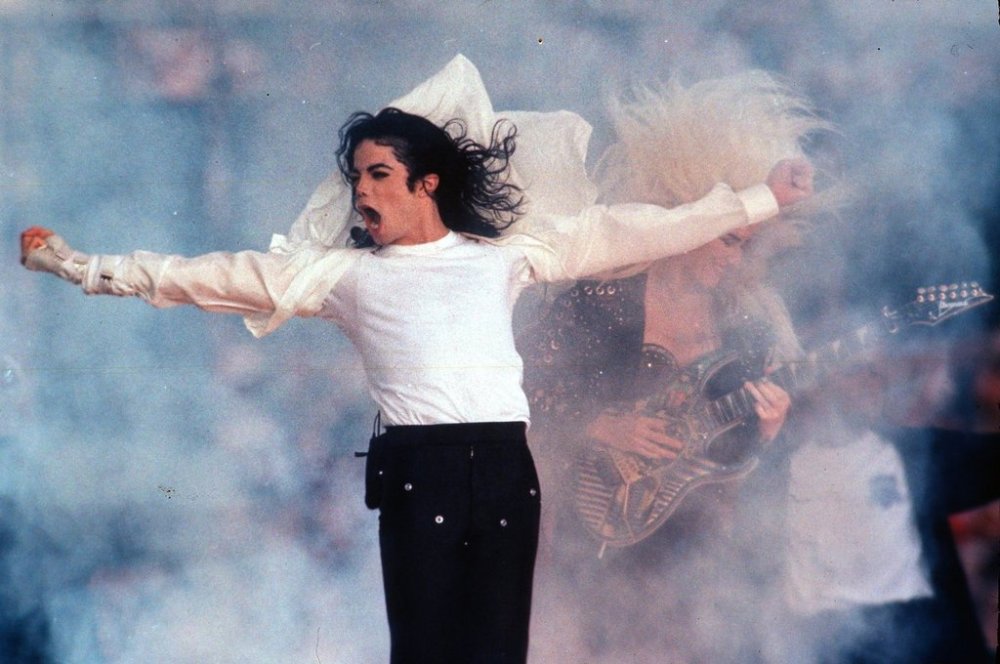
But as the Super Bowl’s popularity soared and game day emerged as an unofficial holiday in the U.S., the NFL wanted the halftime show to grow in the same capacity. The league tapped New Kids on the Block and Gloria Estefan the first two years of the ’90s. Then it saw a huge breakthrough when Michael Jackson headlined the 1993 show at the Rose Bowl in Southern California, where the King of Pop notoriously moonwalked across the stage and performed hits including “Billie Jean,” “Black or White” and “Heal the World.”
Jackson’s stellar performance opened the door for other stars like the Rolling Stones, Diana Ross, Jennifer Lopez and Shakira who are eager to perform.
The NFL handles production costs and expenses for performers — who don’t get paid — but the exposure to hundreds of millions of people worldwide is considered priceless.
Some notable examples include U2’s remembrance of the 9/11 victims; Beyoncé’s unapologetic Blackness and political activism through her Black power anthem “Formation”; and the first show to feature hip-hop artists led by Dr. Dre and Snoop Dogg in 2022.

Snoop praised NFL commissioner Roger Goodell and Jay-Z for pushing the halftime show forward. The league worked with Roc Nation to help its Inspire Change initiative, created by the NFL after an agreement with a coalition of players who demonstrated during the national anthem to protest social and racial injustice in this country.
“Shout out to Jay-Z for changing the climate. Roger Goodell for giving him an opportunity,” Dogg said. “This is music. The music that dictates the world is what’s performing at halftime now. They’re starting to understand that it’s about what those players want to hear, what those fans want to hear, and what’s universally effective.
Snoop added: “It has no color on it now. Pop used to have a color on it. Now pop is popular. So, the most popular music is the music that we make. It makes sense to put those people on there that make that music.”
___
This story first moved in January 2024 and has been updated ahead of the 2026 Super Bowl.