

A needed pivot on Canadian EV policy
Advertisement
Read this article for free:
or
Already have an account? Log in here »
To continue reading, please subscribe:

Digital Subscription
One year of digital access for only $205*
- Enjoy unlimited reading on winnipegfreepress.com
- Read the E-Edition, our digital replica newspaper
- Access News Break, our award-winning app
- Play interactive puzzles
*First annual payment billed as $205.00 + GST for one year. This annual subscription will automatically renew at $233.00 + GST every 52 weeks (10% off the regular annual price of $259.35). Offer available to new and qualified returning subscribers only. Cancel any time.
To continue reading, please subscribe:
Add Free Press access to your Brandon Sun subscription for only an additional
$1 for the first 4 weeks*
- Enjoy unlimited reading on winnipegfreepress.com
- Read the E-Edition, our digital replica newspaper
- Access News Break, our award-winning app
- Play interactive puzzles
*Your next Brandon Sun subscription payment will increase by $1.00 and you will be charged $17.95 plus GST for four weeks. After four weeks, your payment will increase to $24.95 plus GST every four weeks.
Read unlimited articles for free today:
or
Already have an account? Log in here »
Prime Minister Mark Carney has put a charge — pun intended —into Canada’s beleaguered auto industry. His timing could not be better.
This week, the prime minister announced he was repealing Ottawa’s electric vehicle mandate, which required that by 2035, all new cars sold in Canada would have to be zero-emission.
Although a strong expression of former prime minister Justin Trudeau’s desire to combat climate change, the policy was soundly criticized by both auto manufacturers and political critics for being too awkward and blunt to achieve its goals.
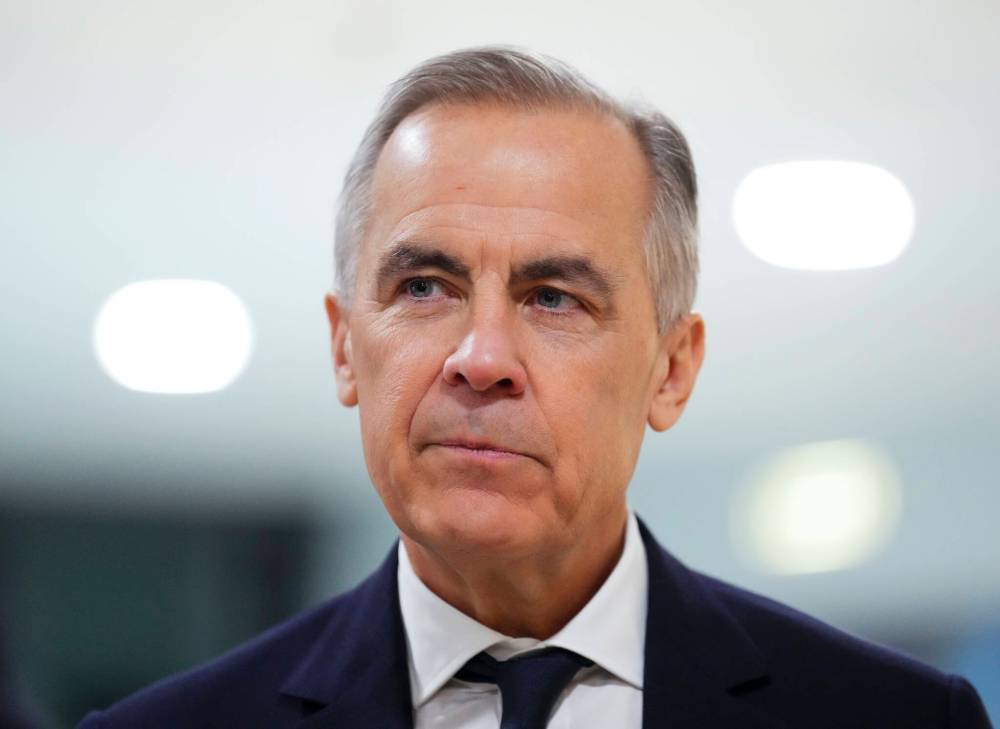
Sean Kilpatrick / The Canadian Press
Prime Minister Mark Carney
Carney’s approach is considerably different, yet another expression of the current prime minister’s tendency to re-imagine the macro policy levers of his predecessor to make them more practical.
Instead of a punitive mandate, Carney decided to re-instate financial incentives to convince Canadians to purchase more EVs. This carrot will accompanied by much-needed government investments in a new national fast-charging network, new emissions standards for vehicles made from 2027 to 2032, and supports for businesses that want to be part of a new supply chain for EV manufacturing.
The theory is that by triggering higher demand for EVs, Ottawa will achieve many but not all of the same goals.
Carney said this week government believes the increased demand sparked by buyer incentives will mean that EVs will make up 75 per cent of new vehicle sales by 2035 and 90 per cent by 2040.
There is consistent if not cautious support for Carney’s plan but concern that if not fully and properly enacted, it will leave Canada right where it is today — a laggard nation in the global drive to embrace EVs.
Canadians should root for Carney’s EV strategy because it will, among other things, mean Canada has taken a significant step to free itself from U.S. President Donald Trump’s volatile auto industry policies, which are designed to repatriate manufacturing in the U.S. and discourage EVs.
Carney’s strategy is the clearest sign to date that the Carney government is slowly but deliberately trying to free Canada’s auto industry from getting caught in the same vortex of politics that has already trapped the U.S. automakers.
The prime minister has already struck a soft trade agreement that lowers tariffs on a small number of industry-leading Chinese-made EVs exported into Canada. At the same time, he is encouraging foreign auto makers to establish EV and battery plants in Canada as government tries to spark greater consumer demand. There is also a program that will reward foreign automakers that open plants in Canada to import additional foreign-made to Canada tariff free.

Carney’s plan is perhaps not as bold or, in the context of climate change, as direct as the Trudeau policies. However, it seems to building enthusiasm among some of Carney’s biggest political critics and EV automakers.
American manufacturers celebrated the end of the hard mandate. The Global Automakers of Canada, a lobby group that includes Japanese automakers Honda and Toyota, has given a cautious thumb’s-up to Carney’s retooled EV strategy, although there are lingering concerns about the process of meeting stringent new emissions standards.
Ontario Premier Doug Ford has also given cautious support to Carney’s plan, which will see a vast majority of federal money invested in his province. However, he is dead-set against offering matching consumer incentives, a policy he has long decried.
The proof of the pudding in Carney’s new approach to EVs is, as they say, in the eating.
Or in this case, in the number of new EVs and charging stations in Canada in a decade’s time.