A spellbinding debut

Sisters land in New France to find a new life, new love — and, perhaps, some sorcery

Advertisement

Advertise with us

Ottawa writer Jennifer Chevalier brings a documentarian’s keen eye for detail and weaves a compelling tale of two sisters who strive to improve their lot in 17th-century New France in her debut novel, The Winter Witch.

Read this article for free:


or

Already have an account? Log in here »

To continue reading, please subscribe:

Subscribe and receive a limited-edition Free Press branded hat or tote.

Digital Subscription

One year of digital access for only $205*

  • Enjoy unlimited reading on winnipegfreepress.com
  • Read the E-Edition, our digital replica newspaper
  • Access News Break, our award-winning app
  • Play interactive puzzles

*First annual payment billed as $205.00 + GST for one year. This annual subscription will automatically renew at $233.00 + GST every 52 weeks (10% off the regular annual price of $259.35). Offer available to new and qualified returning subscribers only. Cancel any time.

To continue reading, please subscribe:

Add Free Press access to your Brandon Sun subscription for only an additional

$1 for the first 4 weeks*

  • Enjoy unlimited reading on winnipegfreepress.com
  • Read the E-Edition, our digital replica newspaper
  • Access News Break, our award-winning app
  • Play interactive puzzles
Start now

*Your next Brandon Sun subscription payment will increase by $1.00 and you will be charged $17.95 plus GST for four weeks. After four weeks, your payment will increase to $24.95 plus GST every four weeks.

Hey there, time traveller!
This article was published 14/02/2026 (214 days ago), so information in it may no longer be current.

Ottawa writer Jennifer Chevalier brings a documentarian’s keen eye for detail and weaves a compelling tale of two sisters who strive to improve their lot in 17th-century New France in her debut novel, The Winter Witch.

Chevalier, who worked for the BBC in London and is now a senior producer for CBC Radio’s The House, tells the story of Élisabeth and Marthe, two “filles de roi” — young women sent with royal dowries to marry French settlers in North America. When their father dies, they can’t keep their farm in Normandy going, so the sisters take the last option available to them.

Élisabeth is heartbroken at leaving her beau, Remy, and is crushed by the sin and scandal of her miscarriage. She’s convinced she’s been cursed, and seeks salvation. Of their destination, Ville-Marie (in current-day Montreal), where her village priest said the Jesuits saved souls despite snow, starvation and torture, she says, “Imagine surviving simply through holy deeds and divine will? I think … I think miracles must happen in such a sacred place.”
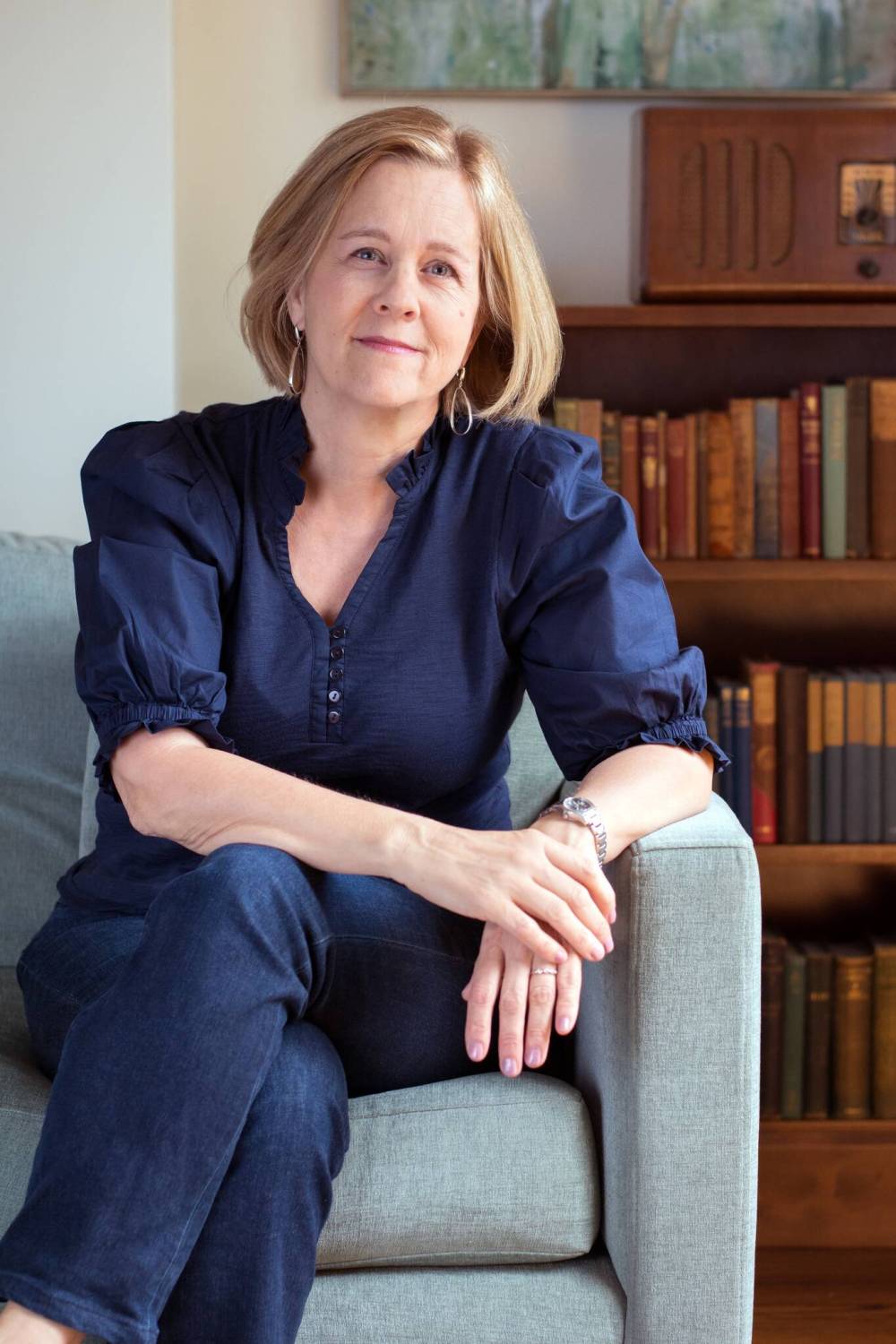
Angela Gordon photo
                                Alternating the viewpoints between the two sisters in her novel, Jennifer Chevalier shows each to be an unreliable narrator.

Angela Gordon photo

Alternating the viewpoints between the two sisters in her novel, Jennifer Chevalier shows each to be an unreliable narrator.

Marthe, for her part, wants a hardworking husband in New France to escape poverty and loneliness. “I intend to stay in town,” she asserts to the other prospective brides. “I have had my fill of reaping grain and shearing sheep. I want to marry a smith or a cooper. Or any craftsman, really.”

Élisabeth convinces Marthe that one of their compatriots, the finely dressed and enigmatic Jeanne Roy, is actually a witch. Élisabeth secretly hopes she can undo the curse upon her.

Alternating the sisters’ viewpoints, Chevalier shows each to be an unreliable narrator.

Élisabeth sees sorcery and doom everywhere. Marthe’s ambition to marry well and become an entrepreneur blinds her to the threat of the lecherous governor of Montreal, de Lafredière, even though her first impression of him is that “he looked like a leopard on the prowl.”

He’s not the only danger. Along for the journey is witch hunter Father de Sancy, who claims to have smashed a coven at a nunnery in Louviers: “It took us many months and some of the nuns were quite broken after their ordeal.”

The devout priest relishes describing the punishments he meted out, and seems keen to do so again.

Less ominous but no less potent is Barbe Poulin, the widow of the baker that Marthe’s new husband apprenticed with and who remains living with the newlyweds. A superstitious busybody in Ville-Marie, she proves capable of stirring up the entire town when it suits her.

Historical novels risk flouting accuracy for the sake of story or getting bogged down in minutiae at the expense of plot or character. Chevalier, however, crafts an engaging tale in the sisters’ efforts to carve out a new life in 1670 Montreal that sugar-coats neither colonialism nor life in a frontier town.

The Winter Witch

The Winter Witch

Élisabeth’s superstitions overwhelm her and jeopardize her own new marriage, as she abandons the idea of ever returning to France. Along with Barbe Poulin, she turns the village, including Father de Sancy, against Jeanne — not knowing that Marthe, who is pregnant, badly needs Jeanne’s help.

“Marthe, please,” she says, “I was not myself. The demon, it … No, it was not the demon, it was me. I made a grave error. And I shall set it right.”

It makes for a story that’s hard to put down — not to mention one that, given our modern dilemma with misinformation and mob mentality, will ring all too true.

David Jón Fuller is a Winnipeg writer and editor. His debut novel, Venue 13, is forthcoming from Turnstone Press.

David Jón Fuller

David Jón Fuller
Copy editor

David Jón Fuller is a copy editor with a lifelong love of writing and working in newspapers.

Our newsroom depends on a growing audience of readers to power our journalism. If you are not a paid reader, please consider becoming a subscriber.

Our newsroom depends on its audience of readers to power our journalism. Thank you for your support.

Report Error Submit a Tip

More Stories

Letters, Sept. 16

7 minute read 2:01 AM CDT

Say what you’ll do

I must say that I agree with what Laura Reimer wrote (What do we elect a school trustee to do?, Think Tank, Sept. 12).

I would add, though, that school trustees and school board candidates also have a responsibility to clearly state where they stand on issues in order for people to come out and vote in school board elections.

Simply putting out very generic campaign material (“I’ll work hard on your behalf”; “I live in the area”; “education is important”; and so on …) is insufficient to generate interest or to motivate taxpayers/voters to go out and support candidate X.

Wind and batteries the best bet

James Wilt 5 minute read Preview

Wind and batteries the best bet

James Wilt 5 minute read 2:01 AM CDT

For years, Manitoba Hydro has claimed that we can’t rely on wind turbines during multi-day or even multi-week cold snaps. Although turbines can be equipped with cold-weather packages to operate down to –30 C, as at the St. Leon and St. Joseph wind farms, Hydro routinely warns of the possibility of a lengthy winter wind drought at the same time as electricity use peaks due to high heating demand.

This concern is largely why Hydro is pushing to build a 750 MW fossil gas-fired power plant in Brandon, rather than building more wind farms.

But new analysis by Alexander Hogeveen Rutter, a former energy modeller for Manitoba Hydro, shows that wind-generation reliability well exceeds assumptions and that, if combined with battery energy storage, it could meet even the most bullish load growth forecasts. (These findings were presented to the Public Utilities Board on Aug. 31, and the full report can be found on Climate Action Team Manitoba’s website.)

Hydro’s low estimate of wind generation stems from its erroneous assumption that all new wind farms will be built in the same locations as Manitoba’s two existing wind farms (St. Leon and St. Joseph). Because these two wind farms are only 100 kilometres apart, they have highly correlated wind speeds; when wind conditions are low at one site, they likely are at the other as well. This is not how new wind farms will be built in Manitoba. Instead, they will be located in different areas and use much taller turbines with higher generation potential than the existing wind farms.

Read
2:01 AM CDT

BRANDON — A 29-year-old man has been sentenced to 18 years in prison for sexually abusing and impregnating a 14-year-old girl in 2024.

“Sexual abuse of a child is inherently a grave violation of the child’s bodily integrity, dignity, and security, and in this case, the consequences were compounded by the victim’s pregnancy and the need to undergo a termination,” Brandon provincial court Judge Patrick Sullivan said on Tuesday.

The accused had pleaded guilty to two counts of sexual interference and two counts of breaching a court order banning him from contacting anyone under 18.

A publication ban prohibits the publication of information that could identify the 14-year-old, who is from a western Manitoba First Nation, and two other minors with whom he communicated.

Food literacy curriculum on the menu

Maggie Macintosh 5 minute read Preview

Food literacy curriculum on the menu

Maggie Macintosh 5 minute read 2:01 AM CDT

Manitoba has a new recipe for health class and “food literacy” is a key ingredient.

The in-class portion of phys-ed has historically involved lessons about puberty, the risks of consuming drugs and dissecting Canada’s food guide.

A new pilot program asks teachers to expand their nutrition units and include in-depth discussions about how everything from diet culture to food insecurity affects eating habits.

“This is really moving beyond a conception of food as only fuel, where you just boil down food to its calories, its vitamins,” said Sarah Elvins, a food historian at the University of Manitoba who researches popular culture and marketing.

Read
2:01 AM CDT

Sisters land in New France to find a new life, new love and, perhaps, some sorcery

Reviewed by David Jón Fuller 4 minute read Preview

Sisters land in New France to find a new life, new love and, perhaps, some sorcery

Reviewed by David Jón Fuller 4 minute read Saturday, Feb. 14, 2026

Ottawa writer Jennifer Chevalier brings a documentarian’s keen eye for detail and weaves a compelling tale of two sisters who strive to improve their lot in 17th-century New France in her debut novel, The Winter Witch.

Chevalier, who worked for the BBC in London and is now a senior producer for CBC Radio’s The House, tells the story of Élisabeth and Marthe, two “filles de roi” — young women sent with royal dowries to marry French settlers in North America. When their father dies, they can’t keep their farm in Normandy going, so the sisters take the last option available to them.

Élisabeth is heartbroken at leaving her beau, Remy, and is crushed by the sin and scandal of her miscarriage. She’s convinced she’s been cursed, and seeks salvation. Of their destination, Ville-Marie (in current-day Montreal), where her village priest said the Jesuits saved souls despite snow, starvation and torture, she says, “Imagine surviving simply through holy deeds and divine will? I think … I think miracles must happen in such a sacred place.”

Marthe, for her part, wants a hardworking husband in New France to escape poverty and loneliness. “I intend to stay in town,” she asserts to the other prospective brides. “I have had my fill of reaping grain and shearing sheep. I want to marry a smith or a cooper. Or any craftsman, really.”

Read
Saturday, Feb. 14, 2026

Transit safety drives first mayoral debate

Morgan Modjeski 4 minute read Preview

Transit safety drives first mayoral debate

Morgan Modjeski 4 minute read Yesterday at 2:01 AM CDT

The safety of Winnipeg Transit drivers was front and centre Monday as the first mayoral debate of the 2026 election focused on public transit.

Kevin Klein, the most experienced of the 10 candidates at the Amalgamated Transit Union 1505-hosted debate, said the time for partial safety shields has passed.

“The partial shields have failed drivers. That’s why we need change,” the former PC MLA and city councillor said, adding driver safety is not a staffing issue, but a “protection failure.”

If elected, Klein said he will bring in full-shield implementation across the city within two years and start a nine-bus pilot project immediately.

Read
Yesterday at 2:01 AM CDT