

Supreme Court agrees to hear from oil and gas companies trying to block climate change lawsuits
Advertisement
Read this article for free:
or
Already have an account? Log in here »
To continue reading, please subscribe:
Monthly Digital Subscription
$1 per week for 24 weeks*
- Enjoy unlimited reading on winnipegfreepress.com
- Read the E-Edition, our digital replica newspaper
- Access News Break, our award-winning app
- Play interactive puzzles
*Billed as $4.00 plus GST every four weeks. After 24 weeks, price increases to the regular rate of $19.95 plus GST every four weeks. Offer available to new and qualified returning subscribers only. Cancel any time.
Monthly Digital Subscription
$4.99/week*
- Enjoy unlimited reading on winnipegfreepress.com
- Read the E-Edition, our digital replica newspaper
- Access News Break, our award-winning app
- Play interactive puzzles
*Billed as $19.95 plus GST every four weeks. Cancel any time.
To continue reading, please subscribe:
Add Free Press access to your Brandon Sun subscription for only an additional
$1 for the first 4 weeks*
*Your next subscription payment will increase by $1.00 and you will be charged $16.99 plus GST for four weeks. After four weeks, your payment will increase to $23.99 plus GST every four weeks.
Read unlimited articles for free today:
or
Already have an account? Log in here »
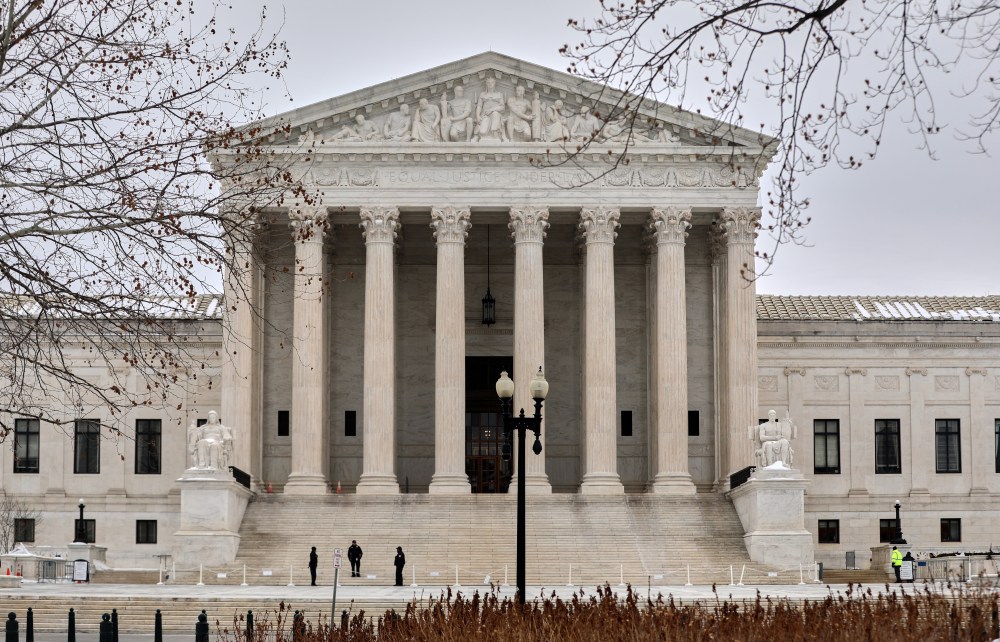
WASHINGTON (AP) — The Supreme Court said Monday that it will hear from oil and gas companies trying to block lawsuits seeking to hold the industry liable for billions of dollars in damage linked to climate change.
The conservative-majority court agreed to take up a case from Boulder, Colorado, one of multiple lawsuits alleging the companies deceived the public about how fossil fuels contribute to climate change.
Governments around the country have sought damages totaling billions of dollars, arguing it’s necessary to help pay for rebuilding after wildfires, rising sea levels and severe storms worsened by climate change. The lawsuits come amid a wave of legal actions in California, Hawaii and New Jersey and worldwide seeking to leverage action through the courts.
The case out of Boulder County will likely have implications for other lawsuits, some of which have been dismissed while others work their way through state courts.
Suncor Energy and ExxonMobil appealed to the Supreme Court after Colorado’s highest court let the Boulder case proceed. The companies argue emissions are a national issue that should be heard in federal court, where similar suits have been tossed out.
“The use of state law to address global climate change represents a serious threat to one of our Nation’s most critical sectors,” attorneys wrote. ExxonMobil said Monday that “climate policy shouldn’t be set through fragmented state‑court actions.”
President Donald Trump’s administration weighed in to support the companies and urge the justices to reverse the Colorado Supreme Court decision, saying it would mean “every locality in the country could sue essentially anyone in the world for contributing to global climate change.”
Trump, a Republican, criticized the lawsuits in an executive order, and the Justice Department has sought to head some off in court.

Attorneys for Boulder had agued that the litigation is still in early stages and should stay in state court. “There is no constitutional bar to states addressing in-state harms caused by out-of-state conduct, be it the negligent design of an automobile or sale of asbestos,” they wrote.
City officials said the case was about dealing with problems people are facing in Colorado. “Our case is, fundamentally, about fairness. Boulder is already experiencing the effects of a rapidly warming climate, and the financial burden of adaptation should not fall solely on local taxpayers,” said Jonathan Koehn, its climate initiatives director.
The Supreme Court also asked the two sides to present arguments on whether the case is truly ready to be heard by the justices. Arguments are expected in the fall.
___
Follow the AP’s coverage of the U.S. Supreme Court at https://apnews.com/hub/us-supreme-court.