

Southern grit
Dark debut details desperation, religious hypocrisy and more in poverty-stricken Appalachia
Advertisement
Read this article for free:
or
Already have an account? Log in here »
To continue reading, please subscribe:
Monthly Digital Subscription
$1 per week for 24 weeks*
- Enjoy unlimited reading on winnipegfreepress.com
- Read the E-Edition, our digital replica newspaper
- Access News Break, our award-winning app
- Play interactive puzzles
*Billed as $4.00 plus GST every four weeks. After 24 weeks, price increases to the regular rate of $19.95 plus GST every four weeks. Offer available to new and qualified returning subscribers only. Cancel any time.
Monthly Digital Subscription
$4.99/week*
- Enjoy unlimited reading on winnipegfreepress.com
- Read the E-Edition, our digital replica newspaper
- Access News Break, our award-winning app
- Play interactive puzzles
*Billed as $19.95 plus GST every four weeks. Cancel any time.
To continue reading, please subscribe:
Add Free Press access to your Brandon Sun subscription for only an additional
$1 for the first 4 weeks*
*Your next subscription payment will increase by $1.00 and you will be charged $16.99 plus GST for four weeks. After four weeks, your payment will increase to $23.99 plus GST every four weeks.
Read unlimited articles for free today:
or
Already have an account? Log in here »
This gritty debut novel serves as an intimate look at poverty-stricken Appalachia and a metaphor for corporate forces destroying the region.
Dark and utterly humourless, author Zak Jones explores drug addiction, poverty, desperation and religious abuse against a believable backdrop.
A dual citizen — and U.S. army veteran — Jones grew up between the contrasting worlds of rural North Carolina and Toronto.

Supplied photo
Zak Jones’ sharp, striking prose never wastes words, as he creates sometimes unlikable but mostly sympathetic characters.
His story is set in the former, opening in the present-day and real-life Fancy Gap, a beautiful but desperate region between the borders of Virginia and North Carolina.
On a remote mountain farm, elderly and charismatic Nana Grace has abandoned her daughter and grandsons from the town below.
Grace leads a co-called religious community, keeping her followers in line with promises of belongings and rations of stolen prescription drugs.
As Jones describes Grace’s followers, “They shared the belief that the towns and the computers and the people who had pushed them away had fallen into the hands of the devil, the lake of desire. And they, drug addicted and uneducated and cold and alone, they, the victims of modernity, had become lost to their old families and communities, and feeling unmissed, had found Grace.”
Meanwhile in town, Grace’s estranged daughter Jane has pretty much forgotten her. She’s busy balancing a drinking problem with her college classes, battle with breast cancer and worries for her two troubled sons.
Her oldest, Dalton, has just been discharged from the army under conditions “Other Than Honourable.”
Her son Messiah, appropriately nicknamed “Messy,” lives in a dreamy world of his own, close to his mother but struggling to bury a seething anger over his unfortunate life.
Jane gets no help from her ex-partner, Clyde, who’s joined forces with Grace.
Jones tells the story in rotating narratives among Grace, Clyde, Jane, Dalton and Messiah. Their stories slowly wind together, bringing them to a glaring confrontation.
Jones’s striking prose never wastes words, sharply creating deep, sometimes unlikable but mostly sympathetic characters.
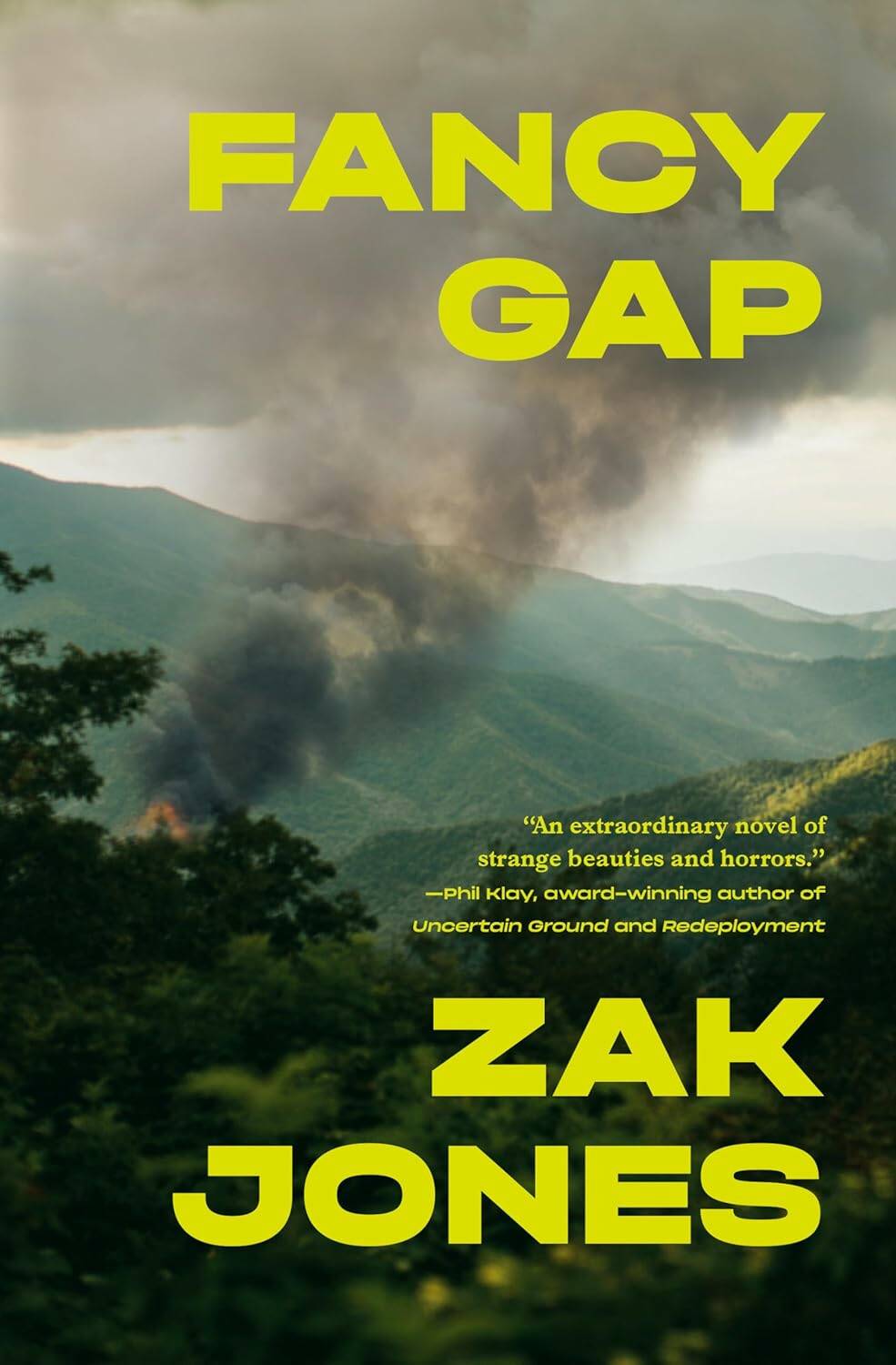
Fancy Gap
As well as being one of the book’s main characters, Grace serves as a metaphor for the region’s drug companies and manufacturing industries. Like Grace, the corporate forces draw in locals, keeping them dependent on drugs, slave wages and hope for better circumstances.
Jones’ stark depiction of desperate poverty and the drug trade may remind readers of Daniel Woddell’s 2006 novel Winter’s Bone, about a teenage girl in the Ozarks trying to keep her family from losing their home.
Jones sharply criticizes religious hypocrisy, drawing parallels between Grace’s cult on the mountain and the apparently mainstream church in town.
As Jane reflects on the financial help she’s received from her church community, she wryly notes, “She knew she was their totem, their spiritual linchpin and shared welfare story … she wasn’t so much their friend as their living ticket to heaven, the borne fruit and blinding symbol of their Christian charity.”
Jones avoids referencing any specific U.S. administrations, focusing instead on the disillusioned people of Appalachia.
Kathryne Cardwell is a Winnipeg writer.