

Ottawa agrees to cover Bay du Nord oil project’s UN fees, which could hit $1 billion
Advertisement
Read this article for free:
or
Already have an account? Log in here »
To continue reading, please subscribe:

Digital Subscription
One year of digital access for only $205*
- Enjoy unlimited reading on winnipegfreepress.com
- Read the E-Edition, our digital replica newspaper
- Access News Break, our award-winning app
- Play interactive puzzles
*First annual payment billed as $205.00 + GST for one year. This annual subscription will automatically renew at $233.00 + GST every 52 weeks (10% off the regular annual price of $259.35). Offer available to new and qualified returning subscribers only. Cancel any time.
To continue reading, please subscribe:
Add Free Press access to your Brandon Sun subscription for only an additional
$1 for the first 4 weeks*
- Enjoy unlimited reading on winnipegfreepress.com
- Read the E-Edition, our digital replica newspaper
- Access News Break, our award-winning app
- Play interactive puzzles
*Your next Brandon Sun subscription payment will increase by $1.00 and you will be charged $17.95 plus GST for four weeks. After four weeks, your payment will increase to $24.95 plus GST every four weeks.
Read unlimited articles for free today:
or
Already have an account? Log in here »
Hey there, time traveller!
This article was published 04/03/2026 (198 days ago), so information in it may no longer be current.
ST. JOHN’S – The Canadian government has agreed to cover fees for a proposed deepwater oil project that could come due under a United Nations convention, drawing the ire of environmental groups who say taxpayers shouldn’t be subsidizing oil companies.
Federal Fisheries Minister Joanne Thompson confirmed the commitment Tuesday night at an event announcing Newfoundland and Labrador’s benefits arrangement with Norwegian energy company Equinor for its Bay du Nord offshore oil development. Bay du Nord would be Canada’s first deepwater oil installation, and the first outside the country’s exclusive economic zone — a term defined by the United Nations Convention on the Law of the Sea, or UNCLOS.
The question of who would foot the bill for Bay du Nord’s UNCLOS obligations has dogged the project for years, and Newfoundland and Labrador has maintained that Canada should bear the costs.
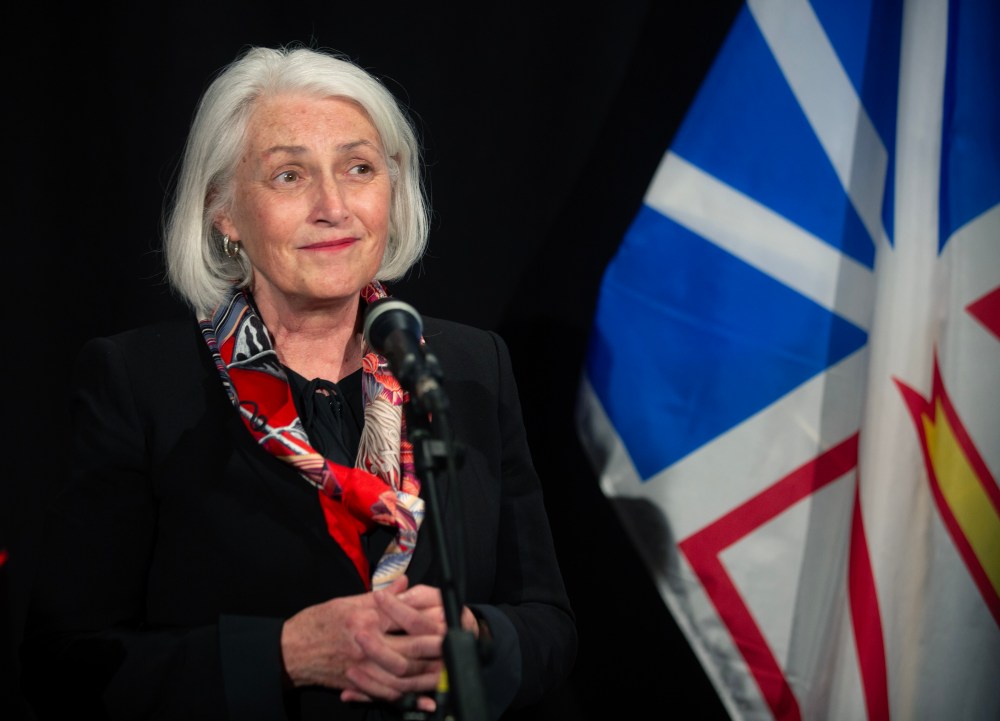
John Fragos, press secretary for federal Finance Minister François-Philippe Champagne, said Canada is committed to meeting its obligations under the treaty. “Further work is required before determining the potential financial contribution associated with this project,” Fragos said in an emailed statement.
“Any payment under UNCLOS would be subject to negotiations and the ‘sole’ responsibility of the federal government.”
The fees could reach $1 billion, officials with the Newfoundland and Labrador government said Tuesday during a media briefing.
Canada ratified the treaty in 2003, committing to making payments to the International Seabed Authority for any resource development outside the exclusive economic zone, which extends beyond a coastline for 370 kilometres or 200 nautical miles.
The annual payments begin after the first five years of production. They start at one per cent of the production value or volume of oil produced, and increase another percentage point every year until they reach seven per cent. The fees hold steady at seven per cent for the life of the project.
If it goes ahead, Bay du Nord would be farther from shore than any other oil installation on the globe. It is expected to be the first project in the world to trigger these obligations, Fragos said.
When pressed in St. John’s on Tuesday about whether the federal government would pay those fees even if they reached $1 billion, Thompson said, “the federal government is committed to that, yes.”
Canada is still negotiating how that will play out, she said.
Danielle LaBrash, a policy analyst with the International Institute for Sustainable Development, said it is crucial that Canada lives up to its commitments under the convention. But it can make Equinor and BP — the companies behind Bay du Nord — cover the bills.
“Paying these royalties on behalf of Equinor is a subsidy. It’s a direct transfer of wealth from Canadians to an international oil company,” LaBrash said in an interview. “This is essentially an indefinite subsidy.”
She pointed to various examples of Newfoundland and Labrador’s offshore regulator flagging the convention requirements in notices to oil companies making exploration bids in the region where the Bay du Nord discoveries lie.
Julia Levin, an associate director with Environmental Defence, said Canada would violate its commitment to stop subsidizing oil and gas companies if it paid the UNCLOS fees for the Bay du Nord development.

“Using taxpayer dollars to to increase the profits of a Norwegian oil company at the moment of an affordability crisis is not in the best interest of Canadians,” Levin said.
Thompson said Bay du Nord is important to the federal government as it shores up its economy in the face of rapidly shifting global politics. When asked if she could imagine the federal Liberals under former prime minister Justin Trudeau covering Bay du Nord’s costs, Thompson said Prime Minister Mark Carney is “another leader” in “another time.”
“Yes, we’re doing things differently, because we have to do things differently,” she said.
Equinor is expected to make a final investment decision about Bay du Nord next year.
This report by The Canadian Press was first published March 4, 2026.