Wounded wombs Proposed federal bill wants coerced procedures classified as a crime
Read this article for free:
or
Already have an account? Log in here »
To continue reading, please subscribe:

Digital Subscription
One year of digital access for only $205*
- Enjoy unlimited reading on winnipegfreepress.com
- Read the E-Edition, our digital replica newspaper
- Access News Break, our award-winning app
- Play interactive puzzles
*First annual payment billed as $205.00 + GST for one year. This annual subscription will automatically renew at $233.00 + GST every 52 weeks (10% off the regular annual price of $259.35). Offer available to new and qualified returning subscribers only. Cancel any time.
To continue reading, please subscribe:
Add Free Press access to your Brandon Sun subscription for only an additional
$1 for the first 4 weeks*
- Enjoy unlimited reading on winnipegfreepress.com
- Read the E-Edition, our digital replica newspaper
- Access News Break, our award-winning app
- Play interactive puzzles
*Your next Brandon Sun subscription payment will increase by $1.00 and you will be charged $17.95 plus GST for four weeks. After four weeks, your payment will increase to $24.95 plus GST every four weeks.
Read unlimited articles for free today:
or
Already have an account? Log in here »
Hey there, time traveller!
This article was published 06/03/2026 (201 days ago), so information in it may no longer be current.
Grace Whiteway is still haunted by memories of feeling helpless and alone, even 30 years later.
As the delivery of her fifth child neared, she had already spent a month in Winnipeg, separated from her family in remote Berens River First Nation.
She remembers being exhausted and barely awake after the birth of her daughter when a nurse placed a piece of paper in front of her and told her to sign it.
The decision fills Whiteway with regret. She had always wanted a big family, but the document she signed in her vulnerable state gave permission for her fallopian tubes to be tied — an irreversible surgical procedure that renders a woman sterile.
MANITOBA MOON VOICES Grace Whiteway remembers being in a vulnerable state shortly after the birth of her daughter when a nurse pushed her to sign a release that granted permission for her fallopian tubes to be tied.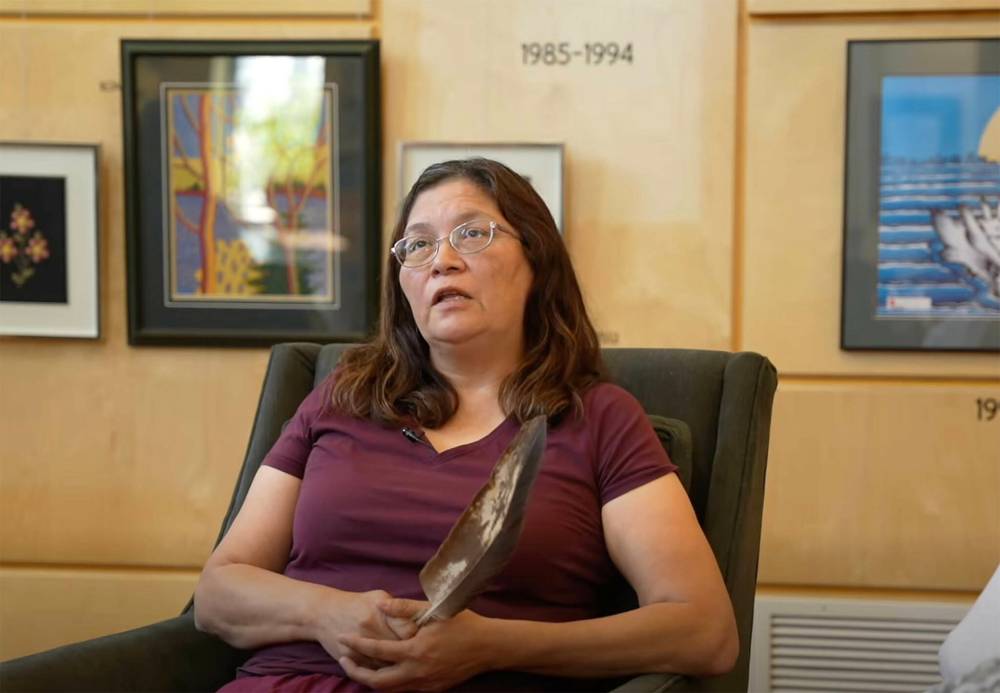
“They stole from me,” Whiteway, now 58, said in a recent interview. “They stole from me my ability to have children. They took away my future. And I live with that every day, thinking, what if? I often wonder what if I was able to have more kids. How different would my life have been?”
She remembers begging for the procedure to be stopped as she was brought to the operating room one day after giving birth.
“I looked at the nurse, telling her, ‘Please, I don’t want to do this,’” she said.
Forced sterilization has a long, dark history in Canada. Indigenous women and girls were disproportionally coerced into being sterilized, often during labour, while under sedation or without their knowledge, according to a 2022 Senate report.
The practice was part of a racist and colonial policy to “subjugate Indigenous peoples,” the report states, though other racialized women and people with disabilities were also targeted. Alberta and British Columbia both had legislation dating back to the 1920s and 1930s that permitted the sterilization of people deemed “mentally deficient.”
The Senate report — which emphasizes that coerced sterilization still exists in Canada — issued 13 recommendations, including a call to amend the Criminal Code to prohibit the practice.
Bill S-228, sponsored by Sen. Yvonne Boyer, is currently working its way through the House of Commons. The bill proposes classifying forced or coerced sterilization procedures as aggravated assault, with a maximum penalty of 14 years in prison. It received second reading last week and has moved to committee for further consideration.
Related Articles
Survivors call on Ottawa to pass bill to criminalize forced or coerced sterilization

The Senate report also called on the federal government to develop a national plan to collect and publish data on forced and coerced sterilization to fully understand its scope and develop appropriate responses.
The Ottawa-based Survivors Circle for Reproductive Justice was created in response to that recommendation.
The non-profit also has an office in Winnipeg and provides supports for victims and advocates for reproductive autonomy for First Nations, Inuit and Métis women. It has established a national registry to document cases and estimates that 12,000 to 15,000 people in Canada were sterilized without proper consent.
While Alberta and B.C. were the only provinces with laws allowing the practice, involuntary sterilization occurred across the country. According to Survivors Circle, historical cases have been documented in Manitoba Indian Hospitals and residential schools throughout the last century, as well as during the 1990s, 2000s and 2010s — with the most recent case occurring in 2024 in Winnipeg.
“There are survivors that were sterilized in hospitals in the Winnipeg area, some with reoccurring and known physicians,” Survivors Circle executive director Harmony Redsky said, adding surgeries also occurred in Brandon and Selkirk.
“It is part of the ongoing systemic bias that exists against Indigenous people when they enter the health-care system.”
The most recent documented case nationally involved an Indigenous patient in Saskatoon last year, Redsky said. It was reported to the Survivors Circle by the patient, who refused the procedure.
“It’s still a very current, very real issue,” Redsky said. “It is part of the ongoing systemic bias that exists against Indigenous people when they enter the health-care system.”
Redsky said women often report physicians as being responsible for initiating a sterilization procedure, with the nursing team instructed to follow up several times and to present the patient with consent forms. It is during this time where coercion and racist remarks often take place, she said.
A spokesperson for Manitoba Shared Health said any allegation of coercion or non-consensual care would be reviewed thoroughly through institutional and professional processes and that “ongoing vigilance, culturally safe and patient-centred care and transparency are essential to rebuilding and maintaining trust.”
The spokesperson said Shared Health acknowledges the history of forced and coerced sterilization in Canada, including in Manitoba, and that it has resulted in serious harm and mistrust in the health-care system.
“That history must be recognized, and it informs how care is delivered today,” the spokesperson said in a statement.
Current practice is grounded in informed, voluntary consent and patient autonomy, the spokesperson said, with permanent contraception — such as bilateral salpingectomy (surgical removal of the fallopian tubes) or tubal ligation (the closing of the fallopian tubes) — only performed with explicit consent.
Patients are counselled on the full range of contraceptive options, including short-acting methods and long-acting reversible contraception, the spokesperson said.
Survivors Circle helps smaller groups, like Manitoba Moon Voices, document accounts of forced and coerced sterilization. Moon Voices has produced six YouTube videos, one of them featuring Whiteway’s experience.
The video project, called Healing Journeys: Stories of Reproductive Justice, stresses two themes: Indigenous women are often pressured to have fewer children; and the coercion they experience to be sterilized often happens at moments of heightened vulnerability — while in pain, recovering from childbirth, or while grieving. The most recent Manitoba case cited in the project is from 2018.
RUTH BONNEVILLE / FREE PRESS Shannon Hoskie says women are refusing to stay silent about what happened to their bodies.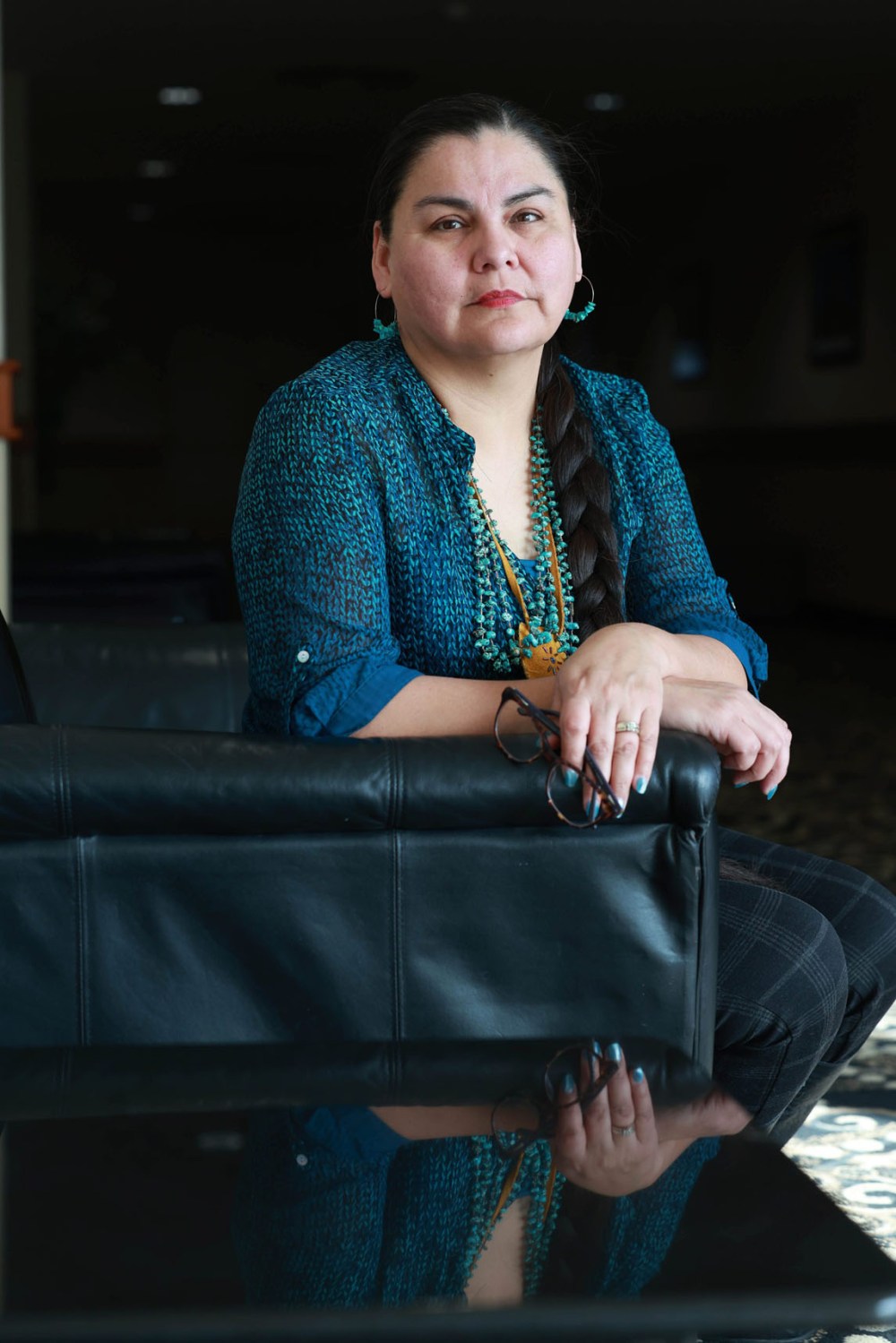
“As Indigenous women, we’re at a time now where we’re no longer being silenced,” Moon Voices acting executive director Shannon Hoskie said.
“We’re pushing back against, and we’re saying, ‘no more.’ This is our truth, we will no longer allow stuff like this to happen, we’re going to continue using our voice.”
Corinne Edwards, from Roseau River Anishinabe First Nation, says she always wanted a daughter. Now 54, she participated in the video series.
After the birth of her second son in the early 1990s, she contacted Child and Family Services for help finding child care in Winnipeg for her oldest son. CFS provided some assistance, Edwards said, but then a worker began suggesting she should have her “tubes tied.”
The pressure intensified after the birth of her fourth son, she said, with a CFS worker coming every couple of days, often presenting her with a piece of paper to sign.
“I always felt that worker betrayed me — that if I signed the paper, I’d get all the support I needed,” she said.
“I made the biggest mistake of my life going to CFS for help, thinking they were there to help you,” she said. “Instead, they just ripped my family apart. They took my ability to have children in the future. And I never did get my daughter.”
Amanda Lamont, now 56, wanted her “tubes clamped,” a procedure that can be reversed, after having her fourth baby. At the time, she says in her YouTube video, she was in a toxic, abusive relationship and didn’t plan on having more kids.
“But should I lose all my children in a house fire, or some terrible accident, I would want to have children again,” she said.
Instead, a tubal ligation was performed, leaving her overcome with grief.
“It’s a wounded womb, that’s what they’ve done to us,” Lamont said. “And you couldn’t wound a woman worse than that.”
MP Lori Idlout, the NDP critic responsible for the bill, said the trauma the women experienced is generational.
“It’s through the strength of these women who keep making sure that it’s not lost in the noise of the larger geopolitical environment that we have to keep honouring their experiences to make sure that our children don’t continue to suffer the same genocidal policies,” Idlout said. “That’s why this bill is so important.”
Manitoba Families Minister Nahanni Fontaine said society needs to be honest about what forced sterilization was: a colonial tool.
“Forced sterilization is a grave human rights violation rooted in colonialism, racism and misogyny,” she said. “For decades in this country, Indigenous women were targeted, coerced and, in most cases, sterilized without their free and informed consent.
“It was part of a broader system designed to diminish Indigenous Peoples. It was meant to reduce our numbers, disrupt our families and eliminate our Nations. Women’s and girls’ bodies were treated as sites of control. Our ability to have children, to carry forward language, culture and nationhood, was seen as something to restrict or erase.”
Fontaine said she has met with many Indigenous women who were forcibly sterilized and she can’t forget the pain those women carry. While legislation won’t undo the trauma, she sees it as an essential step toward accountability and a declaration the practice will no longer be tolerated.
“No woman’s or girl’s body belongs to the state or to a doctor,” she said. “Decisions about reproduction belong to the individual. Full stop.”
scott.billeck@freepress.mb.ca


Scott Billeck is a general assignment reporter for the Free Press. A Creative Communications graduate from Red River College, Scott has more than a decade’s worth of experience covering hockey, football and global pandemics. He joined the Free Press in 2024. Read more about Scott.
Every piece of reporting Scott produces is reviewed by an editing team before it is posted online or published in print — part of the Free Press‘s tradition, since 1872, of producing reliable independent journalism. Read more about Free Press’s history and mandate, and learn how our newsroom operates.
Our newsroom depends on a growing audience of readers to power our journalism. If you are not a paid reader, please consider becoming a subscriber.
Our newsroom depends on its audience of readers to power our journalism. Thank you for your support.
History
Updated on Wednesday, March 11, 2026 12:24 PM CDT: Corrects spelling of Corinne Edwards