

Survivors call on Ottawa to pass bill to criminalize forced or coerced sterilization
Advertisement
Read this article for free:
or
Already have an account? Log in here »
To continue reading, please subscribe:

Digital Subscription
One year of digital access for only $205*
- Enjoy unlimited reading on winnipegfreepress.com
- Read the E-Edition, our digital replica newspaper
- Access News Break, our award-winning app
- Play interactive puzzles
*First annual payment billed as $205.00 + GST for one year. This annual subscription will automatically renew at $233.00 + GST every 52 weeks (10% off the regular annual price of $259.35). Offer available to new and qualified returning subscribers only. Cancel any time.
To continue reading, please subscribe:
Add Free Press access to your Brandon Sun subscription for only an additional
$1 for the first 4 weeks*
- Enjoy unlimited reading on winnipegfreepress.com
- Read the E-Edition, our digital replica newspaper
- Access News Break, our award-winning app
- Play interactive puzzles
*Your next Brandon Sun subscription payment will increase by $1.00 and you will be charged $17.95 plus GST for four weeks. After four weeks, your payment will increase to $24.95 plus GST every four weeks.
Read unlimited articles for free today:
or
Already have an account? Log in here »
Hey there, time traveller!
This article was published 24/02/2026 (206 days ago), so information in it may no longer be current.
OTTAWA – Parliament must pass legislation to criminalize non-consensual sterilization, survivors told a press conference Tuesday on Parliament Hill.
Bill S-228 passed the Senate last fall and is set to have its first real debate in the House of Commons on Thursday.
Justice Minister Sean Fraser’s spokesperson Lola Dandybaeva said Tuesday the government will support the legislation that would amend the Criminal Code to make sterilizing a person without obtaining informed consent an act of aggravated assault.
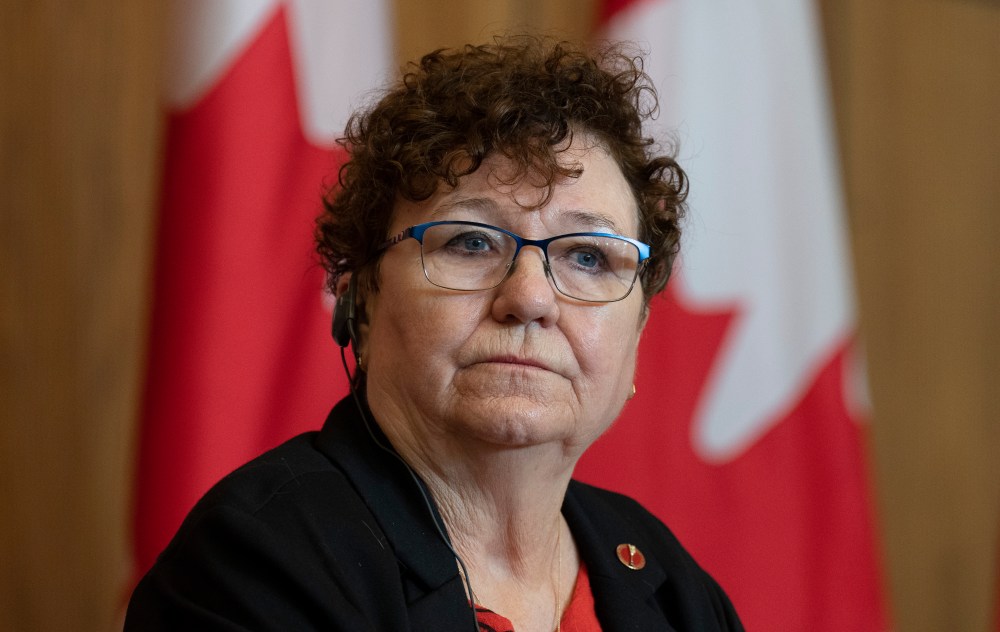
It has the support of the Canadian Medical Association, which called it a “critical step” toward ensuring forced sterilization is seen as a criminal act.
The Survivors Circle for Reproductive Justice said an estimated 12,000 to 15,000 individuals have been sterilized in Canada without proper consent — some as recently as last year.
The organization says professional misconduct investigations don’t provide enough of a sanction against forced or coerced sterilization.
Forced or coerced sterilization disproportionately affects Indigenous women but has also harmed people with disabilities, racialized women and members of the LGBTQ community.
“It’s been hard and gruelling to realize that you were violated, that I was violated in that manner,” said Heather Bear, a survivor who attended Tuesday’s press conference.
“We trust doctors, we’re supposed to trust the health care system. (When) it’s breached, it does leave you with a sense of vulnerability.”
Sen. Yvonne Boyer, who introduced the bill in the Senate, said women told her they were sterilized during “their most vulnerable” moments, sometimes during labour or while medicated.
She said while there are existing provisions in the Criminal Code that deal with assault, they’ve never been used to prosecute forced sterilization.
“That silence has allowed confusion, inconsistency and, ultimately, impunity,” Boyer said.
“Bill S-228 sends a clear message — in Canada, no one has a right to permanently take away another person’s ability to have children through coercion, pressure, deception or abuse of authority.”
The final report of the National Inquiry into Missing and Murdered Indigenous Women and Girls, released in 2019, documented forced sterilization of Indigenous women, which they said was used as a means to lower Indigenous populations.
The Assembly of First Nations has long demanded the criminalization of forced sterilization, calling it a “gross violation of human rights.”
Senators on the human rights committee studied the issue in depth by hearing from advocates and survivors — including Sen. Amina Gerba, who was sterilized in 2005.
Gerba said her gynecologist signed her up for an endometrial ablation, which involves the removal of some tissue that causes heavy menstruation.
In 2016, during treatment for an unrelated medical issue, Gerba’s doctor ordered a pelvic ultrasound.
She said she was baffled when her doctor told her she no longer had a uterus because she believed she had only undergone a minor procedure — not a hysterectomy.
“I was never informed,” she told The Canadian Press in October. “It was when I listened to the witnesses that I realized that I was actually a victim of this.”
Conservative MP Jamie Schmale, who is sponsoring the legislation in the House of Commons, said he is hoping the bill will pass as soon as possible.
Compulsory sterilization has a long history in Canada. Both Alberta and British Columbia had laws on the books for decades that allowed for the sterilization of those considered mentally unfit. In other provinces like Ontario that did not have formal legislation, the procedure still occurred.
This report by The Canadian Press was first published Feb. 24, 2026.
— With files from Dylan Robertson
Related Articles
Wounded wombs: Indigenous women who were involuntarily sterilized still grieving their losses
Advertisement Advertise With Us
Advertisement Advertise With Us