

Amid soaring oil prices, Trump is now turning to the Strategic Petroleum Reserve
Advertisement
Read this article for free:
or
Already have an account? Log in here »
To continue reading, please subscribe:
Monthly Digital Subscription
$1 per week for 24 weeks*
- Enjoy unlimited reading on winnipegfreepress.com
- Read the E-Edition, our digital replica newspaper
- Access News Break, our award-winning app
- Play interactive puzzles
*Billed as $4.00 plus GST every four weeks. After 24 weeks, price increases to the regular rate of $19.95 plus GST every four weeks. Offer available to new and qualified returning subscribers only. Cancel any time.
Monthly Digital Subscription
$4.99/week*
- Enjoy unlimited reading on winnipegfreepress.com
- Read the E-Edition, our digital replica newspaper
- Access News Break, our award-winning app
- Play interactive puzzles
*Billed as $19.95 plus GST every four weeks. Cancel any time.
To continue reading, please subscribe:
Add Free Press access to your Brandon Sun subscription for only an additional
$1 for the first 4 weeks*
*Your next subscription payment will increase by $1.00 and you will be charged $16.99 plus GST for four weeks. After four weeks, your payment will increase to $23.99 plus GST every four weeks.
Read unlimited articles for free today:
or
Already have an account? Log in here »
NEW YORK (AP) — Oil prices have soared since the U.S. and Israel launched their war against Iran, and President Donald Trump is now turning to America’s Strategic Petroleum Reserve as part of a wider agreement from many of the world’s wealthiest countries to tap into emergency stockpiles.
Trump previously downplayed the need of using reserve oil after the Iran war broke out, maintaining that U.S. supplies were ample and prices would soon fall. But that changed Wednesday, when the International Energy Agency pledged to release 400 million barrels of oil available from its member nations’ stockpiles, the largest volume of emergency oil pulled in the organization’s history.
The U.S. is one of the IEA’s 32 member countries. And the Trump administration soon confirmed that it would release 172 million barrels from the Strategic Petroleum Reserve starting next week as part of this effort — with deliveries set to roll out over 120 days.
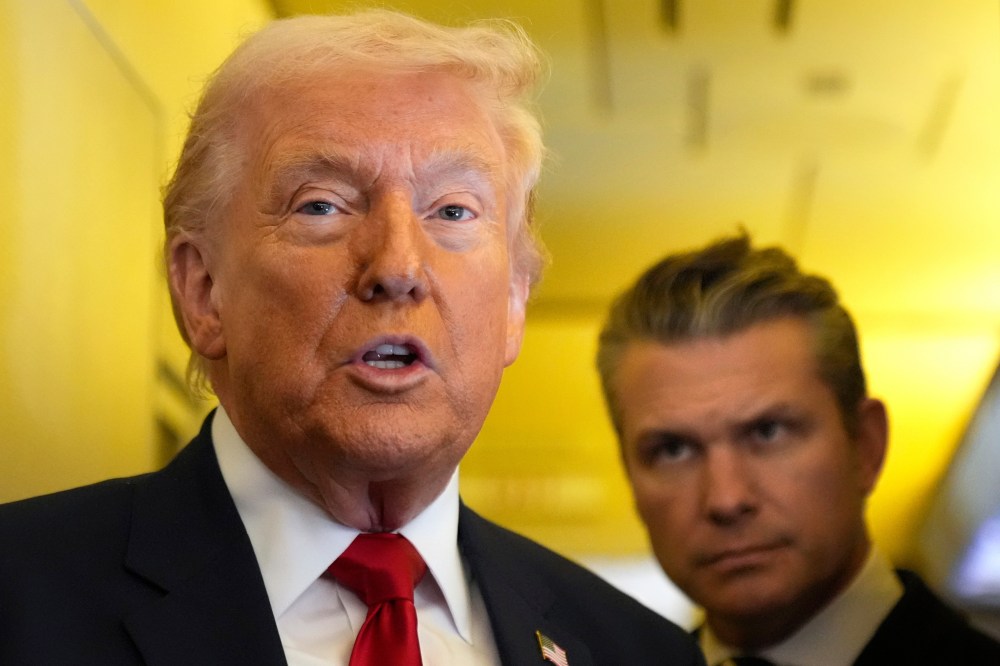
The widening war has strained the energy sector globally. And in the U.S., drivers are already facing higher gas prices, a key cost of living. Trump’s Republican Party is under pressure over the issue of affordability ahead of November midterm elections. And tapping the reserve is among the few things a president can do on his own to try to make an impact on oil prices — although it’s not a permanent fix.
Here is a look at what would be involved:
What is the Strategic Petroleum Reserve?
The Strategic Petroleum Reserve is a collection of underground salt caverns in Texas and Louisiana that can hold more than 700 million barrels of oil, although it is not currently full. The reserve held more than 415 million barrels as of the end of last month, up from about 395 million barrels at this time in 2025, according to the U.S. Energy Department.
The reserve was created after the 1970s Arab oil embargo to give the United States a supply that could be used in an emergency. The amount of oil inside peaked more than a decade and a half ago, Energy Department data shows, when the reserve held more than 726.6 million barrels at one point.
Will gas prices get cheaper when the reserve is tapped?
While pulling from the reserve may provide some short-term relief, it’s takes a while for new supply to trickle down to consumers — and many factors go into prices at the pump.
In the U.S., the average price for gasoline has already climbed nationally — sitting at nearly $3.60 per gallon on Thursday, up about 35 cents from a week ago and 65 cents a month ago, per motor club AAA.
Refineries buy crude oil in advance, so it’s possible that the pain of higher prices could increase further if the war drags on. And even if more oil were withdrawn from the reserve, refineries could still be working with more expensive supply for a bit.
As always, some states also have pricier averages than others, due to factors ranging from nearby refinery supply to local fuel requirements and differing tax rates. On Thursday, California had the highest average of nearly $5.37 per gallon, while Kansas had the lowest of about $3.04 a gallon.
Gas prices are regressive — meaning lower-income people are more likely to spend a higher percentage of their money on fuel than affluent Americans. So increases hurt the most price-sensitive consumers.
How is the reserve used?
Today, the U.S. exports more petroleum than it imports. But the reserve remains and has been tapped for various reasons over time, from offsetting the impact of hurricanes and ship-channel closings to raising money for deficit reduction.
Former presidents have turned to the reserve amid supply disruptions spanning from geopolitical conflicts, adding more supply onto the market in the hope of pushing prices lower. President Joe Biden drew significantly from the reserve in 2022 following Russia’s invasion of Ukraine, dropping the stockpile to its lowest level since the 1980s. Back in 1991, President George H.W. Bush also authorized withdrawing nearly 34 million barrels during the Gulf War, although only 17 million barrels were used. And in 2011, President Barack Obama approved the release of 30 million barrels to offset the disruption of supply from Libya.
Why is Trump tapping the reserve now?
As the Iran war continues to escalate, oil prices have spiked and swung rapidly. That’s because the flow of oil tankers through the Strait of Hormuz has all but stopped, cutting off a vital passageway where roughly one-fifth of the world’s oil sails through on a typical day. Major producers in the region like Iraq, Kuwait and the United Arab Emirates have also cut production because they are running out of storage space. And Iran, Israel and the U.S. have all struck oil and gas facilities, worsening supply concerns.

The price for a barrel of Brent crude, the international standard, was back over the $100 mark on Wednesday — up from nearly $70 a barrel just late last week. Meanwhile, benchmark U.S. crude was $96.12 as of morning trading.
In efforts to alleviate some of the effects of the Iran war on energy markets, the IEA on Wednesday said it will make 400 million barrels of oil available. The Trump administration’s plans to pull 172 million barrels from the reserve are part of that effort.
Trump frequently criticized the administration of his predecessor, Joe Biden, for tapping the reserve to try and bring down gas prices. U.S. Secretary of Energy Chris Wright reiterated that criticism when announcing the coming release from the reserve on Wednesday — and said that the U.S. had arranged to replace about 200 million barrels of reserve oil within the next year.
How do they get the oil out?
Oil is lighter than water — that’s why disasters like those caused by the Exxon Valdez tanker and the Deepwater Horizon drilling rig create slicks on the surface. To remove oil from the reserves, water is pumped into the salt caverns, making the crude float to the surface, where it is captured and sent through pipelines to refineries.