Ass backwards: How a Canadian donkey documentary is defying Oscars conventions
Advertisement
Read this article for free:
or
Already have an account? Log in here »
To continue reading, please subscribe:

Digital Subscription
One year of digital access for only $205*
- Enjoy unlimited reading on winnipegfreepress.com
- Read the E-Edition, our digital replica newspaper
- Access News Break, our award-winning app
- Play interactive puzzles
*First annual payment billed as $205.00 + GST for one year. This annual subscription will automatically renew at $233.00 + GST every 52 weeks (10% off the regular annual price of $259.35). Offer available to new and qualified returning subscribers only. Cancel any time.
To continue reading, please subscribe:
Add Free Press access to your Brandon Sun subscription for only an additional
$1 for the first 4 weeks*
- Enjoy unlimited reading on winnipegfreepress.com
- Read the E-Edition, our digital replica newspaper
- Access News Break, our award-winning app
- Play interactive puzzles
*Your next Brandon Sun subscription payment will increase by $1.00 and you will be charged $17.95 plus GST for four weeks. After four weeks, your payment will increase to $24.95 plus GST every four weeks.
Read unlimited articles for free today:
or
Already have an account? Log in here »
Hey there, time traveller!
This article was published 11/03/2026 (192 days ago), so information in it may no longer be current.
When Montreal filmmaker Alison McAlpine first noticed a group of donkeys ambling around an observatory in Chile’s Atacama Desert, she couldn’t help but wonder what they were thinking.
“I just asked, how do they see this world?” she recalls.
That question became the starting point for “Perfectly a Strangeness,” McAlpine’s mesmeric short film following three donkeys grazing around towering telescopes scanning the cosmos. It’s now up for an Oscar on Sunday.
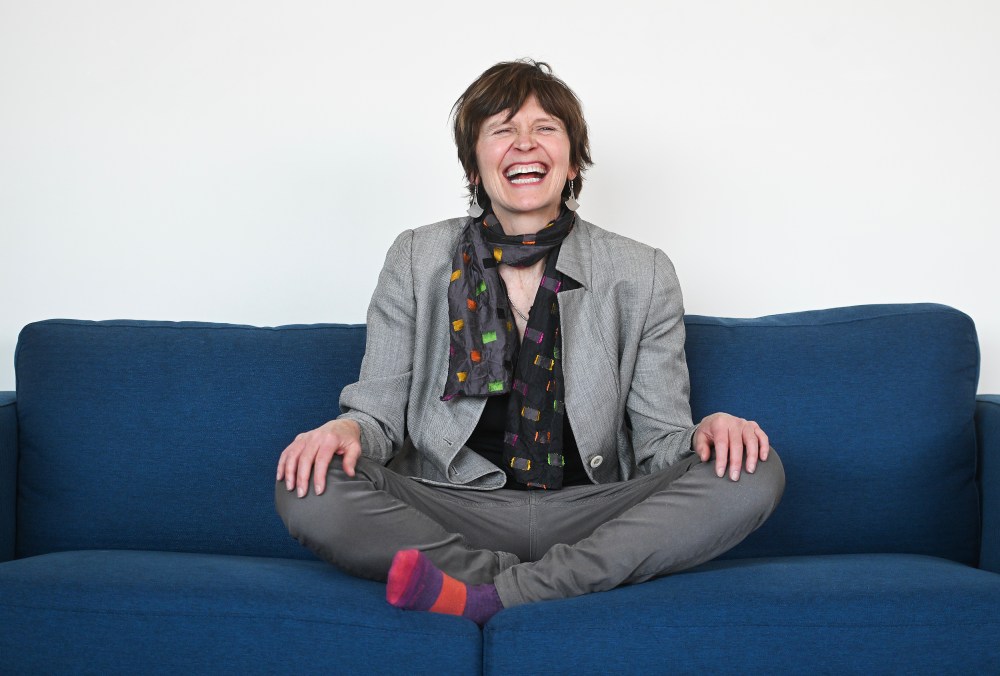
But while the film is nominated in the documentary short category, its dreamlike, stylized approach has stirred a debate: what exactly counts as a documentary?
“I’m surprised that the definition of what a documentary is is still very strong in some people’s minds,” McAlpine says.
For McAlpine, the conversation itself highlights how narrow the category can be.
“Fiction takes from documentary and vice versa. Really, it’s about the tools the film needs to tell that story,” she argues.
“I just call it a film.”
The filmmaker notes “Perfectly a Strangeness” has screened across both documentary and fiction circuits, winning awards against narrative films — including best Canadian short at Planet in Focus and the grand prize at Montreal’s Festival du Nouveau Cinema.
“Perhaps it’s more of a hybrid form of film, which is what cinema is,” she says.
The project grew out of McAlpine’s 2018 Atacama-set feature documentary “Cielo,” an existential exploration of the night sky. While filming near the La Silla Observatory, she was struck by donkeys roaming freely among partially abandoned telescopes.
“The juxtaposition of these machines and these donkeys, who were partly wild and partly domestic, just fascinated me,” she says.
For “Perfectly a Strangeness,” the crew rented three donkeys — Palaye, Ruperto and Palomo — from locals and filmed them exploring the site.
Sometimes they lured the animals toward certain locations; other times they simply followed them and captured whatever unfolded.
“There were magical moments when you were just with them,” she says.
When the donkeys reach the observatory, the camera lingers on a close-up of their ears twitching and swivelling, like antennas picking up a distant signal.
The film contains no narration, interviews or traditional explanation. Instead, it unfolds almost like a meditative experience, shifting between the donkeys’ slow wandering and the observatory’s giant machines awakening at night.
“I just loved their exploration, this sense of them discovering the world for the first time,” explains McAlpine.
“How are they, with their eyes and ears, discovering this world versus these mythical beasts that are alive by night and opening to the heavens, so to speak, chasing the stars with their different eyes and ears?”
The animals weren’t always cooperative.
“One was a bit of a rabid donkey,” she laughs, noting that Palaye had to be replaced partway through filming.
“Perfectly a Strangeness” competes against a slate of weightier documentaries at the Oscars — from “All the Empty Rooms,” documenting the empty bedrooms of children killed in school shootings; to “Armed Only With a Camera: The Life and Death of Brent Renaud,” about a fallen war reporter; “Children No More: Were and Are Gone,” chronicling a weekly silent vigil for the kids killed in Israeli attacks on Gaza; and “The Devil Is Busy,” following an Atlanta abortion clinic swarmed by protesters.
Given the unconventional approach of McAlpine’s film, some online commenters have questioned whether it belongs in the documentary category.
“Every time you put a camera on a subject, it’s a subjective gaze,” McAlpine argues. “The idea that something is somehow more true to life because you are dealing with an issue or doing a talking-head documentary — I don’t find that a very true definition.”
In fact, some scenes were deliberately orchestrated. McAlpine asked scientists at the observatory to move their telescopes in co-ordinated ways so the machines would appear to “dance” across the night sky.
“But even in the straightest documentary, the director is telling somebody to sit — even if they’re just telling them to sit and they put a lens on them, that’s direction,” she says
“Or they’re telling them, ‘Walk across here so we can cut to here.’”
Because the film has no narration, interviews or text, McAlpine says some viewers are unsure what to make of it.
“A lot of documentaries explain,” she says. “And I don’t want to make cinema that explains. I want to make cinema that explores how to tell a story.”
Before turning to filmmaking, McAlpine worked as a poet and theatre artist — influences she says naturally shape her storytelling. Instead of delivering a clear message, she prefers to leave room for interpretation.
Made largely with arts council funding and a small team in Quebec and Chile, the film wasn’t created with awards in mind.
“It’s the out-of-the-box indie film,” McAlpine says. “It comes out of nowhere.”
The Oscar nomination has brought an intense round of travel, screenings and industry events — something she initially resisted.
“I would like to just make films,” she laughs.
But she says it has also introduced her to filmmakers around the world and expanded her creative network.
Several members of the film’s small crew plan to attend the Oscars together, paying their own way.
“My little company is trying to pay for an Airbnb, where most of us will camp for a few nights, because there won’t be enough beds,” she says.
The donkeys, however, won’t be making the trip.

“I’d love that,” she laughs. “But I think a poor donkey in L.A. would be traumatized.”
While there may be no hoofs on the red carpet, McAlpine hopes her film’s success might encourage a broader view of documentary storytelling.
“I’ve been moved by emails from filmmakers who’ve said, ‘Congratulations, I didn’t even know that the Oscars would even let in a film like yours,’ she says.
“It’s so wonderful that it’s opening up.”
This report by The Canadian Press was first published March 11, 2026.
Related Articles
'North of North' and '40 Acres' lead Canadian Screen Awards nominations

Advertisement Advertise With Us
Advertisement Advertise With Us