From athlete to activist
Former Canadian volleyball star recalls highs and lows, including the struggle for gay rights during the 1980s
Advertisement
Read this article for free:
or
Already have an account? Log in here »
To continue reading, please subscribe:
Digital Subscription
One year of digital access for only $1.44 a week*
- Enjoy unlimited reading on winnipegfreepress.com
- Read the E-Edition, our digital replica newspaper
- Access News Break, our award-winning app
- Play interactive puzzles
*Billed as $5.77 plus GST every four weeks. After 52 weeks, price increases to the regular rate of $19.95 plus GST every four weeks. Offer available to new and qualified returning subscribers only. Cancel any time.
To continue reading, please subscribe:
Add Free Press access to your Brandon Sun subscription for only an additional
$1 for the first 4 weeks*
- Enjoy unlimited reading on winnipegfreepress.com
- Read the E-Edition, our digital replica newspaper
- Access News Break, our award-winning app
- Play interactive puzzles
*Your next Brandon Sun subscription payment will increase by $1.00 and you will be charged $17.95 plus GST for four weeks. After four weeks, your payment will increase to $24.95 plus GST every four weeks.
Read unlimited articles for free today:
or
Already have an account? Log in here »
Hey there, time traveller!
This article was published 14/03/2026 (226 days ago), so information in it may no longer be current.
In 1981, tennis star Martina Navratilova made international headlines off the court for coming out as a lesbian. Around the same time, a less prominent Canadian athlete named Betty Baxter was beginning a public battle for equality.
Baxter was well-known in the queer community, having played on the national Canadian women’s volleyball team at the 1976 Montreal Olympics. She caused a media frenzy a few years later when she became the first female and youngest ever coach of the same team.
Less well-known was that after only 18 months as coach she was fired, behind closed doors, as rumours swirled that she was a lesbian. Baxter had not come out publicly; she lost her job for not denying she was a lesbian.
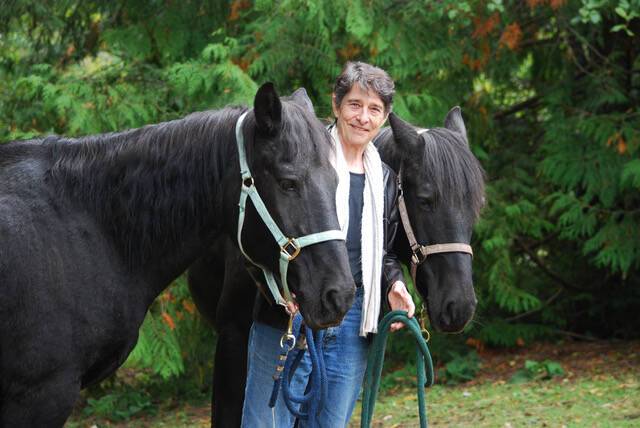
Andrea Pratt photo
Betty Baxter… TK
She was told by a human rights lawyer that she had no recourse. This was common practice before sexual orientation was enshrined in the Human Rights Act in 1996; contemporary readers may have a difficult time imagining how brave it was to come out publicly in the ‘80s.
Outspoken centres around Baxter’s emotional and physical growth as a human and athlete. As a young woman she excelled in several sports before choosing to focus on volleyball. She made the national team at age 18, allowing her to travel internationally to places such as China (where most of the 20,000 fans smoked as they watched) as well as Cuba, where she was assaulted by a male player and powerless to say anything in case anyone suspected her truth.
Despite her talents as a player, Baxter faced more than her share of disappointments. In one scene, Baxter is flying home from a tournament in Europe, on a high because she was just named as a tournament all-star. Her coach pulled her aside on the plane and informed her that she had been cut from the team to make way for younger players.
For volleyball fans, it will be disappointing that there aren’t more scenes describing matches. One exception is a particularly vivid description of a match against Peru during the Montreal Olympics, where Baxter dives to dig a ball on match point, and succeeds, only to have it fall on her side of the court.
Baxter addresses the paralyzing low she experienced following the Olympics. With no ongoing program for the women’s volleyball team, weeks after the high of playing at the Olympics, she goes to work in Alberta for a natural gas exploration company.
Her first-person storytelling here is straightforward and full of inspiring anecdotes. Baxter’s integrity shines on every page.
The memoir ends on a high note. Having felt tossed aside by mainstream athletics, Baxter reluctantly returns to play at Gay Games in San Francisco in 1986. Here she finds joy in competition again, subsequently accepting a role as part of the organizing committee to bring the Games to Vancouver in 1990.
The Vancouver Gay Games prove to be a watershed moment for both her and for Canada’s queer community. The previous games in San Francisco hosted roughly 2,000 athletes; Vancouver played host to more than three times that number.
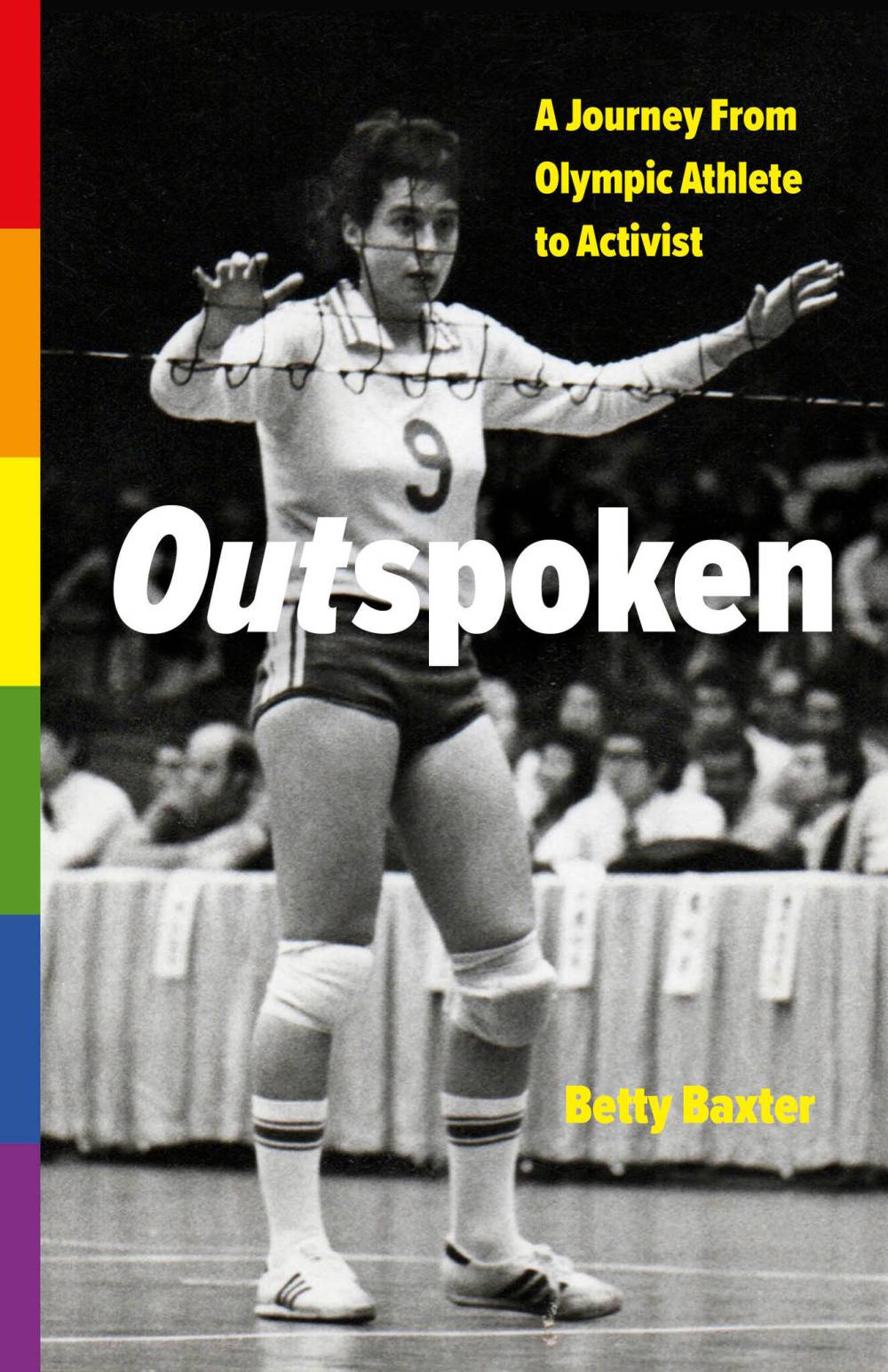
Outspoken
For eight days and nights, queer love and athleticism was on display in Canada’s largest West Coast city. Many gay people felt empowered to hold their partner’s hand or kiss them in public for the first time in their lives.
The story of Baxter’s transition from athlete to activist is a powerful illustration that individuals can effect social change. She now lives in Roberts Creek, B.C., where the community encouraged her to write her story.
Readers looking to understand what life was like for queer people before their rights were enshrined will be glad she did.
Greg Klassen is a Winnipeg writer who also participated in Gay Games in San Francisco and Vancouver. He has also played on a volleyball court with Betty Baxter.