A searing second act
Exploration of latter-era Dylan attempts to unpack songwriter’s enduring genius
Advertisement
Read this article for free:
or
Already have an account? Log in here »
To continue reading, please subscribe:

Digital Subscription
One year of digital access for only $205*
- Enjoy unlimited reading on winnipegfreepress.com
- Read the E-Edition, our digital replica newspaper
- Access News Break, our award-winning app
- Play interactive puzzles
*First annual payment billed as $205.00 + GST for one year. This annual subscription will automatically renew at $233.00 + GST every 52 weeks (10% off the regular annual price of $259.35). Offer available to new and qualified returning subscribers only. Cancel any time.
To continue reading, please subscribe:
Add Free Press access to your Brandon Sun subscription for only an additional
$1 for the first 4 weeks*
- Enjoy unlimited reading on winnipegfreepress.com
- Read the E-Edition, our digital replica newspaper
- Access News Break, our award-winning app
- Play interactive puzzles
*Your next Brandon Sun subscription payment will increase by $1.00 and you will be charged $17.95 plus GST for four weeks. After four weeks, your payment will increase to $24.95 plus GST every four weeks.
Read unlimited articles for free today:
or
Already have an account? Log in here »
Anyone who has paid serious attention to Bob Dylan in the past couple decades knows that the bard of Minnesota is a force of nature unrivaled by few artists of the 20th and now 21st century.
Yet the casual music fan likely thinks he hasn’t penned a memorable song in 40 or 50 years.
At the 2016 ceremony in Stockholm for his Nobel Prize in Literature, the Bobster’s stand-in, Patti Smith, performed A Hard Rain’s A-Gonna Fall, which dates from 1962.
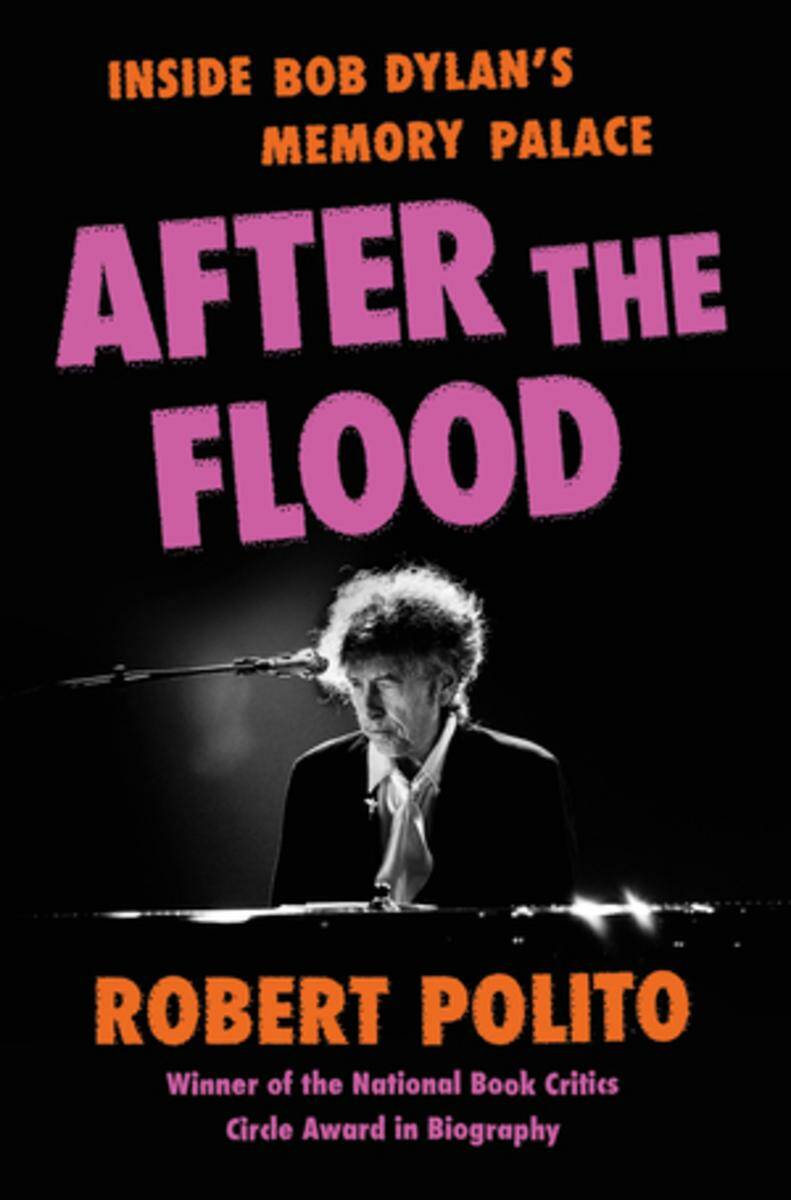
After the Flood
The mission of this exhaustive and often exhausting work of mainstream scholarship is to debunk this popular misconception.
In After the Flood, Robert Polito, an American poet, English academic and author, argues forcefully that the second half of Dylan’s creative life is perhaps even more monumental than the first half.
He dates Dylan’s “second act” as beginning in 1991, when Dylan — ironically at a professional and personal low ebb — was given a lifetime achievement award at the Grammys.
The second act has yet to end — Dylan will be 85 in May and is presenting concerts this spring in the U.S. Midwest.
Between then and now, Polito enumerates Dylan’s key accomplishments.
Since 1992 (bullet-form summary ours, not Polito’s):
• He has “toured relentlessly,” performing more than 3,000 live shows throughout the world.
• He has released a dozen studio albums, half of them original material, the most recent of which was 2020’s Rough and Rowdy Ways (which Polito argues is Dylan’s real Nobel acceptance speech).
• He has written a memoir, Chronicles (2004), and a book about his musical influences, Philosophy of Modern Song (2022).
• He co-wrote and starred in the art film Masked and Anonymous (2003) and contributed several original songs to other movie soundtracks.
• He hosted more than 100 episodes of a weekly radio program, Theme Time Radio Hour (2006-2009).
• He has circulated his drawings, paintings, prints and welded sculptures in art catalogues, galleries and museums.
• He has approved and helped co-ordinate the ongoing Bootleg Series of recordings from his past incarnations, introducing “crucial” previously unheard songs to the canon.
• He has been honoured with dozens of prizes, from the U.S. Presidential Medal of Freedom (yes, predating Connor Hellebuyck) to France’s Commander of Arts and Letters.
“Fierceness of empathy and memory powered Dylan’s extraordinary revival as a writer, performer and even public figure,” writes Polito, 74, who is also the author of an award-winning biography of the American writer Jim Thompson.
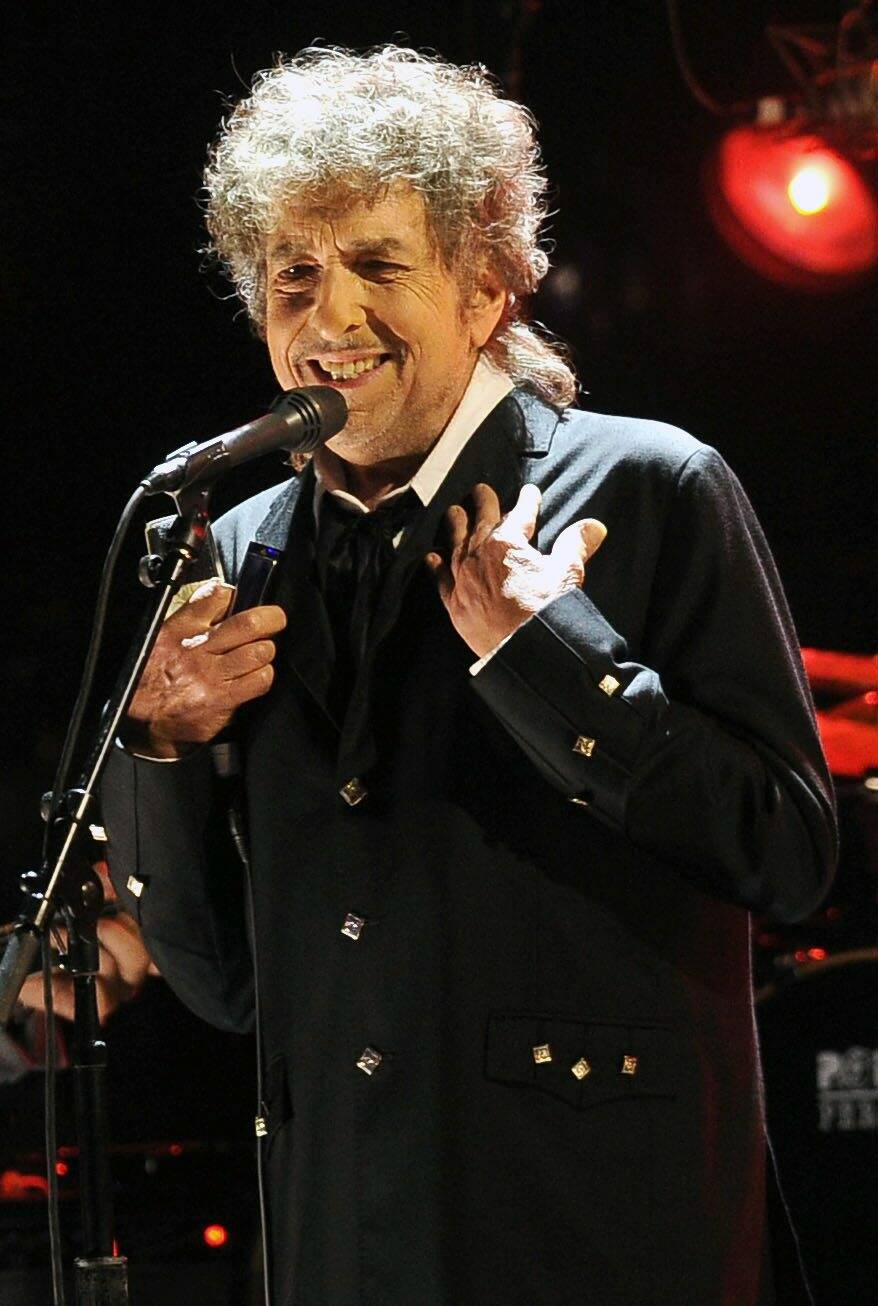
Chris Pizzello / Associated Press files
Author Robert Polito believes the key to Bob Dylan’s genius lies in his photographic memory.
“(Dylan’s) vertiginous intuition is that the past erupts into the present, an intuition he then embodies and renders literal through allusion and collage.”
Polito divides his book into 26 chapters, an “abecedarium” of topics, with each topic conforming (sometimes mysteriously) to a letter of the alphabet.
The book’s subtitle highlights what Polito believes is the key to Dylan’s genius — his photographic memory. Polito quotes several people who have witnessed this, among them Canadian folk legend Sylvia Tyson:
“He literally remembers everything he’s ever heard or seen,” Tyson once said. “I’ve had him recall to me conversations we had years earlier word for word.”
This freakish ability, Polito believes, has given Dylan the ability to incorporate into his lyrics references to writers classical and modern, famous and obscure.
Dylan always transmutes others’ phrases through his own vision. Polito brooks no argument on this. Dylan’s technique is historical collage, not plagiarism.

This book clearly aims to occupy a literary shelf alongside the Boston-based poetry academic Christopher Ricks’s landmark 2004 work, Dylan’s Visions of Sin.
Like Ricks’s work, After the Flood will bewilder the average reader. The density of its prose and the dozens if not hundreds of paragraphs that present what feel like laundry lists of artists and song titles will put off all but the most committed Dylanophile.
The emphasis, too, on Dylan as a lyricist, while understandable, feels one-dimensional. Popular songwriting also incorporates melody, rhythm, tone and vocal personality, among many other elements.
Polito, like Ricks (and most other literary Dylanologists), would be advised to concentrate on these non-verbal aspects to achieve a more rounded appreciation of the master’s genius.
Morley Walker is a retired Free Press writer and editor.