Manitoba bill targets technology that could alter grocery prices for some shoppers
Advertisement
Read this article for free:
or
Already have an account? Log in here »
To continue reading, please subscribe:

Digital Subscription
One year of digital access for only $205*
- Enjoy unlimited reading on winnipegfreepress.com
- Read the E-Edition, our digital replica newspaper
- Access News Break, our award-winning app
- Play interactive puzzles
*First annual payment billed as $205.00 + GST for one year. This annual subscription will automatically renew at $233.00 + GST every 52 weeks (10% off the regular annual price of $259.35). Offer available to new and qualified returning subscribers only. Cancel any time.
To continue reading, please subscribe:
Add Free Press access to your Brandon Sun subscription for only an additional
$1 for the first 4 weeks*
- Enjoy unlimited reading on winnipegfreepress.com
- Read the E-Edition, our digital replica newspaper
- Access News Break, our award-winning app
- Play interactive puzzles
*Your next Brandon Sun subscription payment will increase by $1.00 and you will be charged $17.95 plus GST for four weeks. After four weeks, your payment will increase to $24.95 plus GST every four weeks.
Read unlimited articles for free today:
or
Already have an account? Log in here »
Hey there, time traveller!
This article was published 17/03/2026 (191 days ago), so information in it may no longer be current.
WINNIPEG – The Manitoba government says it’s moving to ban what it calls “predatory pricing” on groceries, even though the issue hasn’t been seen locally.
Finance Minister Adrien Sala says a bill introduced in the legislature last week is aimed at ensuring shoppers won’t be charged different prices for the same product from the same store.
Sala pointed to a recent investigation by Consumer Reports and two advocacy groups in the United States, which says some online shoppers using a third-party platform were charged different prices for the same item bought at the same time from the same seller.
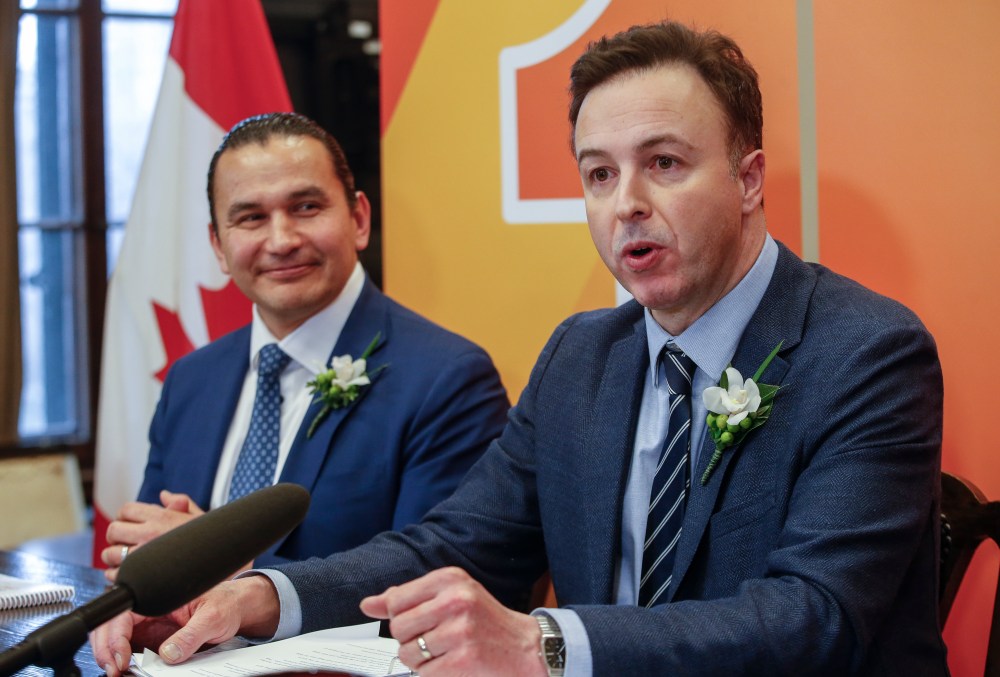
Sala says technology can allow for companies to use personal data to set different prices for individuals, and the government is moving to ensure it doesn’t happen in Manitoba.
The Retail Council of Canada has said its members haven’t engaged in such pricing.
Sala said the bill, if passed into law, wouldn’t ban discounts for members of loyalty programs but would ensure prices are not changed based on shoppers’ personal data, shopping history or other factors.
“We’re in an environment where we’re seeing businesses use (artificial intelligence) more and more extensively,” Sala said.
“We want to make sure that personal data is not being used and weaponized against consumers to raise costs.”
The bill also covers the possibility of in-store price adjustments targeting individuals through electronic shelf labels, which can be changed quickly.
“As we start to see … digital labelling in stores, we’re going to see a blurring of those lines between online and in-store environments. So that makes it even more important that we get ahead of this issue,” Sala said.
Sala didn’t say how the NDP government would police prices or enforce the ban on predatory pricing.
The NDP made affordability a key part of its 2023 election campaign and the government has already tried to tackle grocery prices.
Kinew said in 2024 that he expected prices to be controlled when the province temporarily suspended its fuel tax. But food inflation in Manitoba was, for a time, higher than the national average due to factors including high beef prices on the Prairies.
This report by The Canadian Press was first published March 17, 2026.