

A well-oiled machine
Like everyone else in the industrialized world, Manitobans are suffering from Mideast-conflict gas pains; soaring prices could lead to an energy turning point in Canada

Advertisement
Read this article for free:
or
Already have an account? Log in here »
To continue reading, please subscribe:

Digital Subscription
One year of digital access for only $205*
- Enjoy unlimited reading on winnipegfreepress.com
- Read the E-Edition, our digital replica newspaper
- Access News Break, our award-winning app
- Play interactive puzzles
*First annual payment billed as $205.00 + GST for one year. This annual subscription will automatically renew at $233.00 + GST every 52 weeks (10% off the regular annual price of $259.35). Offer available to new and qualified returning subscribers only. Cancel any time.
To continue reading, please subscribe:
Add Free Press access to your Brandon Sun subscription for only an additional
$1 for the first 4 weeks*
- Enjoy unlimited reading on winnipegfreepress.com
- Read the E-Edition, our digital replica newspaper
- Access News Break, our award-winning app
- Play interactive puzzles
*Your next Brandon Sun subscription payment will increase by $1.00 and you will be charged $17.95 plus GST for four weeks. After four weeks, your payment will increase to $24.95 plus GST every four weeks.
Read unlimited articles for free today:
or
Already have an account? Log in here »
Hey there, time traveller!
This article was published 20/03/2026 (209 days ago), so information in it may no longer be current.
Veteran actor Billy Bob Thornton may seem like an unlikely source of wisdom about the world’s relentless dependence on oil. Then again, it would be hard to find a better, more poignant description of the global addiction than a diatribe he delivered in a recent episode of Landman, a melodrama set in the Texas oil industry.
Thornton’s character, Tommy Norris, a crisis manager for a large oil company, is walking through a wind turbine farm that generates electricity to power remote oil rigs. Norris notes that over a wind turbine’s 20-year lifespan, the “clean” energy it produces won’t offset the carbon emitted in the manufacturing of its components or its installation. The same economics, Norris says, can be applied to solar panels and batteries for electric vehicles.
Then, the punchline.

Emerson Miller / Paramount+
Billy Bob Thornton as Tommy Norris in Landman: Norris is an oil-patch problem solver who realizes oil will run out before a replacement is found.
“Our whole lives depend on (oil). And hell, it’s in everything — that road we came in on, the wheels on every car ever made, including yours. It’s in tennis rackets and lipstick and refrigerators and antihistamines. Pretty much anything plastic: your cellphone case, artificial heart valves, any kind of clothing that’s not made with animal or plant fibers. Soap, f—king hand lotion, garbage bags, fishing boats. You name it, every f—king thing. And you know what the kicker is?
“We’re gonna run out of it before we find its replacement.”
Art is now imitating life.
The war waged by the United States and Israel against Iran, which is crippling the flow of oil from the Middle East and driving prices to heights not experienced since Russia invaded Ukraine in 2022, reinforces the notion of our global dependence on oil.
As we know from other conflicts, the higher oil prices go, the slower economies perform, and higher inflation and interest rates become more likely consequences.
A barrel of Brent crude — the benchmark for worldwide oil prices — is now at more than US$100, nearly 50 per cent higher than it was just three weeks ago when U.S. President Donald Trump and Israeli Prime Minister Benjamin Netanyahu launched an attack on Iran.
In response, Iran has disrupted the flow of tankers travelling through the Strait of Hormuz, the principal shipping route that supplies more than 20 per cent of the world’s oil. Market watchers believe if Iran continues to shut down the waterway, oil prices could soar above US$200 a barrel.
The fallout from the bombing in the Middle East is being felt around the world from gas pumps to grocery checkout lines.
The average pump price in Canada reached $1.68 per litre Friday, up 40 cents over the last month, according to the Canadian Automobile Association. Higher fuel prices mean higher prices for everything from food, clothing, building supplies, automobiles and anything else made with petroleum products or using fossil fuels for transportation.
Unfortunately, governments of all levels are hamstrung when it comes to providing short-term relief if oil prices remain high.
Prior to the attacks on Tehran, Prime Minister Mark Carney had introduced a number of affordability measures, including the removal of the consumer carbon tax from gasoline last year. And then in January, his government also introduced the Canada Groceries and Essentials Benefit, an enhanced version of the GST Credit that will increase by 25 per cent in each of the next five years.
However, since the hostilities in the Middle East started, the Carney government has been quiet on affordability.
Provincial governments are also playing their cards close to their vests.
Manitoba Premier Wab Kinew has strongly hinted Tuesday’s budget will include some affordability measures, possibly including relief from high gasoline prices. In the first year of his government, the NDP suspended the provincial tax on gasoline, and later brought it back at a lower rate.
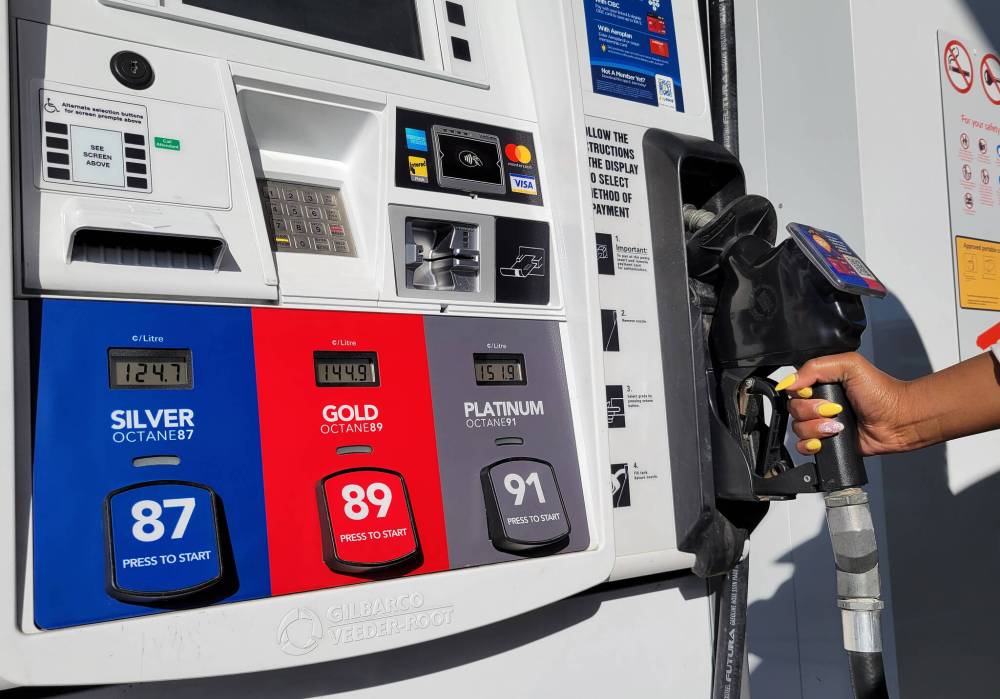
Will he go that route again? Kinew said his first hope was that “the war stops.” But if it doesn’t?
“We’re always going to be there to help you,” he said this week.
The problem with stop-gap affordability measures is they are extremely expensive when broadly applied. The provinces may not want to make any moves until they get a better sense of how long the war could go on, and how high oil prices could soar.
The other problem is that every province in Canada is facing a bigger-than-forecast budget deficit. Red ink on the balance sheet tends to dampen enthusiasm for tax cuts or other affordability handouts.
Manitoba, as an example, is facing a $1.6-billion deficit for the current fiscal year. Even though Kinew may want to be “there” for Manitobans suffering from rising gas prices, it appears that there will be little fiscal wiggle room in next week’s budget to provide significant relief.
“Nothing but tough budgetary choices for the finance minister and the premier,” University of Manitoba political scientist Paul Thomas said Friday. “No magic fiscal rabbit to be pulled out of a hat. New tax breaks will mean a significant loss of revenues.
“Cutting spending, allowing the deficit to rise or borrowing more, which would add to interest payments on the debt and risk credit rating downgrade, are all options that will bring criticism from different commentators.”
Still, it’s important to realize that what will continue to happen to consumers over the coming weeks is just not the result of pure supply-and-demand economics. Pervasive and opportunistic greed is thriving at the heart of the global oil crisis.
Even as gas prices inch upwards, Canada remains one of the largest oil-producing nations on earth. Currently, we export three times more oil than we consume. And while we do import some oil to feed refineries in Central and Eastern Canada, none comes from the Persian Gulf; it’s sourced in the U.S.
So, a question: how is it that within days of the commencement of the Trump war in Iran that gasoline prices in Canada began to soar? It’s one experts struggle to answer.
Jim Stanford, an economist and director of the Vancouver-based Centre for Future Work, said Canada’s gasoline prices became vulnerable to global energy markets in the mid-1980s, when Ottawa deregulated the oil and gas industry as part of the Western Accord with Alberta, Saskatchewan and British Columbia. Now, gas prices rise and fall on a whim, not as a result of events in other countries.
“We produce three times as much oil as we use, and there is no fundamental economic reason for gas prices to go up here because of something happening in the Persian Gulf,” said Stanford.
“It’s patently clear that gasoline that was in the pump when the war started was refined several weeks before that, and the oil (used to make the gas) was extracted months ago in Canada. So clearly, the gasoline that we’re buying today costs no more to produce than it did a month ago, but we’re paying 30 cents a litre or more.”
The federal government could do something to stop Canadians from being held hostage to shocks in global oil prices, but it’s a steep hill to climb because of domestic politics, Stanford said.

Gas and diesel prices at the Shell Gas Station at the Corral Centre in Brandon on Friday. (Tim Smith/The Brandon Sun)
Ottawa is unlikely to regulate oil prices and start a petroleum holy war with Alberta, he said. In lieu of that, Canada should make major investments in lessening our dependence on fossil fuels. Widespread and aggressive adoption of alternative energy and electric vehicles is the only way for Canada to free itself from the grips of the global oil market.
“I’m very worried that Canada isn’t going to do anything quick on this oil-price shock. And as soon as the feds see price increases, we are going to get hammered with interest rates. And then we’ll be punished twice.”
Could Canada actually ease its dependence on oil? In some ways, it’s already happening but like many western countries, Canada has a long way to go to ween itself off petroleum products.
Simon Enoch, an economist with the Canadian Centre for Policy Alternatives, said petroleum has become an essential ingredient in an array of products because it’s the relatively cheap and easy way to make things. But it wasn’t always that way, he said, and it doesn’t have to continue to be that way in the future.
“It can be used to make plastics and chemicals for pennies,” Enoch said. “And because of that, it’s insinuated itself into almost every aspect of our lives. That doesn’t mean it’s impossible to get away from.”

Enoch said China has created a blueprint for an energy policy that will be decoupled from oil and gas at some point in the future. Nuclear and alternative generation of electricity, broad adoption of electric vehicles and the construction of the infrastructure to charge them has put China closer to freedom from oil than any other country on the planet.
“China is leaving the fossil-fuel era behind as quick as it can, because they recognize that their ability to be a global leader and a global player and to have energy sovereignty requires them not to be reliant on fossil fuels,” he said.
Could Canada follow a similar strategy? Enoch agreed domestic energy politics makes it difficult, particularly when a wealthy province such as Alberta clamours for more investment in traditional oil and gas and takes any refusal as a prompt for a referendum on independence.
”I know (Alberta and other oil-producing provinces) want to make it look like the task of using less oil is impossible. But you’ve got to start somewhere. And if we go into $200 a barrel oil territory like Iran has threatened, you’re going to see an awful lot of people that would never have even considered an EV thinking maybe it’s time.”
dan.lett@freepress.mb.ca
Dan Lett is a columnist for the Free Press, providing opinion and commentary on politics in Winnipeg and beyond. Born and raised in Toronto, Dan joined the Free Press in 1986. Read more about Dan.
Dan’s columns are built on facts and reactions, but offer his personal views through arguments and analysis. The Free Press’ editing team reviews Dan’s columns before they are posted online or published in print — part of the our tradition, since 1872, of producing reliable independent journalism. Read more about Free Press’s history and mandate, and learn how our newsroom operates.
Our newsroom depends on a growing audience of readers to power our journalism. If you are not a paid reader, please consider becoming a subscriber.
Our newsroom depends on its audience of readers to power our journalism. Thank you for your support.
Dan Lett is a columnist for the Free Press, providing opinion and commentary on politics in Winnipeg and beyond. Born and raised in Toronto, Dan joined the Free Press in 1986. Read more about Dan.
Dan’s columns are built on facts and reactions, but offer his personal views through arguments and analysis. The Free Press’ editing team reviews Dan’s columns before they are posted online or published in print — part of the our tradition, since 1872, of producing reliable independent journalism. Read more about Free Press’s history and mandate, and learn how our newsroom operates.
Our newsroom depends on a growing audience of readers to power our journalism. If you are not a paid reader, please consider becoming a subscriber.
Our newsroom depends on its audience of readers to power our journalism. Thank you for your support.
Related Articles
Drive gently and carry a loyalty card: ways to take the edge off high pump prices




Advertisement Advertise With Us
Advertisement Advertise With Us