Trump’s EPA is paving the way for haze to return to national parks, conservationists warn
Advertisement
Read this article for free:
or
Already have an account? Log in here »
To continue reading, please subscribe:
Digital Subscription
One year of digital access for only $1.44 a week*
- Enjoy unlimited reading on winnipegfreepress.com
- Read the E-Edition, our digital replica newspaper
- Access News Break, our award-winning app
- Play interactive puzzles
*Billed as $5.77 plus GST every four weeks. After 52 weeks, price increases to the regular rate of $19.95 plus GST every four weeks. Offer available to new and qualified returning subscribers only. Cancel any time.
To continue reading, please subscribe:
Add Free Press access to your Brandon Sun subscription for only an additional
$1 for the first 4 weeks*
- Enjoy unlimited reading on winnipegfreepress.com
- Read the E-Edition, our digital replica newspaper
- Access News Break, our award-winning app
- Play interactive puzzles
*Your next Brandon Sun subscription payment will increase by $1.00 and you will be charged $17.95 plus GST for four weeks. After four weeks, your payment will increase to $24.95 plus GST every four weeks.
Read unlimited articles for free today:
or
Already have an account? Log in here »
Hey there, time traveller!
This article was published 21/03/2026 (213 days ago), so information in it may no longer be current.
MADISON, Wis. (AP) — A year ago, federal environmental regulators told West Virginia officials that their plan to clear sulfur and smog from skies over the state’s national wilderness areas wasn’t good enough because a dozen coal plants didn’t analyze whether they needed better pollution controls.
Six months later, the Environmental Protection Agency, now firmly under President Donald Trump’s control, blessed the same plan, saying technology evaluations wouldn’t be necessary as long as visibility hit projected benchmarks.
Conservationists say the about-face in West Virginia is just one example of the Trump administration clearing the way for states to roll back pollution restrictions that have helped clear the air over beloved national parks and wilderness areas over the last 25 years.
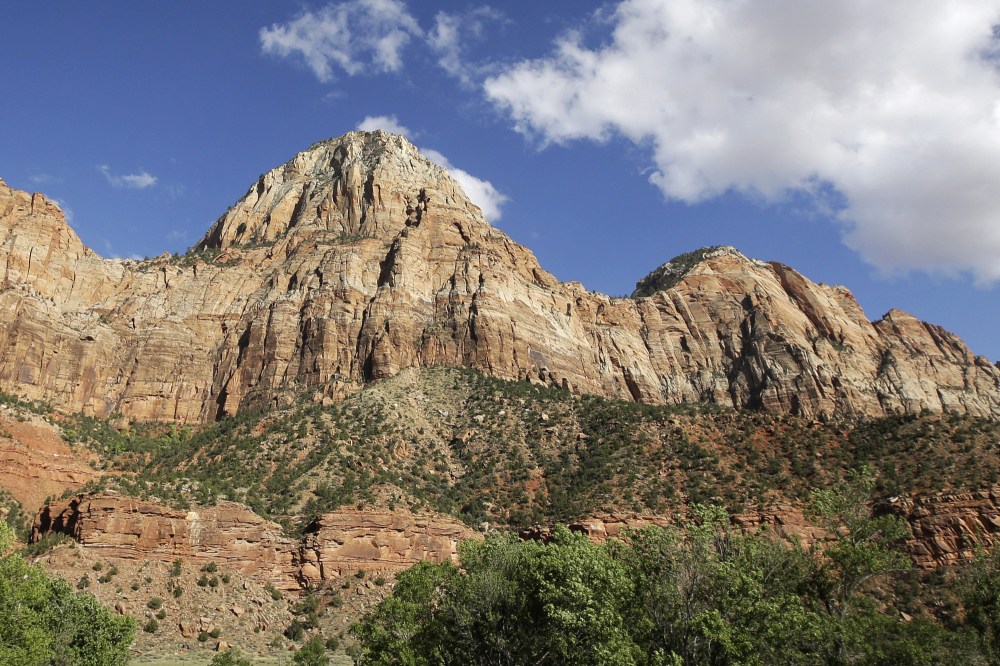
A rule has improved visibility, but Trump’s EPA says it’s too tough
A federal regulation known as the regional haze rule requires states to come up with plans every 10 years to limit emissions and monitor air pollution in more than 150 national parks, wilderness areas, wildlife refuges and tribal reservations across 36 states.
Since the rule took effect in 1999, more than 90% of parks and wilderness areas have seen sulfur and smog emissions decline by hundreds of thousands of tons annually. The average visual range has increased from 90 miles to 120 miles (145 kilometers to 195 kilometers) in some Western parks, according to the Harvard Law School’s Environmental and Energy Law Program.
But energy producers argue the regulations have done their job and are too costly. EPA Administrator Lee Zeldin announced in March 2025 that the agency would look to roll back 31 landmark environmental regulations, including the regional haze rule, to relieve regulatory pressure on the fossil fuel industry.
EPA pushes back on state plans
The EPA is still taking public comments on how to soften the federal rule. Meanwhile, conservationists say, the agency has weakened standards for individual state plans by rejecting state proposals the agency considers too tough on polluters and signing off on weak plans the Biden administration had rejected.
“They’re blessing states that haven’t done a good enough job and they’re dramatically changing course on states like West Virginia, like California, like Hawaii, like Colorado,” said Ulla Reeves, director of the National Parks Conservation Association’s clean air program. “They’re using these reversals and those changes to achieve their agenda of letting polluting facilities stay online.”
EPA spokesperson Brigit Hirsch said in a statement that the agency is committed to following the law and can’t approve state plans that don’t follow the law.
West Virginia about-face lowers the bar
The EPA signaled on the day after Trump took office in January 2025 that it would reject West Virginia’s proposal. The agency noted that state officials decided not to ask eight coal-burning power plants to assess whether they needed more pollution-reduction technology to continue making progress toward natural visibility levels at multiple East Coast national parks and wilderness areas.
The state asked five plants to perform an evaluation, but only one complied. One plant argued it was already under federal emission restrictions. The others said they were meeting visibility benchmarks.
The EPA changed course six months later and approved the plan, adopting a new policy that state plans are good enough if the state can show visibility improvements exceed projections at national parks and wilderness areas affected by its pollution. West Virginia had done that.
The National Parks Conservation Association, the Sierra Club and the environmental law firm Earthjustice are suing EPA, arguing the new policy allowed West Virginia to avoid imposing pollution reductions and threatens air quality in national parks, including Shenandoah, the Great Smoky Mountains and Mammoth Cave, already one of the nation’s haziest parks.
Environmentalists warn that the new policy has far-reaching implications. Visibility levels might hit benchmarks thanks to plants closing or switching fuels, but relying solely on those measurements allows plants that are still polluting to get away with doing nothing, said Joshua Smith, an attorney for the Sierra Club.
For example, as early as 2024, the Biden-era EPA said it planned to reject California’s plan because state officials didn’t consider pollutants other than smog and didn’t explain why they didn’t evaluate pollution levels at a number of refineries and airports. The Trump EPA approved it last summer in part because visibility was meeting benchmarks.
“We view this (new policy) as a backdoor way to kick the can down the road,” Smith said.
Both the EPA and the West Virginia Department of Environmental Protection said they don’t comment on pending litigation.
EPA rejects plant closures in Colorado and Hawaii
Trump’s EPA rejected Colorado’s plan this January largely because it would have closed a coal-burning power plant near Pueblo without consent from owner Colorado Springs Utilities, according to EPA documents. The agency noted Colorado Springs’ concerns about the closure’s effects on the state’s electricity supply and that forcing closure could be illegal. The state has challenged the rejection in federal court in Denver.
“EPA’s action is not based on a failure to meet regional haze requirements or visibility protections, which Colorado continues to meet,” Michael Ogletree, the senior director of state air quality programs, told The Associated Press.
Hawaii’s plan calls for closing six boilers at two power plants on the islands of Hawaii and Maui, as well as the option of shutting down several diesel generators on Maui. The EPA hasn’t made a final decision, but in February signaled it planned to reject those closures, saying that, similar to the Colorado situation, the state hasn’t shown the shutdowns would be legal.
Trump EPA to states: Focus on energy supply
The EPA also has warned that the Trump administration won’t support states that push for plant closures to comply with regional haze requirements and that states have to consider plant closure or pollution reduction technology’s effects on grid reliability.
“Coal-fired power plants are essential sources of baseload power necessary for addressing surging energy demand, increases in American manufacturing, national security interests, and turning the United States into the Artificial Intelligence capital of the world,” the agency said in rejecting Colorado’s plan. “Ensuring affordable and reliable energy supplies is a top priority of the Trump administration.”
Neither the U.S. Energy Association, a consortium of utilities, engineers and government agencies that works to expand access to domestic energy sources, nor the American Coal Council, a group that supports the coal industry, responded to messages seeking comment.
Support for coal like ‘digging up a grave’
Jim Schaberl is a former air and water quality manager at Shenandoah National Park in northern Virginia’s Blue Ridge Mountains, less than 100 miles (160 kilometers) from the West Virginia line.
He said that when he started his job at the park in 2008, a sooty, yellowish-brown haze from West Virginia coal plants often hovered over the park. Now, he said, visibility has improved so dramatically that hikers can make out the Washington Monument 75 miles (120 kilometers) to the east. Trump is threatening to undo all of that, he said.
“To try to resurrect coal is like digging up a grave, and this administration wants to dig up that grave,” Schaberl said. “It’s nonsensical and, I think, lawless.”