Black people in Canada less likely to fill medication prescriptions due to cost, study says

Advertisement

Advertise with us

TORONTO - A new study says the cost of medication is stopping Black people in Canada from filling their prescriptions at a higher rate than white people.

Read this article for free:


or

Already have an account? Log in here »

To continue reading, please subscribe:

Subscribe and receive a limited-edition Free Press branded hat or tote.

Digital Subscription

One year of digital access for only $205*

  • Enjoy unlimited reading on winnipegfreepress.com
  • Read the E-Edition, our digital replica newspaper
  • Access News Break, our award-winning app
  • Play interactive puzzles

*First annual payment billed as $205.00 + GST for one year. This annual subscription will automatically renew at $233.00 + GST every 52 weeks (10% off the regular annual price of $259.35). Offer available to new and qualified returning subscribers only. Cancel any time.

To continue reading, please subscribe:

Add Free Press access to your Brandon Sun subscription for only an additional

$1 for the first 4 weeks*

  • Enjoy unlimited reading on winnipegfreepress.com
  • Read the E-Edition, our digital replica newspaper
  • Access News Break, our award-winning app
  • Play interactive puzzles
Start now

*Your next Brandon Sun subscription payment will increase by $1.00 and you will be charged $17.95 plus GST for four weeks. After four weeks, your payment will increase to $24.95 plus GST every four weeks.

TORONTO – A new study says the cost of medication is stopping Black people in Canada from filling their prescriptions at a higher rate than white people.

The research published Monday in the Canadian Medical Association Journal found that Black people are less likely to have drug plans to cover the cost.

Senior author Bukola Salami says the findings show the consequences of socioeconomic inequalities for Black people’s health.
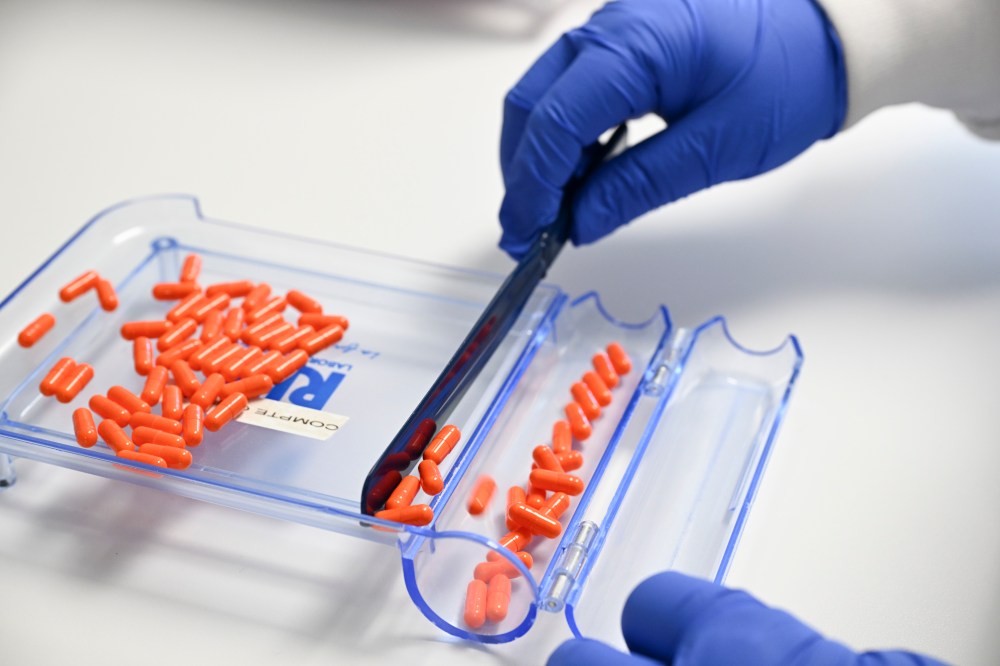
A technician counts pills in a pharmacy laboratory, Wednesday February 5, 2025. THE CANADIAN PRESS/Jacques Boissinot

The researchers analyzed data from five years of the Canadian Community Health Survey and found that about 10 to 15 per cent of Black adults hadn’t filled their prescriptions or had skipped doses, compared to about six per cent of white adults.

Salami, who is the Canada Research Chair in Black and racialized people’s health at the University of Calgary, says even when the researchers controlled for variables such as income and insurance coverage, Black people were still less likely to fill prescriptions.

She says a possible reason for that could be factors that weren’t part of the data they analyzed, including distrust of the health-care system because of direct or systemic racism.

“I think this points us to very, very important questions related to the need for equity in medication drug coverage,” Salami said in an interview.

“When we think about Canada, we say, you know, we have universal health care — but universal health care that does not include prescriptions,” she said.

The data was collected before the national Pharmacare Act was passed in 2024. The federal government has so far negotiated agreements to cover diabetes medication and birth control in British Columbia, Manitoba, Prince Edward Island and Yukon. The rest of the provinces and territories don’t yet have pharmacare agreements with the federal government.

Salami said more research will be needed to see if pharmacare improves access to prescription medication for Black people.

About 72 per cent of Black adults had drug insurance coverage, compared to about 80 per cent of white adults, the study found.

The Canadian Community Health Survey is conducted annually by Statistics Canada and the researchers used data from the years 2015, 2016, 2018, 2019 and 2022.

They excluded 2017, 2020 and 2021 because the surveys didn’t have all the data they needed in those years.

Dr. Mojola Omole, president of the Black Physicians Association of Ontario, said the findings raise “a really important issue.”

Omole, who was not involved in the study, said she sees a large number of Black and racialized patients as a breast surgical oncologist at Scarborough Health Network and the issue of not being able to afford medication comes up “all the time.”

“If people have to pick between their medication and feeding their families, they’re going to pick feeding their families,” Omole said.

“This is a reality for a lot of people who are, whether they’re new immigrants or just coming from a working-class background, this is a huge issue for them.”

The study’s finding that Black patients with insurance were still less likely than white patients to get their medications could be explained by “distrust that Black and racialized folks in our communities have in the medical system,” Omole said.

“We have had such long periods where Black communities have not received great care and even to this day, many have horrific stories of what’s happened to them in terms of the pervasiveness of anti-Black racism.”

The primary care shortage adds to the problem, she said.

“When people are not able to form relationships with their physician because they don’t have a family physician — they’re using episodic care — it makes it more challenging to be able to say, ‘OK, you know what, this person knows me … I trust them in terms of taking this medication,” Omole said.

This report by The Canadian Press was first published March 23, 2026.

Canadian Press health coverage receives support through a partnership with the Canadian Medical Association. CP is solely responsible for this content.


Report Error Submit a Tip

More Stories

Man, 21, killed in animal attack on Manitoba First Nation

Free Press staff 2 minute read 9:32 AM CDT

A 21-year-old man was killed in an animal attack in northwestern Manitoba on Wednesday.

An investigation into a suspicious death reported on Sapotaweyak Cree Nation is ongoing, RCMP said in a news release Monday.

Officials were called to the scene, located on the southeast shore of Dawson Bay, on Wednesday and found the man dead on a community road.

“Following an autopsy, the preliminary cause of death was determined to be from an animal attack. The type of animal has not been determined,” RCMP said in the release.

Retired sportscaster Scott Oake determined as fundraising for women's addictions treatment facility enters home stretch

Melissa Martin 4 minute read Preview

Retired sportscaster Scott Oake determined as fundraising for women's addictions treatment facility enters home stretch

Melissa Martin 4 minute read Thursday, Sep. 10, 2026

For now, the patch of land just east of the Victoria Hospital doesn’t look like much: just a field of rocks, mounded dirt, and concrete piles driven into the earth. Yet when Scott Oake looks over the site, he can already imagine how it will look in just over a year’s time, when the new Anne Oake Family Recovery Centre is expected to open.

It’s easier to picture this time around. In 2020, when the recently-retired CBC sportscaster and his late wife, Anne, were building their first labour of intermingled grief and love, the Bruce Oake Recovery Centre for men, it was hard for him to wrap his mind around how a raw construction site could transform into a welcoming addictions treatment facility.

When that centre opened in 2021, Oake found it looked “almost identical” to the architect’s renderings. So it’s easy to hope the Anne Oake Centre will be the same. It will be the first facility of its kind, its founders believe, not only in Canada but in North America: a place where 50 to 70 women can pursue sobriety while staying with their children.

“At Bruce Oake there’s a culture of love, and most of all a culture of hope,” Oake said, speaking at the site Thursday after a media conference to announce the final push of the centre’s fundraising campaign. “I can feel it every time I walk into that building. And I know it will be the same here.”

Read
Thursday, Sep. 10, 2026

The port of Churchill — but done right

Editorial 4 minute read Preview

The port of Churchill — but done right

Editorial 4 minute read Saturday, Sep. 12, 2026

The seagoing grain carrier wasn’t christened with a champagne bottle. There was no confetti or streamers. Nevertheless, the Aug. 31 event marking the first shipment of grain to be loaded at the Port of Churchill since 2020 was celebrated like the launch of a brand new vessel.

The presence of the federal minister of northern and arctic affairs, provincial cabinet ministers and leaders and elders from several northern First Nations signalled that the fast-tracked process of refurbishing and buffing up Manitoba’s deep-water seaport gem is gaining momentum.

For OneNorth, the partnership of 29 First Nations and 12 northern communities which owns the Port of Churchill and the Hudson Bay Railway (both operated by the Arctic Gateway Group) the event heralded a new beginning. It’s been eight years since OneNorth purchased the port and railroad, and six years since grain was moved by rail through Manitoba and then by ship to European markets. Two more grain shipments, plus shipments of potash and critical minerals, will continue through the fall.

When Prime Minister Mark Carney solicited the premiers to suggest “nation-building” projects following his election in 2025, Premier Wab Kinew pitched a Manitoba trade corridor that would move wheat, critical minerals, potash and energy (oil or liquid natural gas) through the Port of Churchill.

Read
Saturday, Sep. 12, 2026

A man has been arrested and remains in police custody after being charged with spraying bear spray inside a Henderson Highway hotel in early July. The suspect is also accused of  pointing a gun, chasing people and making violent threats in the hotel's parking lot after a dispute over a VLT ticket at the licensed establishment in the 1000 block of Henderson Highway.

Matthew Joseph Marriott, 33, was arrested Sept. 10, the Winnipeg Police Service stated in a news release Sunday. He is charged with several firearms and weapons offences as well as possession of heroin.

Police say the suspect discharged a canister of bear spray at a 36-year-old man and into the bar area of the Curtis Gordon Hotel before going into the parking lot and pointing a gun at people. The firearm was determined to be an airgun, a Sig Sauer MCX. Officers found it on scene, in a backpack, after the suspect fled. The backpack also contained bear spray a knife and a small quantity of suspected heroin, the news release stated.

Puzzles Palace

1 minute read Monday, Jul. 27, 2026

To solve our puzzles, please subscribe with this special offer: |

Drug recovery centre opens office in ‘heart of the city’

Morgan Modjeski 4 minute read Preview

Drug recovery centre opens office in ‘heart of the city’

Morgan Modjeski 4 minute read Saturday, Sep. 12, 2026

Richard Halverson found his freedom from addiction through Adult & Teen Challenge and, six years later, he hopes a new Winnipeg location will bring hope to the city.

Read
Saturday, Sep. 12, 2026