Here’s how to recycle those old laptops, iPhones and earbuds lying around
Advertisement
Read this article for free:
or
Already have an account? Log in here »
To continue reading, please subscribe:

Digital Subscription
One year of digital access for only $205*
- Enjoy unlimited reading on winnipegfreepress.com
- Read the E-Edition, our digital replica newspaper
- Access News Break, our award-winning app
- Play interactive puzzles
*First annual payment billed as $205.00 + GST for one year. This annual subscription will automatically renew at $233.00 + GST every 52 weeks (10% off the regular annual price of $259.35). Offer available to new and qualified returning subscribers only. Cancel any time.
To continue reading, please subscribe:
Add Free Press access to your Brandon Sun subscription for only an additional
$1 for the first 4 weeks*
- Enjoy unlimited reading on winnipegfreepress.com
- Read the E-Edition, our digital replica newspaper
- Access News Break, our award-winning app
- Play interactive puzzles
*Your next Brandon Sun subscription payment will increase by $1.00 and you will be charged $17.95 plus GST for four weeks. After four weeks, your payment will increase to $24.95 plus GST every four weeks.
Read unlimited articles for free today:
or
Already have an account? Log in here »
Many consumers are guilty of filling drawers or closets with old laptops, cellphones, fitness trackers and other electronic devices once they are no longer needed. It’s hard to know where to recycle those items, or it seems costly and inconvenient.
The world generates millions of tons of electronic waste — also called e-waste — each year. According to the United Nations’ most recent estimate, people worldwide produced 137 billion pounds (62 million metric tons) of e-waste in 2022, and only about 22% of it was properly recycled. The Environmental Protection Agency estimates that less than a quarter of e-waste is recycled in the U.S. each year.
Keeping e-waste out of landfills is important because the devices contain materials that can harm the environment. Electronics can also contain precious metals and rare earths that are hard to source, making recycling valuable to businesses.
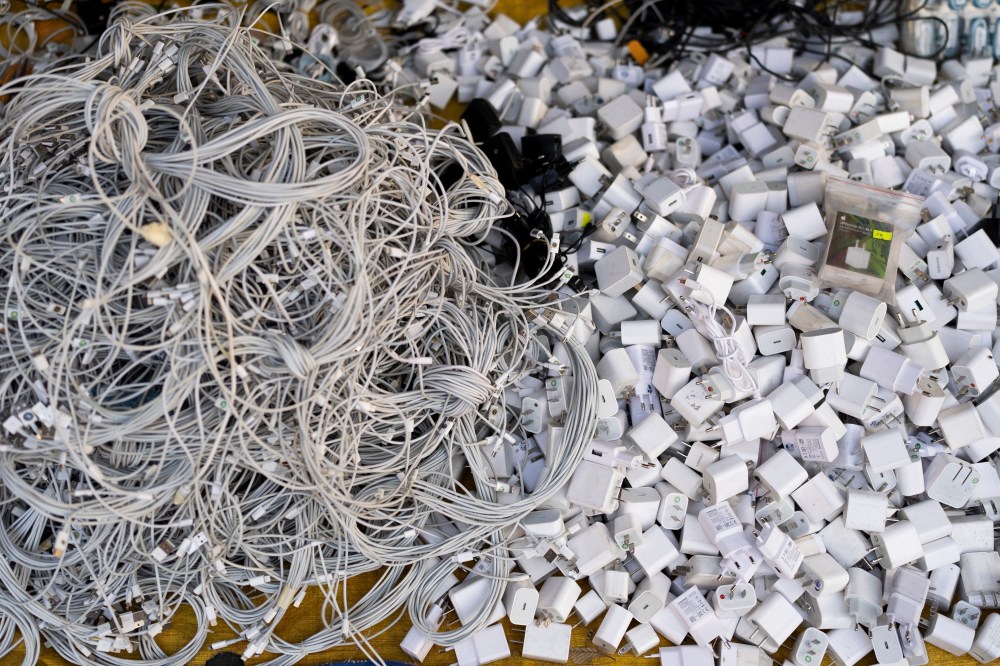
“The way that we’re creating and using and disposing of these devices has generated this completely unsustainable waste stream,” said Rick Neitzel, an environmental health sciences professor at the University of Michigan. “And there’s no signs of that abating at all. In fact, the trend continues to accelerate.”
Experts say that if more consumers recycle their e-waste, it could even drive down the cost of some electronics. Here are some tips.
Why recycling e-waste is challenging — but important
While all recycling comes with challenges, it is often more confusing to recycle e-waste than a plastic bottle or cardboard box. Common containers can be recycled curbside or in public bins, but it often takes some research to figure out where to take an electronic device.
“Cardboard comes in many shapes and sizes, but at the end of the day, it’s still cardboard,” Neitzel said.
Electronics, on the other hand, can range from a small earbud to a large refrigerator, each with different materials inside, he said. Recyclers need to be able to extract each component and material efficiently. That is a complex, energy-intensive and expensive process.
But the efforts are worth it. Components such as steel, aluminum, copper, gold, silver, plastics and even glass, can be recovered and reused, said John Shegerian, founder of Electronic Recyclers International.
Keeping harmful materials out of landfills is another incentive.
“These electronics — which could and have historically ended up in our landfills or in other inappropriate places — can leak all the stuff that’s contained there within: Mercury, lead, cadmium, beryllium, arsenic. All these things are horrible if they get into our environmental ecosystem,” Shegerian said.
Experts say recovering precious metals from devices also helps the environment by lowering the need to mine more of those resources.
Preparing your device for recycling
Some consumers may be hesitant to recycle devices because of the personal data stored on them. Experts say that in order to protect your data, start with a factory reset — not just deleting files.
Resets restore the device to its original settings and thoroughly remove data. It’s important to follow the manufacturer’s guidance, as each device has different steps. Wiping an Android phone, for example, requires different steps than wiping an iPhone. The Cyber Security and Infrastructure Agency provides guidance on data protection, including where to look for manufacturer instructions.
Even factory resets may leave traces of data, so some recyclers will go as far as shredding a device’s hard drive — and verify it’s been destroyed. What’s left goes through the recycling process.
Some devices can be refurbished and reused
If an item is newer and still in working condition, manufacturers may refurbish and resell it. Some charities and recyclers can also refresh devices so they can be given to those in need.
Look for major electronics and computer manufacturers that allow for their old equipment to be shipped back as part of buy-back offerings, or dropped off at a partnering site. Apple, for example, offers a credit toward a future purchase if your trade-in is current enough. Otherwise, they provide free recycling for older models.
Salvation Army and Goodwill Industries have donation programs that accept some used electronics, but it is important to check with your store to find out exactly what they need. Consumers should avoid inundating places with items that can’t be sold or disposed of properly.
For devices at the end of their life
Even if a device can’t be refurbished, manufacturers are still a good first place to check, experts say.
“The manufacturers are where we want this stuff to end up because they know their products, they know best and most efficiently how to recycle them,” Neitzel said.
Retailers such as Best Buy and Staples accept devices big and small for recycling. Best Buy will also haul away televisions and larger appliances for a fee when new models are purchased, then work with electronics recyclers.
While local governments typically don’t accept electronics in curbside recycling, many have drop-off locations that can be researched on their websites.
“Typically, if you’re dropping them off at a government-run electronic waste collection station, you can be confident in that,” Neitzel said.
Recycle Nation allows consumers to look specific items up and find locations in their zip code that will take those items.
Other mail-in options include Amazon and Waste Management. Consumers can order boxes to their home, fill them up with their items, and ship it back.
Some programs charge small fees. Some return sites, for example, charge a few-dollar processing fee — such as $5 per monitor, or a set cost per the weight of returns or by the car-load if you drop off in person.
And even when a device can’t be refurbished, recycling is important for the domestic supply chain of minerals and rare earths, said Terence Musho, an associate professor of engineering at West Virginia University.
He said improving the mineral recovery process and boosting recycling rates can also help consumers in another way: “It can also potentially bring down the price of your future electronics.”
___
Read more of AP’s climate coverage.
___
The Associated Press’ climate and environmental coverage receives financial support from multiple private foundations. AP is solely responsible for all content. Find AP’s standards for working with philanthropies, a list of supporters and funded coverage areas at AP.org.